


According to the Verizon DBIR, third-party involvement in data breaches doubled in a year from 15% to 30%. Nearly one in three breaches now traces back to someone who wasn't even on the payroll.
Usually, it's not a new attack. It's old access nobody revoked:
- A contractor's credentials that outlived the contract
- A vendor account no one deactivated
- A visitor permission that was never time-bound
Employee access gets audited regularly. Non-employee access, such as contractors, vendors, partners, and visitors, often relies on spreadsheets and manual records instead. Temporary access becomes permanent, and security teams can't answer a basic question: who has access right now, and why?
Strong Enterprise Access Governance closes that gap. With a solid contractor management system and disciplined visitor management, enterprises can:
- Monitor non-employee access in real time
- Keep audit-ready records
- Auto-expire outdated permissions
- Cut risk from access nobody's watching
What Is Enterprise Access Governance and Why Does It Matter?
Enterprise Access Governance is the process of controlling, monitoring, and reviewing who can access business resources. While enterprises often have structured employee access controls, governance must also include contractors, vendors, visitors, partners, and other external users.
An effective visitor management system supports this approach by helping organizations verify visitors, control facility access, maintain visitor records, and improve visibility into non-employee activity.
Effective access governance ensures users receive the right access for the right duration, with clear ownership, visibility, and accountability.
What Does Enterprise Access Governance Include?
A strong governance framework covers:
- Access approval workflows: Ensure access requests are reviewed before approval.
- Identity verification: Confirm user identity before granting access.
- Permission management: Control access based on user roles and requirements.
- Access reviews: Regularly validate existing permissions.
- Access removal: Revoke access when it is no longer needed.
- Audit documentation: Maintain records for security reviews and compliance.
Why Non-Employee Access Creates Unique Security Challenges
Managing external access is challenging because contractors, vendors, and visitors often have temporary and changing access requirements.
Common challenges include:
- Temporary permissions becoming permanent
- Changing access needs across projects and locations
- Unclear ownership of external user access
- Separate processes managed by different departments
Enterprise access governance helps organizations apply consistent control, visibility, and accountability to non-employee access.
Why Do Enterprises Struggle to Govern Non-Employee Access?
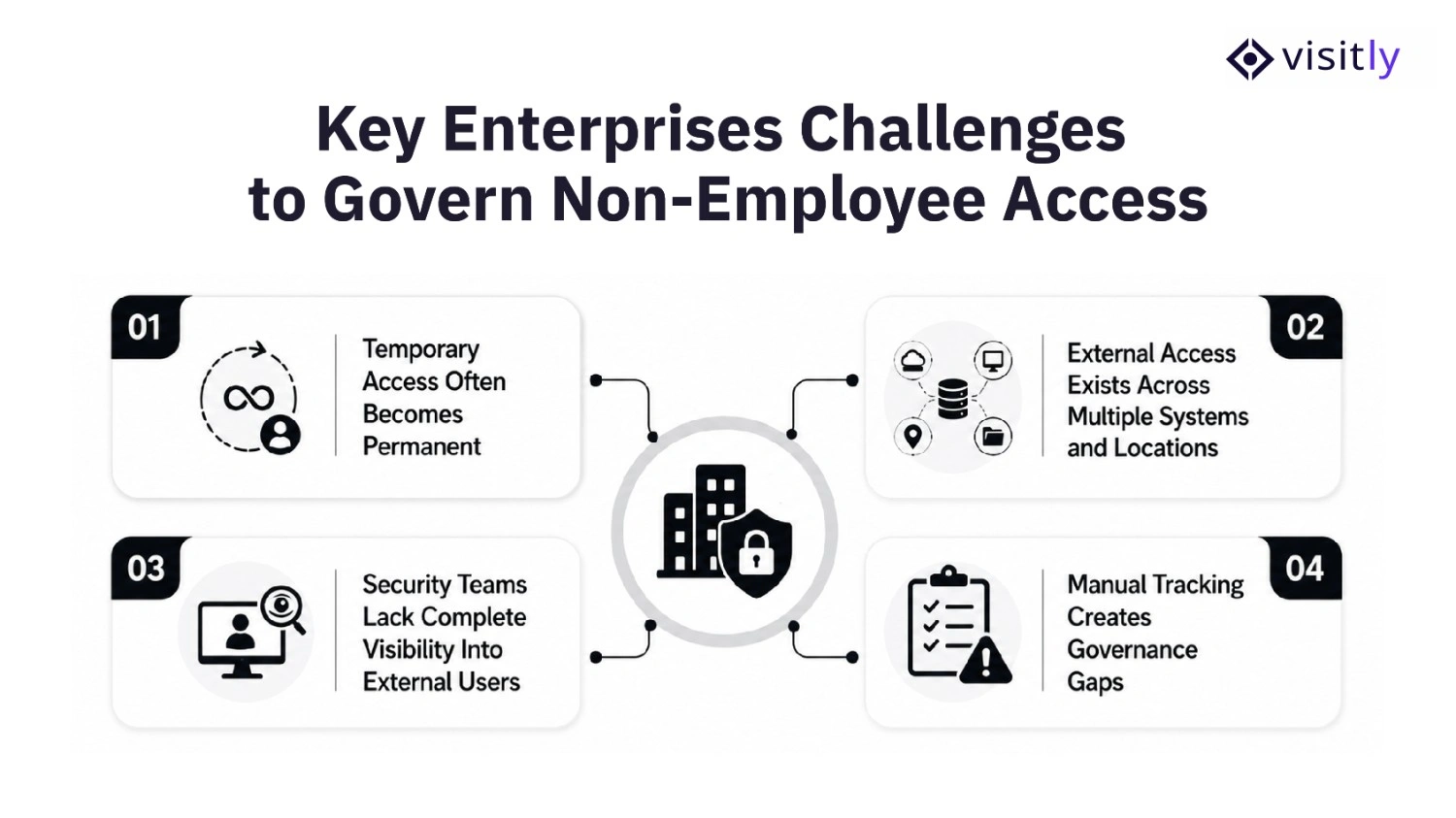
Enterprises struggle to govern non-employee access due to these reasons:
1. Temporary Access Often Becomes Permanent
2. External Access Exists Across Multiple Systems and Locations
3. Security Teams Lack Complete Visibility Into External Users
4. Manual Tracking Creates Governance Gaps
Managing non-employee access is challenging because contractors, vendors, visitors, and partners often operate across different systems, locations, and departments. Without centralized visibility and clear ownership, enterprises can lose control over who has access, why they have it, and when it should be removed.
1. Temporary Access Often Becomes Permanent
External users are usually granted access for specific projects, visits, or business requirements. However, without proper tracking and automatic reviews, temporary permissions can remain active longer than necessary.
Common risks include:
- Contractor access not removed after project completion
- Vendor accounts remaining active after agreements end
- Expired permissions creating unnecessary security exposure
2. External Access Exists Across Multiple Systems and Locations
Non-employee access is rarely managed through a single system. Enterprises often track external users across workplace access systems, visitor management software, contractor databases, and business applications.
Challenges increase when organizations manage:
- Physical access control systems in the workplace
- Automated visitor management systems
- Contractor records
- Business applications
- Multiple office locations
3. Security Teams Lack Complete Visibility Into External Users
A major governance challenge is knowing exactly who has access and whether that access is still justified.
Security teams need clear answers to questions such as the following:
- Who currently has access control?
- Why do they have access?
- Who approved the access control entry?
- When should the access expire?
4. Manual Tracking Creates Governance Gaps
Many organizations still rely on spreadsheets, emails, and disconnected approval processes to manage external access. These manual methods make it harder to maintain accurate records and enforce consistent security policies.
Common issues include:
- Outdated spreadsheets
- Missing approval history
- Delayed access removal
- Incomplete audit records
What Are the Risks of Poor Non-Employee Access Governance?
The risks of poor non-employee access governance are:
1. Increased Security Exposure
2. Compliance and Audit Challenges
3. Operational Inefficiencies
Poor non-employee access governance creates workplace security, compliance, and operational challenges. When enterprises cannot track who has access, why they have it, or when it should be removed, external users can become a hidden risk.
1. Increased Security Exposure
Unmanaged external access can create opportunities for unauthorized activity. Contractors, vendors, and visitors with outdated permissions may access areas or resources beyond their intended purpose.
Key risks include:
- Unauthorized access to restricted facilities or systems
- Exposure of sensitive business information
- Increased facility security risks
- Limited visibility during security incidents
2. Compliance and Audit Challenges
Access governance is a critical part of security in visitor management compliance frameworks such as ISO 27001, SOC 2, and other regulatory requirements. Enterprises must demonstrate that access is properly controlled, reviewed, and documented.
Common audit challenges include:
- Missing access records
- Lack of approval evidence
- Incomplete access review documentation
- Difficulty proving external access controls
3. Operational Inefficiencies
Poorly managed external access also impacts daily operations. Manual approvals, verification processes, and access tracking can slow teams down while increasing administrative effort.
Common challenges include:
- Delayed access approvals
- Manual identity verification
- Increased workload for security and operations teams
- Time-consuming access reviews
What Are the Best Practices for Enterprise Access Governance?
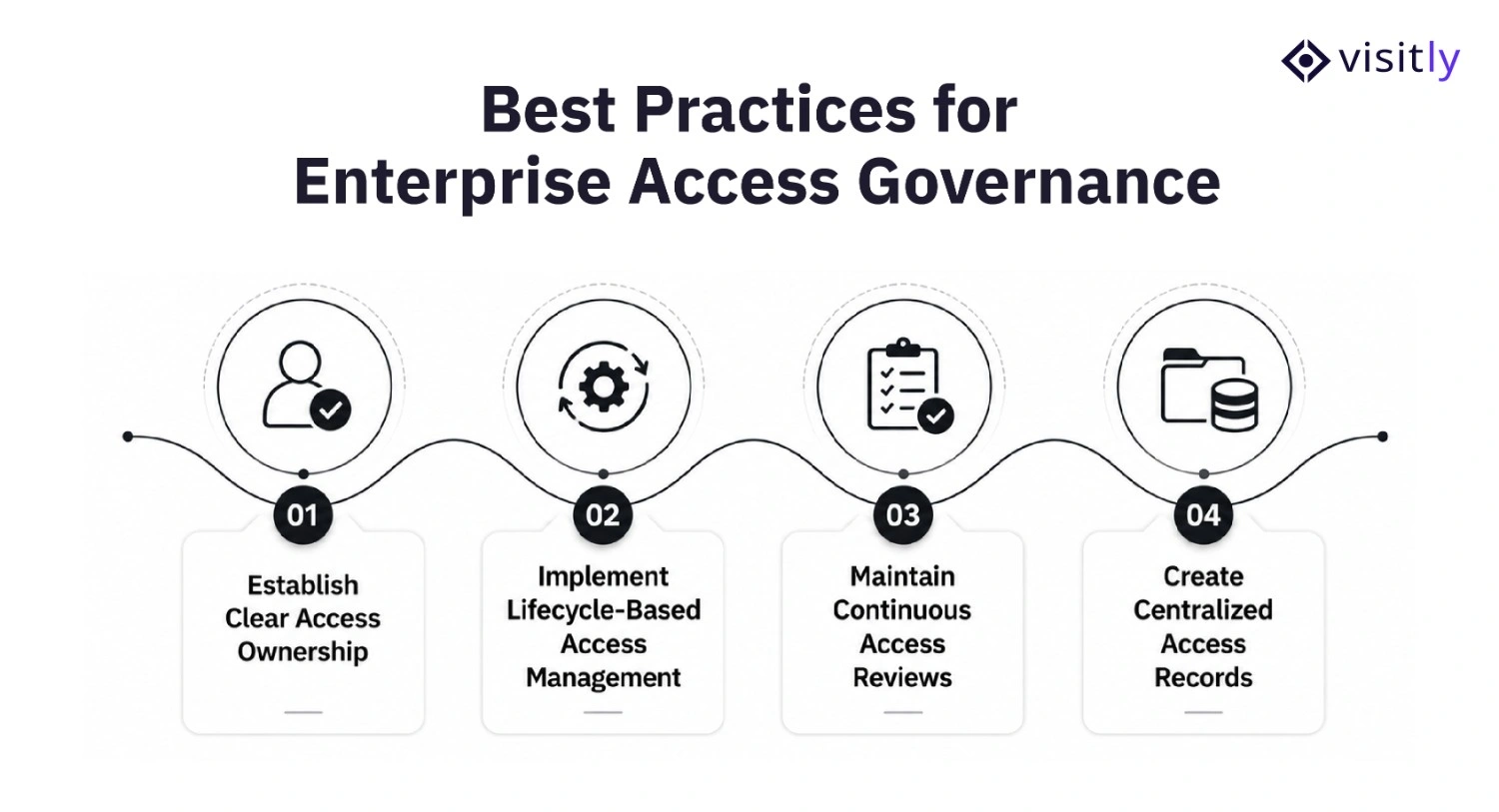
The best practices for enterprise access governance are:
1. Establish Clear Access Ownership
2. Implement Lifecycle-Based Access Management
3. Maintain Continuous Access Reviews
4. Create Centralized Access Records
Strong Enterprise Access Governance requires clear ownership, controlled workflows, regular access reviews, and centralized visibility across all users, including contractors, vendors, visitors, and other non-employees. The goal is to ensure every access permission is approved, monitored, and removed when it is no longer required.
1. Establish Clear Access Ownership
Every external access request should have a defined owner responsible for approval, monitoring, and removal. Without clear accountability, permissions can remain active without proper oversight.
Best practices include:
- Assign access owners for contractors, vendors, and visitors
- Define approval responsibilities across security, IT, and operations teams
- Prevent unmanaged permissions through clear governance policies
2. Implement Lifecycle-Based Access Management
Access should follow a defined lifecycle instead of being granted indefinitely. A structured process ensures permissions are reviewed and updated throughout the user relationship.
The access lifecycle should include:
- Request: Identify the access requirement
- Approval: Validate and approve permissions
- Access period: Monitor active access usage
- Review: Confirm continued need
- Expiry: Remove access when the period ends
- Revocation: Immediately disable unnecessary permissions
3. Maintain Continuous Access Reviews
Access governance is not a one-time activity. Regular reviews help enterprises identify outdated permissions and reduce external access risks.
Organizations should conduct the following:
- Periodic permission reviews
- Contractor access validation
- Vendor access monitoring
- Reviews of temporary access permissions
4. Create Centralized Access Records
Centralized records provide security teams with better visibility into external access activity and support compliance requirements.
Maintain records such as:
- Visitor history
- Contractor access records
- Approval trails
- Access logs
How Do Enterprise Data Access Governance Tool Platforms Help Manage External Access?
Enterprise data access governance tool platforms help organizations control external access by centralizing user permissions, automating approvals, tracking access activity, and maintaining compliance evidence. These platforms reduce visibility gaps caused by disconnected systems and manual processes.
Modern governance platforms help enterprises:
- Centralize access information
- Automate approval workflows
- Track permissions
- Maintain audit records
Key Capabilities Enterprises Should Look For
1. Identity and Access Visibility
Enterprises need clear visibility into:
- Who has access
- Why access was granted
- How long access remains active
2. Automated Approval Workflows
Automated workflows ensure external access follows defined security processes.
Key capabilities include:
- Access requests
- Manager approvals
- Security reviews
- Approval records
3. Access Expiry and Revocation
External access should be removed when it is no longer required.
Look for:
- Automatic access removal
- Temporary access controls
- Permission expiry management
4. Reporting and Audit Support
Strong reporting helps enterprises maintain compliance evidence and investigate access activity.
Key capabilities include:
- Access history
- Compliance reports
- Investigation records
How Visitly Helps Enterprises Strengthen Non-Employee Access Governance
Managing non-employee access requires more than knowing who enters a facility. Enterprises need a structured process to verify external users, monitor access activity, and maintain records that support security reviews and compliance requirements.
Visitly helps organizations bring visitor and contractor access under a structured governance framework. The platform enables secure registration, identity verification, visitor screening, contractor management, digital access records, and real-time notifications.
These capabilities help enterprises improve visibility into non-employee access while creating stronger workplace security controls. By replacing manual tracking with digital workflows, Visitly helps security and operations teams manage external access more efficiently.
1. Improve Visibility Into Visitor and Contractor Access
The first step in effective access governance is knowing who has access to your workplace and why. Visitly helps security and operations teams gain better visibility into visitor and contractor activity across facilities.
With Visitly, enterprises can:
- Identify who enters facilities and when
- Track visitor history and access activity
- Manage contractor visits with better oversight
- Receive real-time notifications when visitors arrive
2. Maintain Audit-Ready Access Records
Visibility alone is not enough during security reviews or compliance audits. Enterprises need accurate records that show access activity and demonstrate that workplace security processes are being followed.
Visitly helps organizations maintain:
- Digital visitor logs
- Searchable visitor records
- Access history documentation
- Security records for audits and investigations
3. Create Consistent Access Workflows Across Locations
For enterprises managing multiple offices, inconsistent visitor processes can create security gaps. Visitly helps standardize access workflows while giving security teams centralized visibility across locations.
Organizations can:
- Apply consistent visitor procedures across facilities
- Maintain centralized access visibility
- Improve coordination between security, workplace, and operations teams

Enterprise Access Governance Checklist for Non-Employee Access
Managing non-employee access requires clear visibility, defined ownership, and regular reviews. Use this checklist to evaluate whether your organization has the right controls in place for contractors, vendors, visitors, and other external users.
Closing Thoughts
External access has become a critical security consideration for enterprises managing contractors, vendors, visitors, and partners. Employee-focused access controls alone are not enough when third-party users also require access to workplace facilities and sensitive resources.
Enterprises need complete visibility, control, and accountability across all users who interact with their organization. A strong Enterprise Access Governance approach helps improve security, strengthen compliance readiness, and reduce operational challenges caused by fragmented access processes.
Book a demo with Visitly experts to see how your organization can improve non-employee access visibility, strengthen workplace security, and build a more controlled access governance process.
FAQs
1. What is Enterprise Access Governance?
Enterprise Access Governance is the process of controlling, monitoring, and reviewing user access across an organization. It ensures employees and non-employees have appropriate access based on business needs and security policies.
2. Why is non-employee access a security risk?
Non-employee access can become a security risk when contractors, vendors, or visitors retain unnecessary permissions after their work is completed. Poor visibility into external access can lead to unauthorized access and compliance issues.
3. How do enterprises manage contractor and vendor access?
Enterprises manage contractor and vendor access through approval workflows, identity verification, access reviews, expiration controls, and digital records that track external user activity.
4. What are the best practices for Enterprise Access Governance?
Best practices include defining access ownership, automating approvals, regularly reviewing permissions, maintaining centralized access records, and removing access when it is no longer required.
5. How does access governance support compliance requirements?
Access governance helps organizations demonstrate control over user permissions by maintaining approval records, access history, and review documentation required for security frameworks such as ISO 27001 and SOC 2.