


A visitor entering a facility without proper tracking creates a security gap. As organizations enter 2027, businesses are managing larger workplaces, multiple facilities, stricter compliance requirements, and connected security systems that require real-time visibility into visitor activity.
Traditional visitor logs create security gaps because they only capture basic entry and exit details. They cannot provide live visibility into active visitors, support faster emergency response, or help security teams make informed decisions during critical situations.
According to Pro-Vigil’s report, 88% of businesses reported that physical security incidents either increased or remained the same, impacting assets, inventory, and operations.
Many organizations still rely on paper sign-in sheets or basic visitor logs, making it difficult to maintain accurate visitor records, manage access effectively, and meet growing security and compliance expectations.
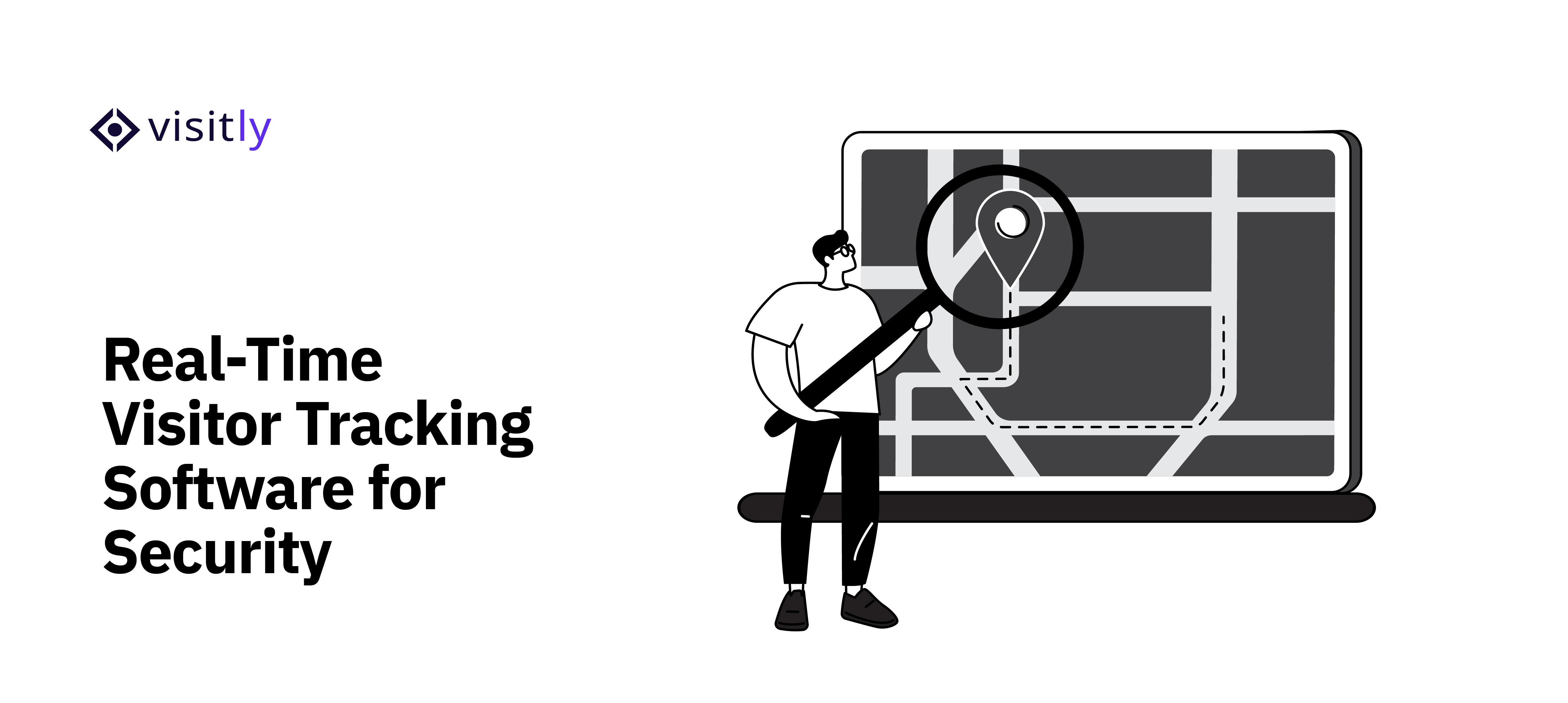
Real-time visitor tracking helps organizations overcome these challenges by providing live visibility into visitor activity through a visitor management system. It enables businesses to:
- Monitor active visitors
- Improve emergency response
- Strengthen access control
- Maintain accurate security records
- Reduce security gaps
Why Do Traditional Visitor Logs Create Security Blind Spots?
Traditional visitor logs create security blind spots because they provide limited visibility into visitors after check-in. They are usually made to document simple information such as visitor arrivals and departures.
They might offer a simple record of who entered a building, but they are not very useful when businesses require instant access to visitor activities.
1. Limited Visibility During Active Visits
At the time of entry, paper logs usually only record basic information. Security personnel frequently lose access to guests' location and status once they leave the reception area.
Enterprises might consequently find it difficult to respond to critical questions such as:
- Who is currently on-site?
- Which areas has a visitor accessed?
- Has a visitor overstayed their authorized visit?
- Are contractors still present in restricted areas?
Without real-time visibility, organizations face significant operational and security challenges.
2. Delayed Response During Security Incidents
When a security event occurs, timing is key.
Businesses that rely on manual visitor records frequently need to review sign-in sheets, contact hosts, and verify visitor information before making informed decisions. This approach can cause delays in investigations and emergency response operations.
The inability to quickly identify active visitors might lead to unnecessary confusion and increase security concerns during occurrences.
3. Inaccurate and Incomplete Records
Manual visitor logs may lead to human errors.
Common issues include:
- Illegible handwriting
- Missing visitor information
- Incomplete sign-outs
- Duplicate entries
- Inconsistent recordkeeping
These inaccuracies can compromise security efforts and make compliance reporting more difficult.
How Does Real-Time Visitor Tracking Strengthen Security?
Real-time visitor tracking strengthens security in the following ways:
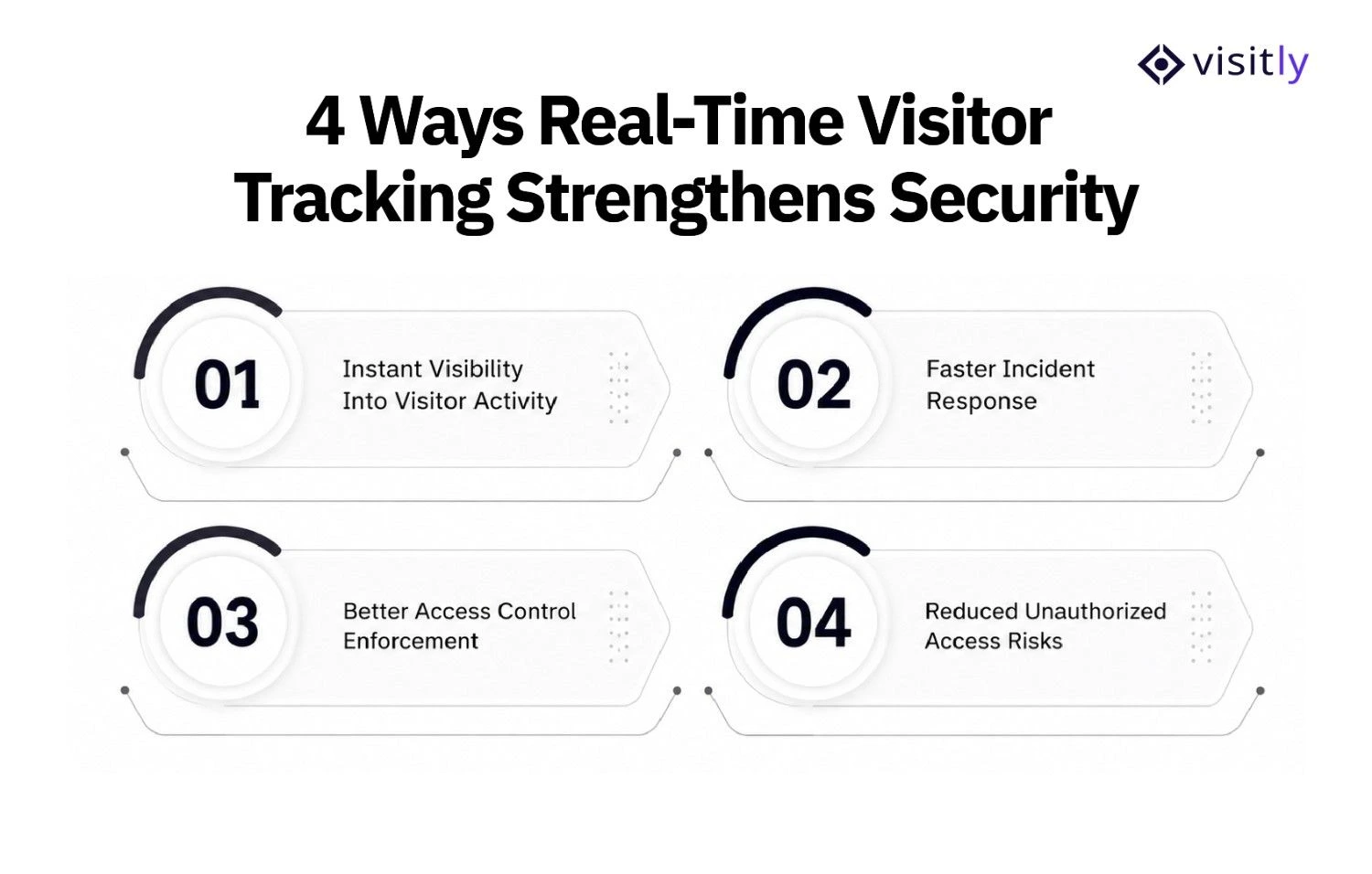
- Instant Visibility Into Visitor Activity
- Faster Incident Response
- Better Access Control Enforcement
- Reduced Unauthorized Access Risks
Security teams can immediately see who is inside the facility, verify whether visitors are in approved areas, and take action before a small issue becomes a security incident. The biggest benefits include faster incident response, stronger access control, better visitor visibility, and reduced unauthorized access risks.
1. Instant Visibility Into Visitor Activity
The immediate visibility provided by real-time visitor tracking is one of its most significant benefits.
Security staff can see active visitors, monitor current occupancy levels, and determine who is present across sites at any given time.
This visibility improves situational awareness, helping companies make faster and more informed security decisions when needed.
Real-time monitoring, in contrast to traditional static visitor data, updates visitor status continually during their visit duration.
2. Faster Incident Response
Security incidents often require rapid access to accurate information.
A modern visitor tracking system allows security personnel to quickly identify any visitors currently on-site, review visitor histories, and verify their access permissions.
This information can support:
- Security investigations
- Emergency response efforts
- Access reviews
- Threat assessments
By reducing the time needed to retrieve visitor information, companies can improve response times and minimize potential security risks.
3. Better Access Control Enforcement
One of the most important aspects of physical security is restricting access to sensitive places.
Organizations can use real-time visitor tracking to ensure that visitors only access authorized areas. When integrated with access control systems, facilities can automatically manage visitor permissions and enforce access policies.
This improves accountability while reducing opportunities for unauthorized movement throughout facilities.
Modern visitor management software supports this by integrating visitor records with access control systems. Security teams can automate visitor permissions, issue temporary credentials, and ensure access is revoked once a visit ends, reducing the risk of unauthorized movement.
4. Reduced Unauthorized Access Risks
Unauthorized access remains a concern across many industries.
Modern visitor monitoring software can help mitigate these risks through:
- Visitor screening
- Identity verification
- Watchlist management
- Automated security alerts
By identifying potential risks before visitors enter the facility, organizations can strengthen security standards and reduce exposure to threats.
What Security Features Should You Look for in Visitor Monitoring Software?
The key security features to look for in visitor monitoring software include live visitor tracking dashboards, automated emergency notifications, visitor screening and identity verification, access control integration, and digital audit trails.
In short, organizations should evaluate visitor monitoring software based on features that improve visibility, strengthen control, and support compliance.
1. Live Visitor Tracking Dashboard
A live visitor tracking dashboard provides a centralized view of your visitors’ activity.
Security teams can monitor:
- Active visitors
- Visitor status updates
- Occupancy levels
- Visit durations
This visibility helps organizations maintain awareness across facilities and respond proactively to security concerns.
2. Automated Alerts and Notifications
Automation plays an important role in improving security operations.
Organizations should look for solutions that provide:
- Visitor arrival notifications
- Overstay alerts
- Access violation notifications
- Security event alerts
Automated notifications ensure that critical information reaches the appropriate personnel without delay.
3. Visitor Screening and Identity Verification
Effective visitor screening helps organizations identify potential risks before granting access.
Key capabilities may include:
- Watchlist checks
- Visitor approvals
- Compliance validation
These features support stronger security policies while improving visitor accountability.
4. Access Control Integration
Security systems become more effective when they work together.
By integrating visitor management with access control systems, firms may better track visitor mobility, limit access permissions, and automate credential issuance.
This makes the visiting experience safer and more efficient.
5. Digital Audit Trails
Accurate recordkeeping is necessary for security and compliance.
Detailed visitor activity data are provided by digital audit trails, which include:
- Check-in and check-out times
- Access history
- Host information
- Visitor approvals
These records help with compliance reporting, audits, and investigations.
Visitly brings live visitor tracking, automated alerts, identity verification, and access control integration together in one platform, so you don't have to piece together multiple tools.
How Does Real-Time Visitor Tracking Improve Emergency Preparedness?
Real-time visitor tracking improves emergency preparedness in these ways:
- Faster Evacuation Management
- Enhanced Muster and Roll Call Processes
- Supporting Business Continuity
Real-time visitor tracking improves emergency evacuations by helping organizations manage evacuations, account for visitors, and maintain business continuity during emergencies.
Here’s how it supports each of these areas:
1. Faster Evacuation Management
If an evacuation situation occurs, organizations must be able to quickly determine who remains inside the facility.
Real-time visitor tracking provides current occupancy information, helping emergency teams identify visitors who may require assistance. This visibility can significantly improve evacuation effectiveness.
2. Enhanced Muster and Roll Call Processes
Traditional roll call processes often rely on incomplete information.
Digital visitor records allow organizations to verify attendance more accurately and account for visitors during emergency events.
This reduces confusion and supports faster emergency response efforts.
3. Supporting Business Continuity
Emergencies can cause major organizational challenges and disrupt operations.
Real-time tracking helps to improve cooperation, accelerate recovery efforts, and strengthen business continuity planning by giving accurate visitor visibility during crises.
How Do Visitor Tracking Systems Support Compliance Requirements?
Visitor tracking systems support compliance requirements in the following ways:
- Maintaining Accurate Visitor Records
- Supporting Regulatory Requirements
- Simplifying Audit Preparation
A visitor tracking system supports compliance by maintaining accurate visitor records, improving record accessibility, and reducing the administrative burden of manual tracking. These capabilities help organizations meet documentation and audit requirements more efficiently.
1. Maintaining Accurate Visitor Records
Touchless visitor management systems improve record accuracy by capturing visitor information digitally.
This reduces common issues associated with manual processes while ensuring records remain consistent and accessible.
Organizations can maintain more reliable documentation without increasing administrative workloads.
2. Supporting Regulatory Requirements
Many industries require detailed records of visitor activity.
Examples include:
- Healthcare facilities
- Government agencies
- Defense contractors
- Manufacturing environments
- Critical infrastructure organizations
Accurate visitor tracking helps support documentation requirements and demonstrates compliance with organizational security policies.
3. Simplifying Audit Preparation
Preparing for audits often requires extensive documentation.
Digital visitor records simplify this process by providing searchable visitor histories and automated reporting capabilities.
Organizations can quickly retrieve records and generate reports when responding to compliance reviews or audits.
How Do Different Industries Use Real-Time Visitor Tracking to Improve Security?
The different industries using real-time visitor tracking to improve security are:
- Manufacturing Facilities
- Healthcare Organizations
- Government and Defense Facilities
- Corporate Offices
Different industries use real-time visitor tracking to address specific security challenges while maintaining consistent visibility into who is on-site. The way organizations use it varies by their facilities, visitors, and security requirements.
1. Manufacturing Facilities
Manufacturing facilities frequently manage contractors, suppliers, and service providers.
Real-time visitor tracking helps improve:
- Contractor accountability
- Restricted-area monitoring
- Safety compliance
- Operational visibility
2. Healthcare Organizations
Healthcare facilities must balance visitor access with patient safety and regulatory requirements.
Visitor tracking supports:
- Patient visitor management
- Compliance initiatives
- Sensitive area protection
- Security monitoring
3. Government and Defense Facilities
Government and defense organizations often operate in highly regulated environments.
Real-time visitor tracking helps strengthen:
- Identity verification processes
- Access restrictions
- Visitor accountability
- Security oversight
4. Corporate Offices
Corporate environments continue to experience evolving security risks.
Organizations use visitor tracking to improve:
- Workplace security
- Visitor visibility
- Multi-site management
- Employee safety
Why Do Organizations Choose Visitly for Real-Time Visitor Tracking?
While real-time visitor tracking provides clear security advantages, organizations need a platform that can bring these capabilities together without adding operational complexity. A modern visitor management solution should help security teams monitor visitor activity, manage access, support emergency response, and maintain accurate records from a centralized system.
Visitly helps organizations achieve this by combining real-time visitor tracking with security and compliance capabilities in one platform. It gives security teams better visibility into visitor activity while helping organizations manage visitor workflows consistently across facilities.
With features such as visitor screening, access control integration, emergency preparedness tools, and digital audit trails, Visitly supports organizations looking to strengthen workplace security and improve improve enterprise visitor management systems.
1. Real-Time Visibility Across Facilities
Managing visitors across multiple locations requires more than knowing who entered a building. Security teams need continuous visibility into active visitors and occupancy levels.
Visitly provides real-time visitor tracking capabilities that allow teams to monitor active visitors, view occupancy information, and maintain awareness across facilities through a centralized dashboard. This helps security teams make faster decisions and respond effectively when situations require immediate action.
2. Security and Compliance Built Into One Platform
Security teams often manage visitor information, approvals, and compliance records across different systems. Visitly brings these processes together by supporting key security workflows, including:
- Visitor screening
- Identity verification
- Access control integrations
- Digital audit trails
- Compliance reporting
These capabilities help organizations maintain accurate visitor records, improve security oversight, and support compliance requirements more efficiently.
3. Supporting Enterprise Security Teams
Enterprise organizations often manage complex visitor workflows across multiple facilities, contractors, and security requirements. They need solutions that can scale while maintaining consistent processes.
Visitly supports enterprise security teams with centralized administration, contractor management capabilities, emergency preparedness support, and standardized visitor management workflows.
By bringing visitor tracking, security controls, and compliance processes together, Visitly helps organizations improve visibility and create a more secure visitor experience across their facilities.
What Should Organizations Do Next?
In an organization, security teams can no longer rely on paper visitor logs and outdated processes to manage modern security challenges. As visitor volumes increase and compliance requirements become more demanding, organizations need greater visibility into visitor activity across their facilities.
Real-time visitor tracking helps enterprises monitor visitors, improve incident response, strengthen access control, and maintain accurate visitor records. It also supports emergency preparedness, simplifies compliance efforts, and provides valuable insights for managing visitor activity more effectively.
Organizations evaluating their visitor management processes should consider whether they have the visibility required to meet today's security and compliance expectations. Solutions such as Visitly help organizations move beyond manual visitor logs and gain the real-time insights needed to strengthen security programs.
Explore how Visitly's visitor management platform can help you strengthen physical security, improve compliance, and gain complete visibility into visitor activity across your facilities.
Ready to see it in action?
Book a Visitly demo and give your security team the real-time visibility they need.
FAQs
1. Why is a visitor management system important for the security of an organization?
A visitor management system replaces manual sign-in sheets with digital records, giving security teams accurate, real-time visibility into who is on-site at any time. This reduces blind spots, strengthens access control, and helps organizations respond faster to security incidents.
2. What are some common features of visitor management software?
Common features include digital check-in, ID verification, automated screening, host notifications, and access control integration. Most platforms also offer live dashboards, automated alerts, and digital audit trails for compliance reporting.
3. What is the best visitor management software?
The best visitor management software depends on factors such as facility size, security requirements, integrations, and compliance needs. Platforms with real-time tracking, access control integration, visitor screening, and reporting capabilities are generally better suited for organizations managing complex visitor workflows. Visitly brings these capabilities together, making it a solid choice for organizations that want visibility and security combined.
4. What is real-time visitor tracking?
Real-time visitor tracking is the ability to monitor visitor activity, location, and status as it happens, rather than relying on static check-in data. It gives security teams live visibility into active visitors, occupancy levels, and potential access violations.
5. How does real-time visitor tracking help during an emergency?
During an evacuation, real-time visitor tracking shows exactly who is still inside the building, helping emergency teams account for everyone quickly. This improves muster and roll-call accuracy and reduces confusion during crisis response.