



“By failing to prepare, you are preparing to fail.” – Benjamin Franklin
Emergencies don’t knock before they arrive. Whether it’s a fire, an earthquake, a pandemic, or a workplace security threat, businesses must have a well-oiled emergency plan in place.
This is where the four steps of emergency management software come into play: Mitigation, Preparedness, Response, and Recovery. When these phases are integrated with efficient workplace management software, the result is a safer, smarter, and more resilient workplace.
According to a report, the U.S. Small Business Administration (SBA), 25% of businesses do not reopen following a major disaster. This highlights the dire consequences of inadequate emergency planning and underscores the importance of proactive risk management.
In this blog, we’ll explore each of the four stages of emergency management services in detail – Mitigation, Preparedness, Response, and Recovery along with practical action steps.
What is the Importance of Emergency Management?
Ignoring emergency preparedness is like playing with fire.
According to the Federal Emergency Management Agency (FEMA), nearly 40% of small businesses never reopen after a disaster. This shocking statistic highlights the importance of robust emergency management services.
Every organization, regardless of its size, must implement the four steps of emergency management to protect its people, assets, and reputation. A well-prepared plan saves lives, reduces chaos, and speeds up recovery.
Incorporating a state-of-the-art visitor management system not only streamlines regular operations but also enhances preparedness and response capabilities during emergencies. An efficient system acts as the first line of defense by maintaining records, monitoring entries, and assisting in critical situations.
What Are The 4 Phases Of Emergency Management
How Emergency Management Services Works: The Four Critical Phases
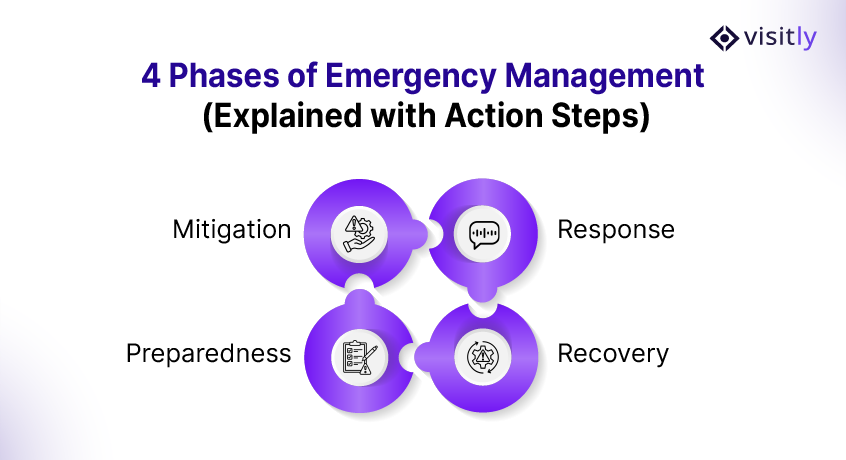
The four phases of emergency management are:
- Mitigation: Focuses on preventing or minimizing the impact of disasters before they occur.
- Preparedness: Prepares organizations to handle emergencies when they arise.
- Response: Involves immediate actions taken during an emergency to reduce its impact.
- Recovery: Focuses on returning to normal operations and making necessary improvements for future preparedness.
Let’s break down the four steps of emergency management and see how they work together seamlessly:
1. Mitigation
Mitigation is the first and most crucial phase. It focuses on minimizing the impact of potential disasters before they happen.
Action Steps:
- Risk Assessment: Identify and assess potential compliance risk management systems in your business environment, including fire hazards, cybersecurity risks, and natural disasters.
- Infrastructure Improvements: Invest in emergency management software to monitor potential threats, such as cybersecurity breaches or physical security risks.
- Safety Technologies: Implement an access control system, fire alarms, and surveillance cameras to prevent incidents from escalating.
- Visitor Management: Use visitor management systems to control access and enhance security. Features like visitor badge printing help you keep track of visitors and contractors, ensuring that unauthorized individuals don’t access sensitive areas.
A well-maintained visitor management system can also assist in mitigation. By using a facial recognition system and visitor tracking, unauthorized individuals can be spotted and managed proactively.
According to MarketsandMarkets’ report, the global market for access control systems is expected to reach $12.1 billion by 2024, emphasizing the growing reliance on these technologies.
2. Preparedness
Preparedness ensures that your organization is ready when disaster strikes. This phase involves developing action plans and training staff to respond swiftly and effectively.
Action Steps:
- Develop Emergency Plans: Create tailored emergency plans for different disaster scenarios, including fires, medical emergencies, and natural disasters. Be sure to integrate your emergency management software into these plans to automate emergency notification and tracking.
- Staff Training: Conduct regular drills, such as fire evacuations and first-aid training. Familiarize staff with your emergency management cycle to ensure everyone knows their role in the event of a disaster.
- Emergency Kits: Ensure the workplace is stocked with essential supplies, including first-aid kits, flashlights, and communication devices.
- Security Check-in System: Leverage your electronic sign-in system to maintain accurate logs of everyone on-site, ensuring no one is left behind during evacuations.
Modern features of visitor management systems, such as real-time alerts and visitor logs, help track every person inside the building during emergencies, streamlining preparedness.
As Steve Jobs once said, “Innovation distinguishes between a leader and a follower,” and innovative visitor management is a clear leadership step in safety preparedness.
3. Response
When an incident occurs, a quick and organized response is critical. This is where your preparation pays off, ensuring that confusion does not take over.
Action Steps:
- Activate Emergency Protocols: Instantly deploy evacuation protocols, alerting employees and visitors via emergency management services such as public address systems or apps linked to your digital visitor management system.
- Use Real-Time Visitor Logs: In an emergency, use real-time tracking through visitor management software to ensure everyone is accounted for, including contractors, guests, and employees.
- Communication: Ensure clear, prompt communication with emergency responders, and use emergency management software to coordinate efforts across teams.
- Access Control Systems: Immediately restrict access to danger zones using automated access control entry systems, preventing unauthorized personnel from entering hazardous areas.
Using an iPad-enabled holographic check-in or facial recognition system ensures no time is wasted verifying visitor identities, speeding up the evacuation process. According to a recent report, 68% of businesses believe technology-driven emergency response systems reduce panic during actual crises.
4. Recovery
Recovery brings operations back to normal after the disaster. It focuses on repairing damage, supporting affected individuals, and learning from the incident to improve future responses.
Action Steps:
- Damage Assessment and Repairs: Evaluate the physical damage to your facilities and work on restoring critical systems and infrastructure.
- Support Affected Individuals: Provide necessary support for employees, such as counselling or medical assistance, and help them deal with the aftermath of the disaster.
- Post-Incident Review: Conduct a post-incident analysis to understand what worked well and where improvements can be made. This is critical for refining future emergency management planning.
- Update Emergency Plans: Revise your emergency management cycle to include lessons learned and address any gaps or new risks that may have emerged.
Maintaining detailed visitor records in an electronic visitor management system simplifies post-incident reporting and audits, aiding insurance claims and legal compliance.
Common Mistakes in Emergency Management Planning
Even the most diligent organizations can overlook critical aspects when developing an emergency management plan. Identifying these common mistakes can significantly improve your organization’s preparedness and overall workplace safety:
- Ignoring Visitor Safety: Many companies overlook the safety of visitors, contractors, or temporary staff during emergencies. An effective automated visitor management system ensures that all individuals on-site are accounted for during evacuations or lockdowns, minimizing risk exposure.
- Outdated Emergency Plans: Emergency plans that are not updated regularly fail to address new risks such as cyber-attacks or evolving workplace threats like active shooters or chemical spills. Businesses should review and revise their plans annually, incorporating lessons learned and new technologies.
- Lack of Technology Integration: Organizations often underutilize tools such as facial recognition, holographic check-in, or a physical access control system that can enhance real-time decision-making and crisis response. These technologies provide instant information about who is in the building, helping emergency teams act swiftly.
- Inadequate Training: Employee preparedness is a crucial part of the four steps of emergency management. According to the Federal Emergency Management Agency (FEMA), nearly 60% of Americans have not practised what to do in a disaster within the last year, indicating a significant gap in emergency readiness at workplaces.
Visitly: The Best Visitor Management System
Emergencies are unpredictable, but your response shouldn’t be.
Thus, Visitly offers a modern, digital security check-in system that simplifies check-ins for visitors, contractors, and employees without requiring an app download.
The following are some of the features of Visitly:
- Visitor Watchlist: Easily flag and monitor suspicious visitors for added security.
- Facial Recognition: Speed up the visitor check-in process securely and prevent unauthorized access.
- Emergency Evacuation: Instantly access real-time visitor lists during emergencies, ensuring no one is left behind.
- iPad-Enabled: iPad visitor sign-in ensures a quick, modern, and user-friendly sign-in and sign-out process that integrates seamlessly with existing infrastructure.
Incorporating Visitly into your emergency plan ensures that all four steps of emergency management are seamlessly supported by technology. The system’s ability to monitor visitors enhances organizational readiness and contributes to safer, smarter environments.

Conclusion
Emergencies can strike like a bolt from the blue, but smart planning can turn chaos into control. Remember, the four steps of emergency management – Mitigation, Preparedness, Response, and Recovery are your organization’s best defense against disasters. A properly implemented emergency management plan, supported by cutting-edge technology, drastically reduces risks and recovery times.
A visitor management system like Visitly adds another layer of safety by ensuring you always know who’s in your building. As Warren Buffet once said, “Risk comes from not knowing what you are doing.” With Visitly, you’ll always be prepared to manage risks confidently.
Stay one step ahead, embrace innovation, and protect your most valuable assets, your people and your reputation.
Book a demo today to see how Visitly can transform your workplace safety.
1. What are the 4 phases of emergency management?
The four phases of emergency management are Mitigation, Preparedness, Response, and Recovery. These phases help businesses reduce risks, prepare staff, respond quickly, and recover efficiently. Integrating emergency management software and emergency management services can streamline these phases and enhance overall safety.
2. How can emergency management software help during a crisis?
Emergency management software plays a crucial role by automating alerts, tracking visitors, and coordinating responses. It integrates with visitor management systems to ensure safety by providing real-time data during the emergency management cycle, improving response times and recovery efforts.
3. Why is preparedness important in emergency management?
Preparedness ensures businesses are ready for emergencies. Developing plans and training staff can minimize chaos during crises. With emergency management services and software, businesses can streamline evacuation processes, manage resources, and ensure the safety of employees and visitors.
4. What role do emergency management badges play in workplace safety?
Emergency management badges are essential for tracking individuals during emergencies. They help ensure everyone, including visitors, is accounted for. These badges integrate with visitor management systems and emergency management software, enabling real-time monitoring and improving safety during evacuations or lockdowns.
5. How does the emergency management cycle improve business continuity?
The emergency management cycle—Mitigation, Preparedness, Response, and Recovery—provides a structured approach to handling crises. By utilizing emergency management software and visitor management systems, businesses can effectively manage each phase, reduce downtime, and recover faster, ensuring business continuity even after a disaster.