



Imagine a visitor enters your office—no ID check, no verification, no real-time monitoring.
Now imagine that a visitor reaches a restricted area and compromises data or triggers a breach. This scenario is more common than you think, and the results can be disastrous.
Visitor management might seem like a small, administrative task, but in today’s world, it carries hidden compliance risks that most businesses overlook.
While you’re focused on protecting your digital assets and employees, the physical entry of guests could expose your company to serious legal, security, and workplace safety risks.
A visitor management system that lacks secure protocols and real-time tracking leaves gaps in compliance and safety procedures.
In this blog, we’re diving into the top 10 hidden compliance risks in visitor management—risks that could jeopardize your security and compliance, data integrity, and regulatory standing.
We’ll also explain how the best visitor management system can protect your business by ensuring compliance and security without hassle.
Let us uncover these hidden threats and explore smarter ways to tackle them.
What Are the Key Hidden Compliance Risks in Visitor Management?
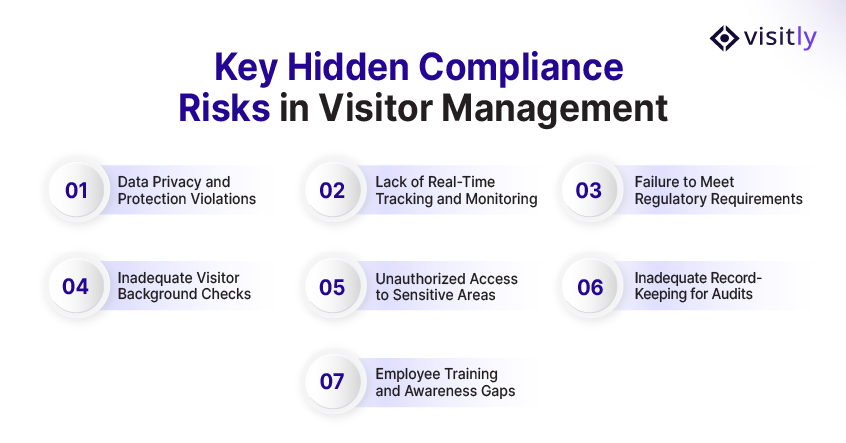
The key hidden compliance risks in visitor management are:
- Data Privacy and Protection Violations
- Lack of Real-Time Tracking and Monitoring
- Failure to Meet Regulatory Requirements
- Inadequate Visitor Background Checks
- Unauthorized Access to Sensitive Areas
- Inadequate Record-Keeping for Audits
- Employee Training and Awareness Gaps
As the world increasingly embraces digital transformation, traditional methods of managing visitors simply don’t cut it anymore. In fact, relying on manual check-ins, handwritten logs, or non-secure integrated workplace management software can create gaps in your security and compliance, jeopardizing your workplace security and reputation.
Let’s discuss visitor management compliance risks and how modern solutions help address them.
1. Data Privacy and Protection Violations
When handling sensitive visitor data, businesses must ensure strict compliance with security standards and privacy regulations such as GDPR, CCPA, and HIPAA. Failure to protect this data from unauthorized access can result in severe penalties and long-term reputational damage.
Many organizations rely on automated visitor management systems that help to encrypt or properly secure data, reducing the risk of breaches.
- Inadequate data encryption leaves visitor information vulnerable to cyberattacks.
- Failure to securely store visitor data.
- Data leaks through unprotected databases or spreadsheets.
- Improper sharing of visitor information without consent.
2. Lack of Real-Time Tracking and Monitoring
Without real-time visitor monitoring, it’s impossible to know exactly who is on the premises and whether they are authorized to be in certain areas. A lack of up-to-date visitor logs can lead to compliance violations, especially when verifying the presence of specific individuals for safety audits or regulatory purposes. This failure to track visitor movements leaves organizations vulnerable to security breaches and unauthorized access.
- Delay in visitor check-in and check-out updates.
- Absence of real-time access to visitor details for authorized personnel.
- Increased risk of allowing unauthorized individuals into restricted areas.
- Inability to track the exact location of visitors during emergency management.
3. Failure to Meet Regulatory Requirements
Organizations that fail to meet specific regulatory standards for visitor management risk facing legal actions, fines, and loss of business credibility.
For instance, regulatory bodies in industries such as healthcare, education, and government require strict visitor data-handling practices, ensuring that only authorized individuals have access to sensitive information or areas. An electronic sign-in system that doesn’t align with these standards can result in significant compliance breaches.
- Non-compliance with industry-specific visitor protocols (e.g., HIPAA for healthcare).
- Missing or incomplete visitor consent forms.
- Inability to demonstrate adherence to workplace safety regulations.
- Failure to ensure secure data storage in line with legal requirements.
4. Inadequate Visitor Background Checks
Relying on manual or informal visitor verification procedures can lead to insufficient background checks, especially for contractors, vendors, or guests accessing restricted areas. This increases the likelihood that unauthorized visitors will gain access to sensitive parts of the business, posing serious security risks.
A contactless QR code-scanning system can benefit your organization by enabling detailed background checks, automating cross-checks with watchlists, and improving compliance with access protocols—helping to prevent security and regulatory failures.
- Missing background checks for contractors or high-risk visitors.
- Inability to verify visitor identities and backgrounds in real-time.
- Relying on paper-based records that could be easily falsified.
- Lack of contactless technology to cross-check visitors against watchlists or databases.
5. Unauthorized Access to Sensitive Areas
Unauthorized access is one of the most critical risks businesses face when visitor management systems are not secure or integrated with access control systems. It’s essential that only authorized personnel are allowed into restricted areas such as data centers, research labs, or executive offices.
Failure to implement access control entry systems alongside a visitor management solution can leave the business vulnerable to unauthorized entry and security threats.
- Failure to link the visitor check-in process with access control systems.
- Lack of restricted area monitoring during high-traffic hours.
- Visitors with incorrect credentials are being granted access.
- No system in place to flag breaches of restricted areas in real time.
6. Inadequate Record-Keeping for Audits
The visitor log monitoring system must be kept meticulously to comply with industry standards. When businesses fail to maintain accurate records of who entered and exited their premises, they risk failing audits or inspections from regulatory bodies.
Manual or outdated logs result in loss, errors, and make demonstrating compliance during inspections difficult.
- Missing or incomplete visitor records.
- Lack of historical data for auditing purposes.
- Manual logs are prone to human error or forgery.
- Difficulty tracking visitor frequency or visit patterns for compliance reviews.
7. Employee Training and Awareness Gaps
Even with the most sophisticated digital visitor management systems in place, compliance risks remain without proper employee training.
Employees must know how to use the system to ensure secure visitor check-ins and maintain compliance with workplace security policies. Without adequate training, employees may unintentionally overlook critical steps in visitor verification, leading to security lapses and compliance failures.
- Employees are unaware of updated visitor management protocols.
- Improper handling of sensitive visitor data due to a lack of training.
- Inability to identify high-risk visitors due to insufficient training.
- Failure to follow safety procedures during visitor check-ins or emergencies.
What Are the Types of Compliance Risks in Visitor Management?
The types of compliance risks in visitor management are:
- Data Security Compliance
- Workplace Safety Regulations
- Access Control Compliance
- Privacy Compliance
Understanding the types of compliance risks involved in visitor management helps organizations strengthen security and compliance practices. It also helps teams implement smarter policies and automated systems that protect employees, visitors, and business operations.
Below are the four major compliance risk categories businesses must address.
1. Data Security Compliance
Visitor data is sensitive, and improper handling exposes businesses to compliance risks under regulations like GDPR and CCPA. Outdated systems or paper logs make unauthorized access easy.
- Secure data storage and encryption are critical.
- Implement role-based access controls for data.
- Use a cloud-based visitor management system with encryption to securely store visitor information.
2. Workplace Safety Regulations
An electronic visitor management system impacts workplace safety, especially in emergencies. Without accurate visitor logs, businesses can’t ensure everyone is accounted for during evacuations.
- Provide safety briefings before entry.
- Track visitors’ movements and send emergency notifications to hosts in real time.
- Maintain emergency evacuation records with automated systems.
3. Access Control Compliance
Unauthorized access to restricted areas is a key compliance risk. Without proper visitor tracking linked to access control, visitors can enter sensitive areas, jeopardizing security and compliance.
- Issue visitor badges with access permissions.
- Integrate visitor management with security management systems.
- Ensure only authorized visitors can access restricted zones.
4. Privacy Compliance
Visitor data handling must comply with privacy laws like GDPR and CCPA. Businesses must inform visitors how their data will be used, obtain their consent, and allow data deletion upon request.
- Collect only necessary visitor information.
- Inform visitors about data usage.
- Implement automated data retention and deletion policies.

What Are Compliance Risk Solutions for Visitor Management?
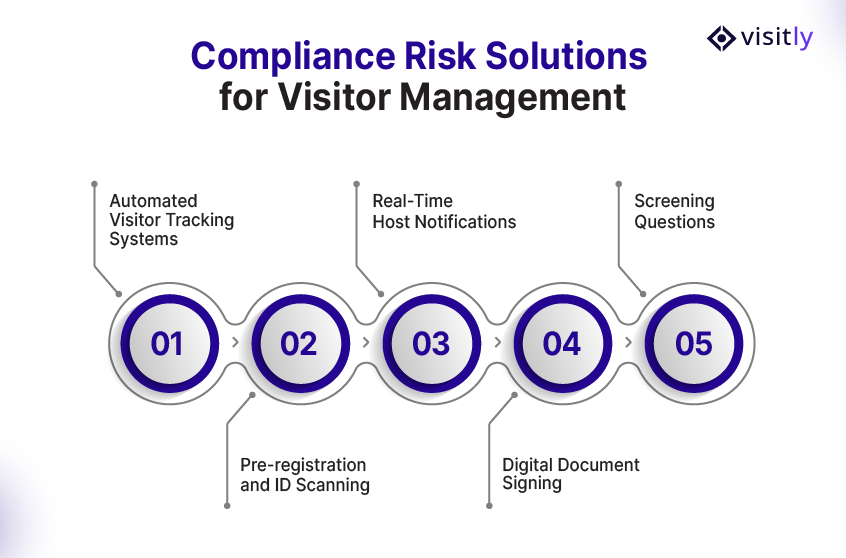
The key compliance risk solutions or strategies for visitor management include the following:
- Automated Visitor Tracking Systems
- Pre-registration and ID Scanning
- Real-Time Host Notifications
- Digital Document Signing
- Screening Questions
With the increasing complexity of regulatory standards and the need to ensure secure workplace environments, organizations must take a proactive approach to mitigate compliance risks in their reception management software.
Below, we explore the key compliance risk solutions every organization should consider.
1. Automated Visitor Tracking Systems
Manual check-ins are prone to errors and can compromise compliance. Automated systems like Visitly streamline the process by providing real-time tracking, accurate logs, and a secure audit trail.
- Provides real-time updates on visitor movements.
- Automatically logs entry and exit times for audit compliance.
- Reduces human error and increases efficiency.
2. Pre-registration and ID Scanning
Visitor re-registration and ID scanning ensure visitors are properly vetted before entering the premises, minimizing the risk of unauthorized access.
- Verifies visitor identity before arrival.
- Ensures compliance with data privacy regulations.
- Speeds up check-ins, reducing bottlenecks and errors.
3. Real-Time Host Notifications
Real-time notifications alert hosts when visitors arrive, enabling immediate verification and ensuring compliance with access controls.
- Instant alerts improve access monitoring.
- Enhances workplace safety by notifying hosts of visitors in restricted areas.
- Allows quick action in case of security breaches.
4. Digital Document Signing
Digital signatures ensure that all necessary agreements are signed, reducing compliance risks and maintaining legal records without physical paperwork.
- Ensures legal compliance with required visitor forms.
- Speeds up the check-in process.
- Keeps digital records for easy access during audits.
5. Screening Questions
Pre-set screening questions help verify visitor backgrounds and purpose, ensuring that only authorized individuals enter the premises.
- Flags high-risk visitors before they arrive.
- Ensures compliance with safety regulations.
- Helps reduce unauthorized access to restricted areas.
What Compliance Risk Management Guidelines Should Businesses Follow?
Some of the compliance risk management guidelines that businesses should follow are:
- Implementing a Clear Visitor Management Policy
- Regular Audits of Visitor Data
- Staff Training and Awareness Programs
- Incident Response Plan
- Vendor Compliance
To ensure compliance and avoid potential risks, businesses must implement clear guidelines to manage visitor management systems effectively. By following structured compliance practices, organizations can mitigate hidden compliance risks and create a secure, regulated environment.
Below are key guidelines every business should adopt to address compliance risks and streamline visitor management software.
1. Implementing a Clear Visitor Management Policy
One of the most effective ways to mitigate compliance risks is by having a clear visitor management policy. This policy should outline the entire visitor journey, from the moment they schedule their visit to their exit.
Key actions to take include:
- Define the process for the visitor registration system and entry.
- Establish protocols for verifying and documenting visitor identity.
- Set clear guidelines for handling visitor data in accordance with privacy laws.
- Ensure all visitors are briefed on safety and compliance procedures upon arrival.
2. Regular Audits of Visitor Data
Compliance risk management cannot be a one-time task. Regular audits of visitor data are essential to ensure your visitor management app complies with data security laws and regulatory standards. Auditing helps identify potential weaknesses in the system and ensures that all visitor records are accurate, up-to-date, and accessible for compliance purposes.
Why audits matter:
- Ensure proper data retention and deletion policies are followed.
- Maintain accurate records for auditing and inspection purposes.
- Ensure compliance with GDPR, CCPA, and industry-specific regulations.
- Identify potential data breaches and proactively address them.
3. Staff Training and Awareness Programs
Having a compliant, touchless visitor management system is not enough; employees must be trained to use it properly and understand the compliance risks associated with visitor management.
Regular staff training programs should cover various compliance issues, including data privacy, workplace safety, and physical access control protocols.
Training should focus on:
- Proper visitor check-in procedures.
- Recognizing the importance of visitor background checks.
- Adhering to privacy laws when handling sensitive visitor data.
- Using the system to manage real-time notifications and track visitor access.
4. Incident Response Plan
Even with a solid compliance framework in place, incidents can occur. That’s why having an incident response plan is crucial for addressing compliance violations, security breaches, or safety emergencies. The plan should outline the steps to take in the event of a visitor-related incident and ensure that all employees know how to act in such situations.
Key elements of an incident response plan include:
- Immediate steps for securing sensitive areas and data.
- Clear communication channels with security and compliance teams.
- Procedures for reporting and documenting the incident.
- Post-incident audits and investigations to prevent future occurrences.
5. Vendor Compliance
In many cases, businesses work with third-party vendors to help manage their visitor systems. However, even if you trust a vendor to handle a portion of your guest management system, your organization remains responsible for ensuring that the vendor complies with relevant regulations.
To reduce the risk of non-compliance through third parties, businesses should:
- Perform thorough due diligence on vendors before hiring them.
- Review the vendor’s compliance history and certifications (e.g., SOC 2, ISO 27001).
- Ensure that the vendor’s visitor management practices align with your organization’s compliance standards.
- Regularly assess the vendor’s ongoing compliance with contracts and regulatory requirements.
Closing Thoughts
Hidden compliance risks in visitor management often go unnoticed until a security issue, audit failure, or data breach occurs. Many organizations still rely on manual check-ins or fragmented systems, exposing them to regulatory and compliance risks, data privacy issues, and workplace safety gaps.
The reality is simple: modern businesses need structured compliance and risk management practices, along with automated tools, to stay protected.
Platforms like Visitly help organizations replace outdated processes with a secure, automated visitor management system that supports compliance, security, and operational efficiency.
Ready to streamline visitor management and reduce compliance risks?
Book a demo with Visitly today and see how secure, automated visitor check-ins can protect your workplace.
FAQs
1. What is a visitor management system compliance risk?
A visitor management system compliance risk occurs when businesses fail to properly secure and track visitors’ data or manage access. It involves non-compliance with regulations such as GDPR, CCPA, and HIPAA, which mandate that visitor information be stored securely and confidentially. Without secure systems, organizations face legal penalties, data breaches, and security breaches.
2. How do digital visitor management systems improve compliance?
A digital visitor management system improves compliance by automating data collection, securely storing visitor information, and ensuring adherence to regulatory standards such as GDPR, HIPAA, and OSHA. It reduces human error, improves real-time tracking, and streamlines the audit process, helping businesses maintain compliance with data privacy laws and workplace safety regulations.
3. Why is manual visitor tracking a compliance risk?
Manual visitor tracking poses a compliance risk because it relies on paper logs or outdated spreadsheets, making it prone to human error, data inaccuracies, and unauthorized access. These systems fail to meet regulatory compliance standards, such as GDPR and CCPA, exposing organizations to potential fines and legal challenges arising from mismanaged visitor data.
4. What compliance laws do visitor systems help businesses comply with?
Visitor management systems help businesses comply with privacy laws such as the GDPR (General Data Protection Regulation) and the CCPA (California Consumer Privacy Act), ensuring the proper handling of personal data. They also support workplace safety regulations, such as OSHA, by tracking who is on-site and ensuring that all safety protocols are followed for visitors entering restricted areas.
5. Can a visitor management system prevent unauthorized access to secure areas?
Yes, a visitor management system can prevent unauthorized access by integrating access control features. This includes real-time identity verification, digital badges, visitor screening questions, and links to security systems. These systems ensure compliance with security regulations by restricting access to sensitive or restricted areas and tracking all visitors, preventing breaches, and maintaining workplace safety.