


Quick Summary:
SCIM 2.0 provisioning automates identity updates across enterprise systems, improving visitor access accuracy, reducing security risks, supporting compliance, and creating scalable workplace security workflows.
When an employee changes roles or leaves an organization, the identity provider may update that information immediately.
However, disconnected workplace systems across other locations may continue using outdated access details. This identity gap creates security risks for enterprises managing multiple offices, identity providers, and visitor management systems.
As visitor access workflows increasingly depend on verified employee and host identities, SCIM 2.0 provisioning supports stronger access governance, improves security and compliance, and enables more reliable visitor management processes.
Before exploring its role in secure visitor access, let’s understand what SCIM 2.0 is and how it works.
What Is SCIM Provisioning?
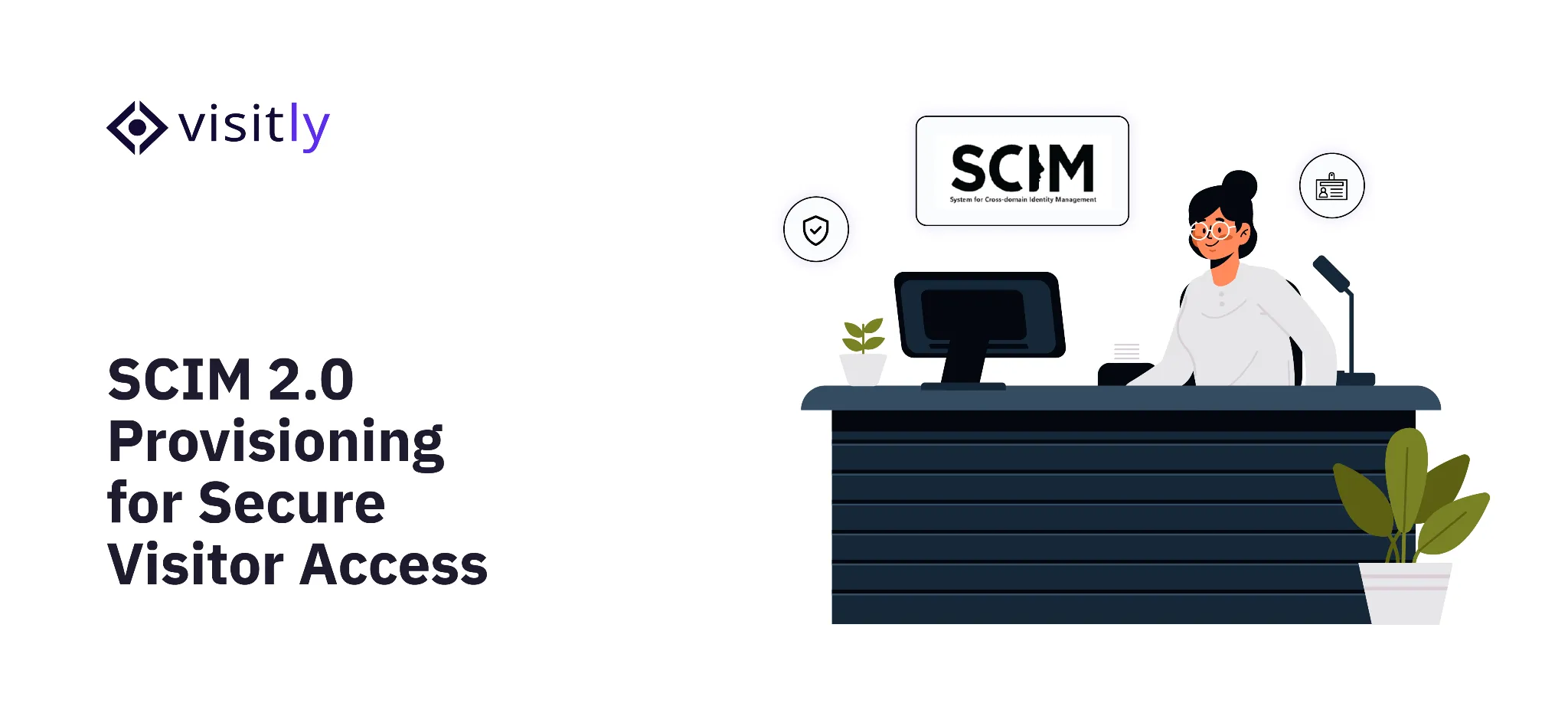
SCIM stands for System for Cross-domain Identity Management. It's an open standard that defines a common schema and REST API for exchanging user and group data between an identity provider and any connected application or system.
Instead of each system requiring its own custom integration, SCIM gives every connected system the same predictable format for identity data. That standardization is what makes automated provisioning possible at enterprise scale.
Why SCIM 2.0 Replaced SCIM 1.1
SCIM 2.0 improved upon SCIM 1.1 by offering better support for modern application environments and API-based identity management.
Key improvements include the following:
- JSON-based data exchange: Makes identity data easier for modern applications to process.
- Better PATCH support: Allows specific user attributes to be updated without replacing complete records.
- Improved REST API compatibility: Enables smoother integration between identity providers and applications.
What Is SCIM 2.0 and Why Does It Matter for Enterprise Security?
SCIM 2.0 is a standardized identity provisioning protocol that automates the lifecycle management of user accounts between an identity provider (IdP) and connected applications. It helps enterprises securely create, update, and remove user identities without depending on manual account management processes.
For enterprise security environments, SCIM 2.0 improves identity accuracy by ensuring connected systems receive consistent user information when changes occur. This reduces risks caused by outdated accounts, delayed access updates, and inconsistent identity records across multiple workplace applications.
Provisioning vs. the SCIM Standard Itself
The terms SCIM and provisioning are often used together, but they refer to different things.
- SCIM 2.0: The standard or protocol that defines how identity information is exchanged between systems.
- Provisioning: The automated process of creating, updating, and removing user accounts using that standard.
For example, when an employee joins an organization, SCIM provides the communication framework, while provisioning automatically creates the required account in connected applications.
Traditional Identity Management vs. SCIM 2.0 Provisioning
1. Traditional Identity Management:
- Manual user creation across applications
- Delayed access updates after role changes
- Higher chances of inconsistent user records
- Manual offboarding processes
2. SCIM 2.0 Provisioning
- Automated user provisioning from a central identity provider
- Faster synchronization of identity updates
- Consistent identity data across connected systems
- Automated user deactivation when access is no longer required
How Does SCIM Provisioning Work?
SCIM provisioning works by creating a standardized connection between an identity provider (IdP) and connected applications. When an administrator makes a user change in the IdP, SCIM automatically transfers that identity update to the connected system. This keeps user accounts synchronized without manual intervention.
The SCIM Client–Server Model
SCIM follows a client-server model where the identity provider acts as the SCIM client and the connected application acts as the service provider.
- The SCIM client (IdP) manages user identities and sends provisioning requests.
- The service provider receives those requests and applies the required account changes.
- Identity data is exchanged through standardized SCIM APIs using structured JSON data.
This model allows enterprises to manage user identities centrally while keeping connected systems updated automatically.
Step-by-Step Provisioning Flow
The SCIM provisioning process typically follows these steps:
1. Admin assigns or removes users in the identity provider
- An administrator updates user access through platforms such as Okta or Microsoft Entra ID.
- Changes may include adding a new user, updating roles, or removing access.
2. SCIM sends an API request to the connected system
- The identity provider sends REST API requests using SCIM protocols.
- Common operations include:
- POST — create a new user.
- PUT/PATCH — update user information.
- DELETE — deactivate or remove a user.
3. The connected system updates the user account
- The application receives the request and creates, updates, or deactivates the account based on the identity change.
- This keeps user information synchronized across systems.
4. Identity changes are recorded for tracking and audits
- Provisioning activities can be logged to support access reviews, troubleshooting, and compliance requirements.
How Does SCIM 2.0 Provisioning Improve Secure Visitor Access?
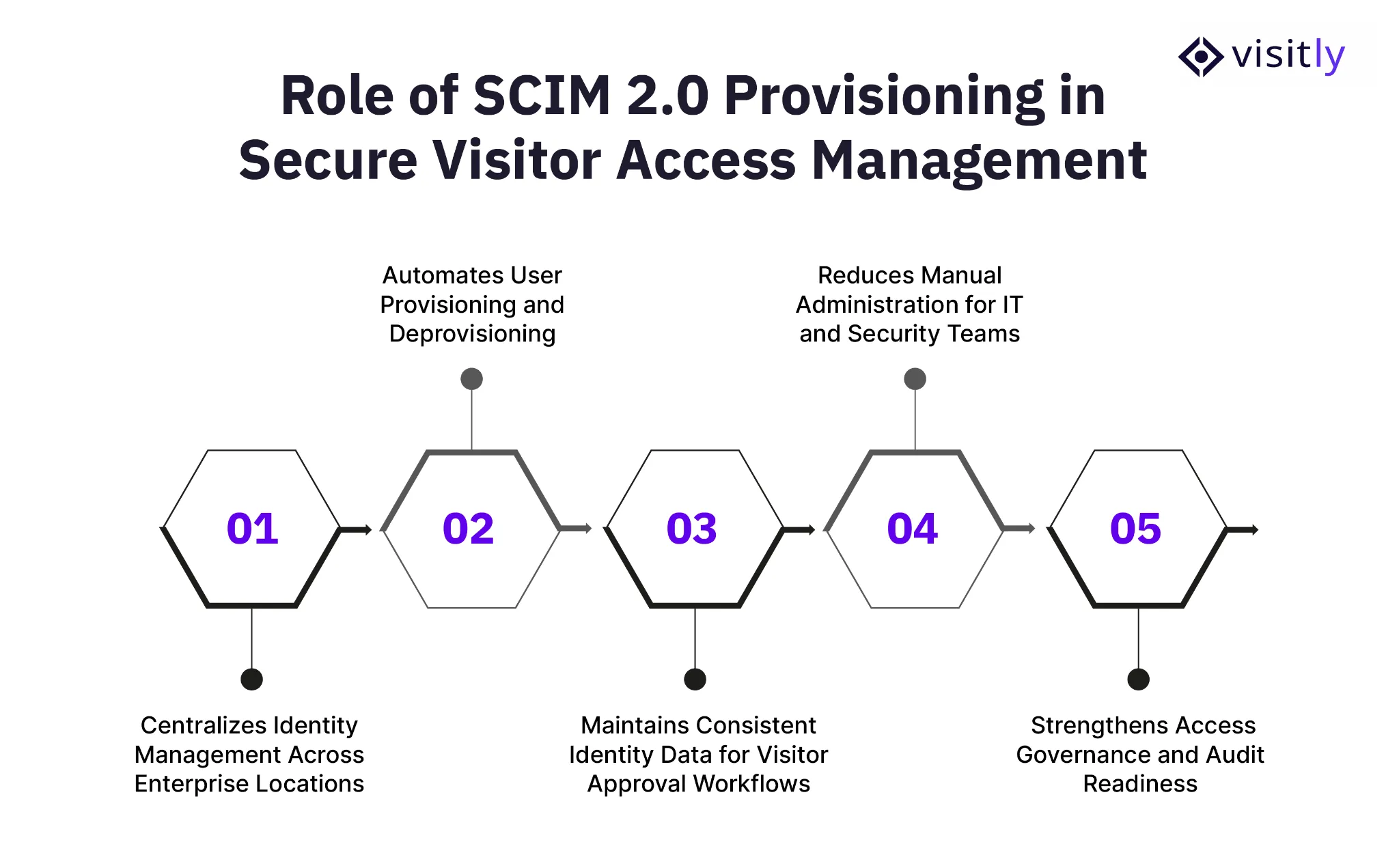
SCIM 2.0 Provisioning improves secure visitor access through the following ways:
1. Centralizes Identity Management Across Enterprise Locations
2. Automates User Provisioning and Deprovisioning
3. Maintains Consistent Identity Data for Visitor Approval Workflows
4. Reduces Manual Administration for IT and Security Teams
5. Strengthens Access Governance and Audit Readiness
Visitor access decisions depend on accurate employee identity information. When a visitor requests access, the system needs to know whether the host is an active employee, whether their details are current, and where notifications should be sent.
SCIM 2.0 provisioning helps maintain this accuracy by automatically syncing identity changes from an organization’s identity provider to connected workplace systems.
For enterprises managing multiple locations, this removes the dependency on manual updates and helps visitor management software workflows operate with current employee data, consistent identity records, and better access governance.
1. Centralizes Identity Management Across Enterprise Locations
Multi-location enterprises often have employees, contractors, and workplace systems spread across different offices. Without centralized identity synchronization, one location may have updated employee information while another still uses outdated records.
SCIM 2.0 provisioning creates a consistent identity source by syncing user information from the organization’s identity provider across connected systems.
How it improves visitor access:
- Keeps employee and host information consistent across locations.
- Ensures visitor requests are linked to the correct active employee.
- Reduces location-specific identity updates managed manually by teams.
- Supports consistent visitor approval workflows as new sites are added.
2. Automates User Provisioning and Deprovisioning
Employee lifecycle changes directly impact visitor access workflows. A new employee may need to become an approved host, while a former employee should no longer receive visitor requests or access-related notifications.
SCIM 2.0 automates these identity changes by syncing updates from the identity provider to connected systems.
How it improves visitor access:
- Creates user profiles automatically when employees join.
- Updates employee details when roles, departments, or locations change.
- Removes inactive users when employment ends.
- Reduces security risks caused by outdated employee records.
3. Maintains Accurate Identity Data for Visitor Approval Workflows
Office visitor management systems rely on employee data to route approvals, send host notifications, and confirm who visitors are meeting. Incorrect identity information can result in failed approvals, delayed check-ins, or notifications reaching the wrong person.
SCIM 2.0 keeps connected systems aligned with the latest identity information from the source directory.
How it improves visitor access:
- Ensures visitors can select and contact the correct host.
- Reduces visitor check-in process issues caused by outdated employee details.
- Improves the accuracy of employee directories used during the visitor registration system.
- Creates smoother approval workflows across locations.
4. Reduces Manual Identity Administration for IT and Security Teams
Managing employee identities manually across multiple workplace systems requires constant coordination between IT, security, and administrative teams. Every manual update creates a possibility of missing information or inconsistent records.
SCIM 2.0 provisioning reduces repetitive identity management tasks by automating synchronization between systems.
How it improves visitor access:
- Eliminates manual user creation and updates across platforms.
- Reduces errors from spreadsheets or disconnected databases.
- Allows IT teams to manage identity changes from a central source.
- Frees security teams to focus on access policies and compliance risk management.
5. Strengthens Access Governance and Audit Readiness
Enterprises need clear records of who had access, when identity changes occurred, and how those changes affected workplace systems. SCIM 2.0 helps maintain a reliable identity foundation that supports security reviews and compliance log requirements.
How it improves visitor access:
- Maintains accurate records of identity changes over time.
- Improves visibility into user provisioning and deprovisioning activities.
- Supports access reviews with consistent identity information.
- Helps organizations demonstrate stronger security visitor management, and compliance practices.
SCIM 2.0 does not replace automated visitor management systems. Instead, it strengthens the identity layer behind them, ensuring visitor workflows are built on accurate employee data and reliable access information.
For enterprises managing multiple locations, this connection between identity management and visitor access creates a more secure and scalable integrated workplace management software.
What Should Enterprises Consider Before Implementing SCIM 2.0 Provisioning?
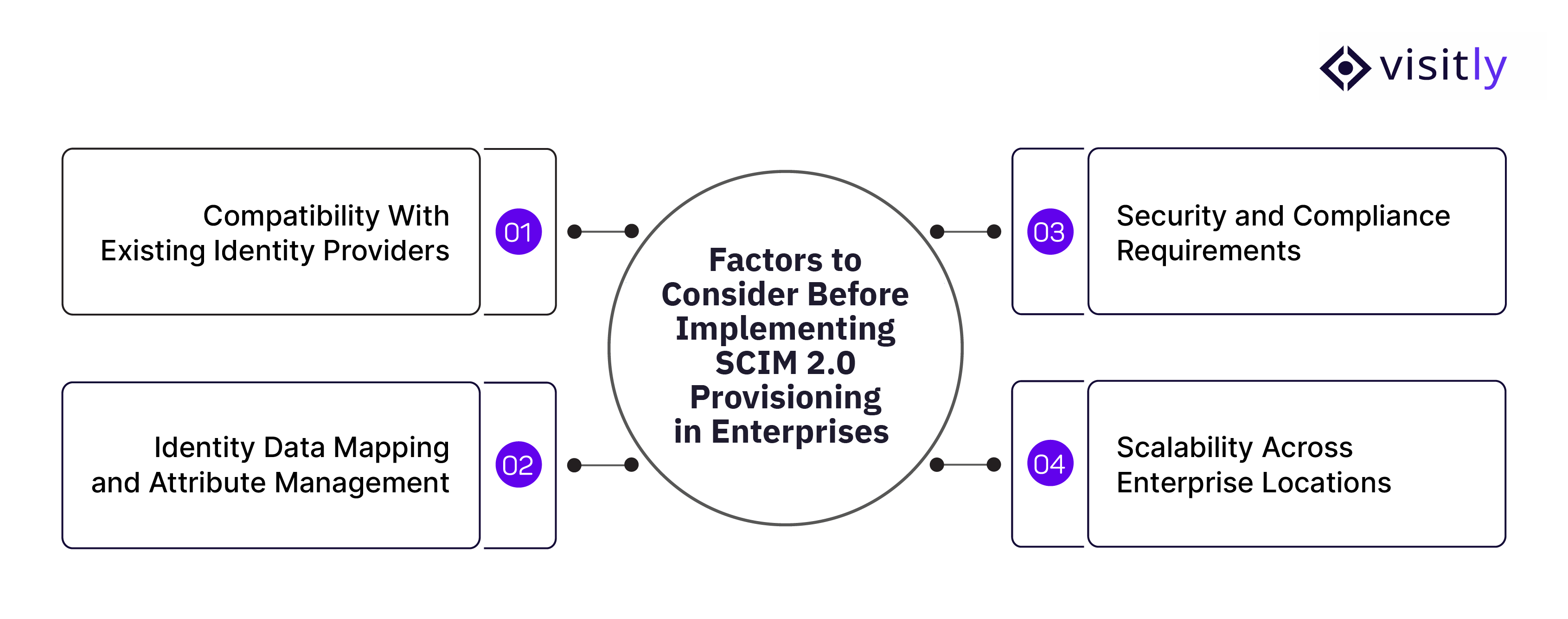
Enterprises consider these factors before implementing SCIM 2.0 Provisioning.
- Compatibility With Existing Identity Providers
- Identity Data Mapping and Attribute Management
- Security and Compliance Requirements
- Scalability Across Enterprise Locations
Implementing SCIM 2.0 provisioning requires more than connecting two systems. Enterprises need to evaluate whether their identity infrastructure, user data, workplace security policies, and operational requirements are ready for automated identity synchronization.
A well-planned implementation ensures that employee identities remain accurate and visitor access workflows receive reliable information.
1. Compatibility With Existing Identity Providers
SCIM 2.0 provisioning works by connecting an organization’s identity provider with supported applications. Before implementation, enterprises should confirm that their existing identity platforms can securely exchange identity information through SCIM.
Key factors to evaluate:
- Support for identity providers such as Okta and Microsoft Entra ID.
- Availability of SCIM connectors for connected applications.
- API compatibility between the identity provider and target systems.
- Authentication and security requirements for SCIM connections.
2. Identity Data Mapping and Attribute Management
SCIM synchronization depends on accurate user attributes being shared between systems. Enterprises need to define which identity details should be transferred and how those attributes will be used across connected platforms.
Key factors to evaluate:
- Which user attributes need synchronization, such as name, email, role, department, or location?
- How should employee roles and permissions map between systems?
- Whether identity information remains consistent across all locations?
- How will changes to user attributes affect connected workflows?
3. Security and Compliance Requirements
Identity synchronization directly impacts access governance. Enterprises should ensure SCIM implementation supports security policies, protects identity data, and provides visibility into user lifecycle changes.
Key factors to evaluate:
- Data protection practices for identity information.
- Access governance policies and permission controls.
- Visibility into provisioning and deprovisioning activities.
- Tracking of identity changes for security reviews and audits.
4. Scalability Across Enterprise Locations
SCIM 2.0 becomes increasingly valuable as organizations expand across offices, campuses, and regions. Enterprises should ensure the implementation can support growing user volumes without creating inconsistent identity workflows.
Key factors to evaluate:
- Support for multiple offices and facilities.
- Ability to manage increasing numbers of users and identity changes.
- Consistent provisioning workflows across locations.
- Maintaining accurate employee information as the organization grows.
How Does Visitly Support Secure Visitor Access Management Across Enterprise Locations?
SCIM 2.0 provisioning helps enterprises maintain accurate identity information, but secure visitor access also depends on how that information is used during daily workplace operations.
Visitly helps organizations turn reliable employee and host data into secure visitor workflows with digital check-ins, real-time notifications, and centralized visitor visibility across locations.
1. Maintain Secure Visitor Workflows With Accurate Host Information
Visitor approval depends on knowing the right person to contact and ensuring host details are current. Visitly helps organizations maintain smoother visitor workflows by connecting digital sign-in and sign-out systems with accurate employee and host information.
Key capabilities include:
- Real-time host emergency notifications when visitors arrive, helping employees respond quickly.
- Updated host information to reduce errors during the visitors log monitoring system and approval.
- Faster visitor approvals by ensuring requests reach the correct employee.
- Better coordination between visitors, employees, and front desk teams.
2. Improve Workplace Security With Digital Visitor Records
Enterprises need more than a record of who checked in. They need reliable visitor information that can support security reviews, incident investigations, and compliance requirements.
Visitly helps organizations maintain structured visitor records through touchless visitor management systems.
Key capabilities include:
- Visitor history tracking to review previous visits and access activity.
- iPad visitor sign-in records with accurate visitor entry and exit details.
- Custom screening questions to collect the required visitor information before access.
- Audit-ready information that helps security teams review visitor activity when needed.
3. Simplify Visitor Access Across Multiple Locations
Managing visitor access across multiple offices becomes challenging when each location follows different processes. Visitly helps create consistent, integrated visitor management system workflows while maintaining visibility across all facilities.
Key capabilities include:
- Centralized visitor management access control to monitor visitor activity across locations.
- Consistent workflows for visitors, employees, and security teams.
- Scalable visitor operations that support growing offices and increasing visitor volumes.
- Simplified administration without relying on disconnected manual processes.
Closing Thoughts
Key Takeaways
SCIM 2.0 provisioning helps enterprises maintain accurate identity information by automating user creation, updates, and deactivation across connected systems. This reduces manual identity management challenges, improves access accuracy, and ensures visitor workflows are based on reliable employee and host data.
For organizations managing multiple locations, secure visitor access requires more than identity synchronization. It requires a visitor management system that can deliver consistent check-in processes, real-time visibility, digital records, and compliance support across every facility.
Visitly helps enterprises create secure and scalable visitor access workflows with digital check-ins, host notifications, visitor history, screening questions, and centralized visitor management. With Visitly, organizations can strengthen workplace security while making visitor experiences faster and easier.
Ready to improve visitor security across your locations? Book a consultation with Visitly today and see how you can simplify access management, improve visibility, and create a safer workplace.
FAQs
1. What is SCIM 2.0 provisioning?
SCIM 2.0 provisioning is a standardized method for automatically creating, updating, and removing user identities between an identity provider and connected applications. It helps enterprises maintain accurate user data without manual account management.
2. How does SCIM provisioning work?
SCIM provisioning works by allowing an identity provider such as Okta or Microsoft Entra ID to send user updates to connected applications through SCIM APIs. These updates automatically create, modify, or deactivate user accounts.
3. Why is SCIM 2.0 important for enterprise security?
SCIM 2.0 improves enterprise security by reducing manual identity management errors, ensuring timely access updates, and helping organizations maintain consistent user information across multiple systems and locations.
4. How does SCIM 2.0 provisioning improve visitor management?
SCIM 2.0 provisioning improves visitor management by keeping employee and host information accurate across connected systems. This helps ensure visitor approvals, notifications, and access workflows use updated identity information.
5. What is the difference between SCIM and SSO?
SSO allows users to access multiple applications with one login, while SCIM manages the lifecycle of user identities by automatically creating, updating, and removing accounts across connected systems.