



According to reports, defense contractors have faced penalties or sanctions for noncompliance with ITAR regulations. Yet, despite the high stakes, many businesses remain unsure about the ITAR compliance checklist they need to stay in compliance with export control laws.
If your business handles defense products or technology, ITAR compliance is essential.
Many companies mistakenly believe a checklist alone suffices.
In reality, navigating ITAR compliance requires more than just ticking off boxes—it involves understanding complex security and compliance procedures to avoid costly fines, legal troubles, and lost contracts.
This blog explores why ITAR compliance matters, what to include in your checklist, and how to ensure compliance.
What is ITAR Compliance, and Why Does it Matter?
What is ITAR Compliance?
ITAR (International Traffic in Arms Regulations) is a set of US government regulations that control the export and import of defense-related articles and services.
Enforced by the U.S. Department of State, ITAR ensures that military and defense technologies, services, and products are not transferred to unauthorized foreign parties that could jeopardize national security. These regulations apply to all entities, whether based in the US or abroad, that deal with sensitive military or defense-related materials.
Why ITAR Compliance Matters?
- National Security and Trade Control:
ITAR isn’t just a set of rules—it’s a critical framework for safeguarding U.S. national security. By controlling the export of sensitive defense technologies, ITAR ensures they are not used by adversaries or unauthorized individuals.
In the wrong hands, defense-related items could be weaponized or misused, posing significant risks to global stability.
- Global Impact:
ITAR affects businesses worldwide. If you produce, export, or distribute defense-related materials and services, you must follow ITAR regulations, no matter your location.
Breaking these rules can result in severe penalties, including fines and the loss of contracts with the U.S. government and international partners.
ITAR Compliance Checklist: What Should You Include?
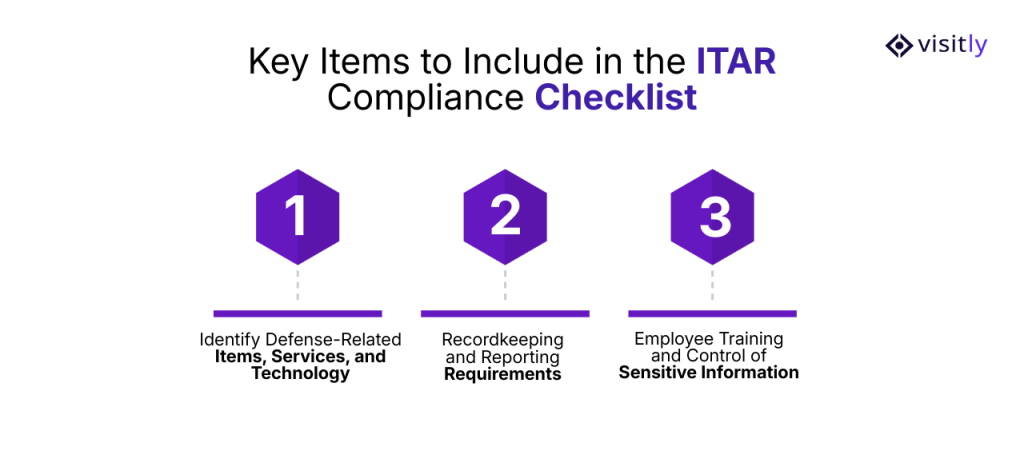
Key items to include in the ITAR compliance checklist to ensure your company remains compliant are:
1. Identify Defense-Related Items, Services, and Technology
2. Recordkeeping and Reporting Requirements
3. Employee Training and Control of Sensitive Information
Navigating ITAR compliance can be overwhelming, especially for companies handling sensitive defense-related materials. To simplify the process, a well-structured ITAR compliance checklist can be a valuable tool.
Below is a comprehensive list of key items you should include to ensure your company remains compliant with ITAR regulations.
1. Identify Defense-Related Items, Services, and Technology
- Defense Articles and Services: First, determine if your products, services, or technology are subject to ITAR. This covers military-grade equipment, weapons, and defense-related technical data.
- U.S. Munitions List (USML): ITAR items must be listed on the USML, which categorizes them into aerospace, electronics, and military materials.
2. Recordkeeping and Reporting Requirements
- Proper Documentation: ITAR requires companies to keep detailed records of all defense articles, services, technology transfers, exports, imports, and transactions with foreign nationals.
- Reporting to the DDTC: The DDTC requires regular reports on ITAR-controlled transactions, especially those with foreign entities.
- Export Control Compliance: Document and report all exports of controlled items and services, and maintain accurate end-user logs.
3. Employee Training and Control of Sensitive Information
- Compliance Training: All employees dealing with defense-related materials or technology should undergo regular ITAR compliance training. This ensures they understand the regulations and know how to handle sensitive information safely and legally.
- Access Control and Information Security: Limit access to ITAR-controlled information to authorized personnel via physical controls, secure storage, and encryption.
- Non-Disclosure Agreements (NDAs): To protect sensitive information, ensure that all employees and contractors sign NDAs that specify the handling of ITAR-controlled materials and data.
What is Covered by an ITAR Compliance Checklist?
An ITAR compliance checklist serves as a roadmap, ensuring your company remains compliant with all applicable regulations.
But what specific areas should your ITAR compliance checklist address to ensure comprehensive coverage?
Let’s break down the key components:
1. Key Documents for ITAR Compliance
- ITAR Registration: The first and most crucial step is registering your company with the U.S. Department of State’s Directorate of Defense Trade Controls (DDTC). Without this registration, your company cannot legally export defense-related materials, even if it meets all other compliance requirements.
- Control Plans: These plans detail the procedures your company uses to control access to sensitive materials. This includes tracking the flow of restricted items and ensuring they are sent only to authorized individuals or organizations. Your control plans must include clear guidelines on handling classified information, reporting procedures, and security measures to prevent unauthorized access.
2. Employee Training Requirements
- Training Programs: One of the most critical aspects of ITAR compliance is ensuring that all employees who deal with sensitive materials or data are properly trained. ITAR mandates that employees receive training on compliance procedures, data security, and the handling of classified information.
- Ongoing Education: Compliance isn’t a one-off task. Your team must stay up to date on regulatory changes and receive regular refresher training. This includes training on new technologies, export procedures, and updated security measures.
3. Export Restrictions and License Requirements
- Export Licensing: ITAR imposes strict restrictions on the export of controlled goods, services, and technologies. Some items may require a specific export license for international transfer. A good ITAR checklist will help you identify these items and determine when a license is necessary.
- License Requirements: There are several types of ITAR licenses, including temporary export licenses, re-export licenses, and specific licenses for certain items. Your checklist should include the requirements for applying for these licenses, including ensuring that the correct documentation and application forms are submitted to the DDTC.
Key ITAR Compliance Procedures for Companies Handling Sensitive Data
Companies dealing with export-controlled items are not just responsible for securing physical products—they must also secure the data associated with them.
Below, we’ll outline key ITAR compliance procedures to help you navigate data protection requirements effectively.
1. Managing Data Security in Accordance with ITAR
ITAR compliance requires businesses to implement strict security measures to protect sensitive data, particularly when dealing with military-grade or defense-related products and services.
The key principle here is data access control—ensuring that only authorized personnel can access ITAR-controlled information.
This requires:
- Strict Access Control Policies: Define who has access to specific types of data and materials. Ensure that only those with the appropriate security clearance or authority can access export-controlled data.
- Regular Audits and Monitoring: Conduct periodic audits to track data access and identify any unauthorized attempts to access sensitive data. Continuous monitoring helps detect potential security breaches before they escalate.
2. The Role of Encryption and Secure Storage
To maintain ITAR compliance and protect sensitive data, businesses must implement robust data encryption and secure storage practices.
ITAR stipulates that technical data (such as blueprints, specifications, and design information related to defense materials) must be encrypted during transmission and storage.
Here’s how to ensure compliance:
- Data Encryption: Encrypt all ITAR-controlled data when in transit (e.g., when sending documents or files over email or via a network) and at rest (when stored on servers, databases, or cloud systems). This ensures that even if the data is intercepted, it remains unreadable without the proper decryption key.
- Secure Storage: Use secure storage methods for classified data. This includes utilizing encrypted drives, cloud services with ITAR-compliant certifications, and systems that support real-time monitoring of data access and usage.
3. ITAR Compliance for International Data Transfers
As businesses expand globally and engage with international partners, data transfer becomes a critical aspect of ITAR compliance.
Any ITAR-controlled data transferred outside the U.S. must be done so in strict accordance with ITAR’s regulations. This is particularly important for companies working in global defense supply chains, as non-compliant data transfers can expose them to significant penalties.
Here’s how to manage this process:
- Know Your Customer (KYC) Procedures: Before sharing any ITAR-controlled data with international partners, companies must vet those partners to ensure they are ITAR-compliant and legally authorized to receive sensitive information. This includes performing due diligence on foreign companies, government entities, and subcontractors.
- Export Licenses: For international data transfers involving ITAR-controlled products or technology, companies must obtain a valid export license from the U.S. government. Export licenses are typically issued for specific destinations, end users, and end uses.
- Data Localization and Restrictions: For certain sensitive data, you may need to localize storage to specific regions to comply with ITAR restrictions on data exports. ITAR compliance procedures must account for these restrictions to ensure data is not inadvertently shared with unauthorized parties.
ITAR Compliance Checklist for Data Protection
Let’s dive into how you can safeguard your data while staying compliant with ITAR regulations.
Steps to Implement Data Protection Measures for ITAR
ITAR compliance requires that businesses handle sensitive defense-related data with the utmost care. Here’s how to implement effective data protection measures:
- Encryption: Ensure all ITAR-controlled data is encrypted, both during storage and transmission. This prevents unauthorized access, even if the data is intercepted.
- Access Control: Set up strict user authentication protocols. Only authorized personnel should have access to sensitive data. Use multi-factor authentication (MFA) for higher security.
- Data Minimization: Limit the sharing and access to only the necessary data. Reducing the number of people who can access ITAR-sensitive information minimizes the risk of accidental or deliberate breaches.
ITAR Compliance Guide: How to Create an Effective Compliance Program
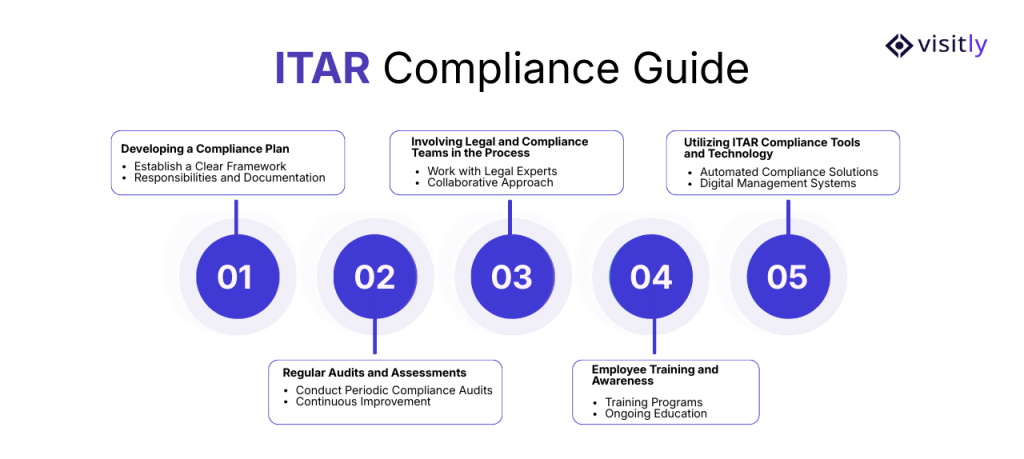
To create an effective compliance program, follow the below ITAR compliance guide steps:
1. Developing a Compliance Plan
- Establish a Clear Framework
- Responsibilities and Documentation
2. Regular Audits and Assessments
- Conduct Periodic Compliance Audits
- Continuous Improvement
3. Involving Legal and Compliance Teams in the Process
- Work with Legal Experts:
- Collaborative Approach
4. Employee Training and Awareness
- Training Programs
- Ongoing Education
5. Utilizing ITAR Compliance Tools and Technology
- Automated Compliance Solutions
- Digital Management Systems
Creating an effective ITAR compliance program is essential for businesses involved in the defense industry. Whether you’re manufacturing, distributing, or handling sensitive military-related materials, it’s crucial to align with the ITAR compliance checklist to avoid severe legal consequences.
Below is a guide to help you build a robust ITAR compliance program that ensures your company remains compliant and protected from regulatory violations.
1. Developing a Compliance Plan
- Establish a Clear Framework: Start by creating a compliance plan that outlines your company’s responsibilities and the steps to adhere to ITAR. This includes defining who in your organization will oversee compliance, how your team will handle export-controlled items, and how often audits will take place.
- Responsibilities and Documentation: Specify who is responsible for compliance across departments, and ensure that all ITAR-controlled materials are meticulously documented. Implement a system for tracking the export, handling, and storage of sensitive items.
2. Regular Audits and Assessments
- Conduct Periodic Compliance Audits: Regular internal and external audits are essential to ensure that your business remains compliant with ITAR. These audits should assess your entire compliance program, identify gaps, and verify that all processes are being followed correctly.
- Continuous Improvement: Audits also allow your team to proactively identify areas for improvement, ensuring your ITAR compliance program evolves with regulatory changes and industry best practices.
3. Involving Legal and Compliance Teams in the Process
- Work with Legal Experts: ITAR compliance requires a deep understanding of legal frameworks, making it essential to involve legal teams who specialize in export control laws. They can help you navigate the complexities of ITAR and ensure compliance with all regulatory requirements.
- Collaborative Approach: Your compliance team should work closely with legal advisors to ensure that all compliance activities, such as obtaining licenses or conducting due diligence on foreign entities, are done correctly.
4. Employee Training and Awareness
- Training Programs: Ensure all employees who handle export-controlled materials or sensitive data are thoroughly trained in ITAR compliance. This includes regular training sessions to familiarize staff with the latest ITAR updates, security protocols, and data protection practices.
- Ongoing Education: Compliance is not a one-time task—your team should receive ongoing training to stay up to date on new regulations and security threats.
5. Utilizing ITAR Compliance Tools and Technology
- Automated Compliance Solutions: Leverage technology to streamline ITAR compliance processes. Software tools designed for compliance can automate recordkeeping, track exports, generate compliance reports, and alert you to potential violations.
- Digital Management Systems: Implement secure digital systems for managing compliance documentation, ensuring data is stored safely and can be accessed for audits and inspections.
What Happens If You Don’t Comply with ITAR Compliance Program Guidelines?
If you don’t comply with ITAR compliance program guidelines, the following consequences happen:
1. Fines, Export Restrictions, and Revocation of Business Licenses
2. Reputational Risk of Being Labeled as Non-Compliant
3. Criminal Charges and Imprisonment
4. Loss of Government Contracts
5. Increased Operational Costs and Legal Expenses
Failing to comply with ITAR compliance program guidelines can result in severe consequences, affecting your business’s financial health, reputation, and operations.
Here are some of the key penalties and risks associated with non-compliance:
1. Fines, Export Restrictions, and Revocation of Business Licenses
- Fines: Companies may face multi-million-dollar fines for even minor ITAR violations.
- Export Restrictions: Non-compliant businesses may be barred from exporting controlled items internationally.
- Revocation of Licenses: The U.S. government can revoke export licenses, halting international transactions.
2. Reputational Risk of Being Labeled as Non-Compliant
- Loss of Trust: Non-compliance can erode trust with clients, partners, and government agencies.
- Impact on Relationships: Being labeled non-compliant could lead to a loss of critical business relationships.
3. Criminal Charges and Imprisonment
- Legal Consequences: Serious violations can lead to criminal charges and prison sentences for individuals.
- Corporate Accountability: Companies may face criminal liability for willful violations, risking financial and operational stability.
4. Loss of Government Contracts
- Contract Eligibility: Non-compliance can disqualify businesses from bidding on U.S. government defense contracts.
- Decreased Competitiveness: Without government contracts, your company’s growth potential may be significantly reduced.
5. Increased Operational Costs and Legal Expenses
- Rectifying Violations: Companies must spend considerable resources correcting compliance issues and undergoing legal consultations.
- Ongoing Legal Fees: Legal defense and settlement costs can add up quickly during investigations.
Examples of ITAR Non-Compliance Consequences
To further understand the implications of ITAR non-compliance, let’s look at a few real-world examples where companies faced severe consequences for failing to follow ITAR regulations.
Case Study 1: The Boeing Case
In 2018, Boeing was fined $51 million for multiple violations of ITAR regulations. The company was found guilty of improperly transferring defense technology to foreign entities without the required licenses.
This violation stemmed from Boeing’s failure to properly assess the export status of certain items and services related to defense contracts. The fine, while significant, was only part of the overall cost. Boeing also faced reputational damage, and the case triggered a full review of their compliance procedures.
Case Study 2: The L-3 Communications Case
In 2016, according to US Department of State report, L-3 Communications, a defense contractor, was fined $13 million for violations related to the unauthorized export of sensitive military technology.
The company was found to have shipped controlled items to foreign governments and entities without the necessary licenses. The U.S. government found that L-3 failed to properly screen exports and lacked adequate compliance procedures, leading to these violations.
Should You Use an ITAR Compliance Checklist or Seek External Support?
When it comes to ITAR compliance, businesses must decide whether to handle the process in-house using a checklist or rely on external support from compliance experts or automated solutions. Both approaches have their merits, and the best choice depends on your company’s specific needs, resources, and risk tolerance.
Let’s explore the benefits of each option and how it help streamline your compliance process.
Benefits of Having an ITAR Compliance Checklist For Data Protection
- Clear, Structured Approach: An ITAR compliance checklist serves as a tangible guide to ensure all necessary steps are followed. It allows you to break down compliance requirements into manageable tasks and monitor progress.
- Cost-Effective: For smaller organizations or those with limited resources, using a checklist can be a cost-effective way to maintain compliance without hiring external experts. A well-organized checklist ensures you don’t miss critical requirements and helps prioritize tasks.
- Customizable: Your ITAR checklist can be tailored to your company’s needs, ensuring that every department follows the necessary compliance procedures, from handling export-controlled items to employee training.
When to Consider Outsourcing Compliance Efforts or Using Automated Compliance Solutions?
- Complexity and Scale: As your business grows or you handle numerous international transactions, ITAR compliance can become increasingly complex. Outsourcing compliance efforts to experts or using automated tools ensures that you don’t miss important regulations and minimizes human error.
- Expertise and Resources: If you lack in-house expertise or bandwidth to manage ITAR compliance effectively, it may be time to consult external compliance specialists. They can offer a deeper understanding of the latest regulatory changes, reducing the risks of penalties or violations.
- Automated Solutions: Many compliance tools now automate time-consuming tasks such as recordkeeping, auditing, and reporting. These tools ensure continuous compliance, not just during audits, and help reduce operational costs by streamlining processes.
How Visitly Can Assist with ITAR Compliance Through Streamlined Visitor and Contractor Management Solutions
Visitly helps businesses meet ITAR compliance requirements by securely and efficiently managing visitors and contractors.

Here’s how:
1. Customizable Visitor Check-in for Compliance
Tailor the visitor check-in process with ITAR-specific questions to ensure only authorized access to sensitive areas, which supports your ITAR program without extra complexity.
2. Real-Time Notifications for Compliance Alerts
Receive real-time emergency notifications for visitor and contractor arrivals, enabling quick compliance verification and minimizing the risk of unauthorized access.
3. Digital Document Signing and ID Scanning
Streamline document signing and ID scanning, ensuring all ITAR compliance documentation is properly completed, signed, and securely stored.
4. Contractor Management
Use Visitly’s pre-registration and contractor check-in to show the safety induction, collect signed documents and keep a record of who was on site in ITAR-controlled areas.
5. Reporting for Compliance Audits
Generate detailed reports for audits, ensuring ITAR compliance tracking and documentation of visitor and contractor activities for regulatory review.
Closing Thoughts
ITAR compliance is essential for businesses in the defense, aerospace, and technology sectors. Failing to comply can lead to severe penalties and risks, including loss of government contracts. An ITAR compliance checklist is crucial in ensuring all regulatory requirements are met, from data protection to employee training.
Stay ahead of evolving compliance regulations to avoid costly mistakes. Visitly helps streamline visitor and contractor management, supporting your ITAR program without added administrative burden.
Ready to simplify your ITAR compliance process?
Connect with Visitly and discover how we can help you streamline visitor and contractor management in support of your ITAR program.
Get Started Today!
FAQs
What should an ITAR compliance checklist include?
An ITAR compliance checklist should cover classification, registration, export authorization, access control, records and training. In practice: check your items against the US Munitions List, register with the State Department's Directorate of Defense Trade Controls (DDTC), get a license or confirm an exemption before any export, keep technical data away from foreign persons who lack authorization, keep records, and train staff.
What does it mean to be ITAR compliant?
Being ITAR compliant means your company follows the International Traffic in Arms Regulations (22 CFR Parts 120 to 130) in how it registers, exports and controls access to defense articles and technical data. There is no government-issued ITAR certification. Companies register with the Directorate of Defense Trade Controls and answer for their own compliance, so read any ITAR certified label as the vendor's own wording.
What is the difference between ITAR and EAR?
ITAR covers defense articles, defense services and related technical data on the US Munitions List, and the State Department administers it. The Export Administration Regulations (EAR) cover mainly commercial and dual-use items on the Commerce Control List, and the Commerce Department's Bureau of Industry and Security administers them. Which one applies to an item is a classification decision for your empowered official or counsel.
What does ITAR require for visitors and foreign nationals on site?
ITAR treats showing or releasing controlled technical data to a foreign person as an export, even when it happens inside the United States, so it needs authorization first. A foreign person is anyone who is not a US citizen, lawful permanent resident or protected individual. Sites therefore identify foreign persons before entry and restrict or escort them near controlled work. Your empowered official decides which areas are controlled.
Does ITAR require employee training?
ITAR does not prescribe a training course or schedule, but the State Department's compliance program guidelines list training as an element of an effective program. A common approach is to train everyone who handles defense articles or technical data when they join and again at set intervals, and to keep attendance records. Your empowered official sets the content and the frequency.
How does a visitor management system support an ITAR program?
A visitor management system supplies the visitor-side controls and records for an ITAR program. It does not make a company compliant. Visitly, for example, can capture a signed US-person declaration at check-in, gate areas by visitor citizenship, route visitors to an escort and export the audit trail as evidence. You designate the controlled areas. Talk to sales to map this to your sites.