


Every organization has a front door. In regulated industries, that front door is one of the most important security checkpoints of the day and one of the most overlooked.
The gap is surprisingly common. Organizations enforce multi-factor authentication on every endpoint, encrypt data at rest and in transit, and run continuous threat monitoring across their infrastructure. Then they let any individual with a printed badge walk through the lobby after a quick glance from a receptionist. A healthcare network may have rigorous PHI access controls in its EHR system but have no documented record of who entered its restricted research wing last Tuesday.
This is the exposed front door problem: strong digital security paired with a significant physical security gap at the visitor layer. In regulated environments, that gap is not just an operational oversight. It is a compliance liability, an audit vulnerability, and a real threat vector.
Why the Front Door Is a Regulated Risk
Regulated industries do not just face best-practice guidance at the visitor layer. They face enforceable compliance requirements. And most of the visitor management tools deployed across these industries were never built to meet them.
Compliance Frameworks at Stake
A badge swipe and a friendly nod satisfies none of these requirements. Generic check-in platforms were built for convenience. Regulated industries need identity verification infrastructure.
Which Verticals Face the Most Exposure
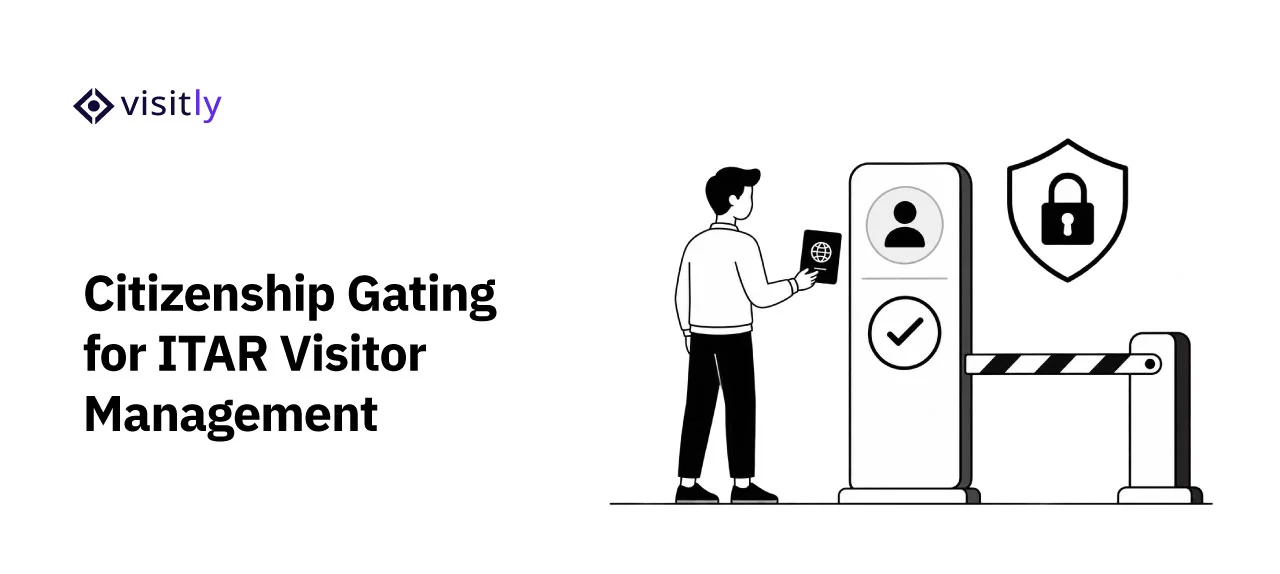
- Defense contractors and R&D facilities – ITAR, C-TPAT, and cleared-personnel access documentation
- Healthcare systems – HIPAA restricted-area credentialing and PHI access governance
- Financial institutions – SOC 2 Type II audit trails and third-party access governance
- Manufacturing facilities – ISO 9001 audit readiness and contractor compliance documentation
- Energy operators – Operational site security, contractor management, and access control logs
What Secure Check-In Actually Requires
Before evaluating any platform, security leaders in regulated verticals need to be clear about what a genuinely compliant visitor check-in process must accomplish. The bar is higher than most legacy systems can clear.
There are three non-negotiable requirements:
- Verify identity against a government-issued document rather than relying on self-reported information typed into a kiosk
- Confirm the person presenting the document is actually the document holder rather than just accepting that a document exists
- Produce a tamper-proof, audit-ready record of every check-in event, available on demand for compliance reviews or regulatory inquiries
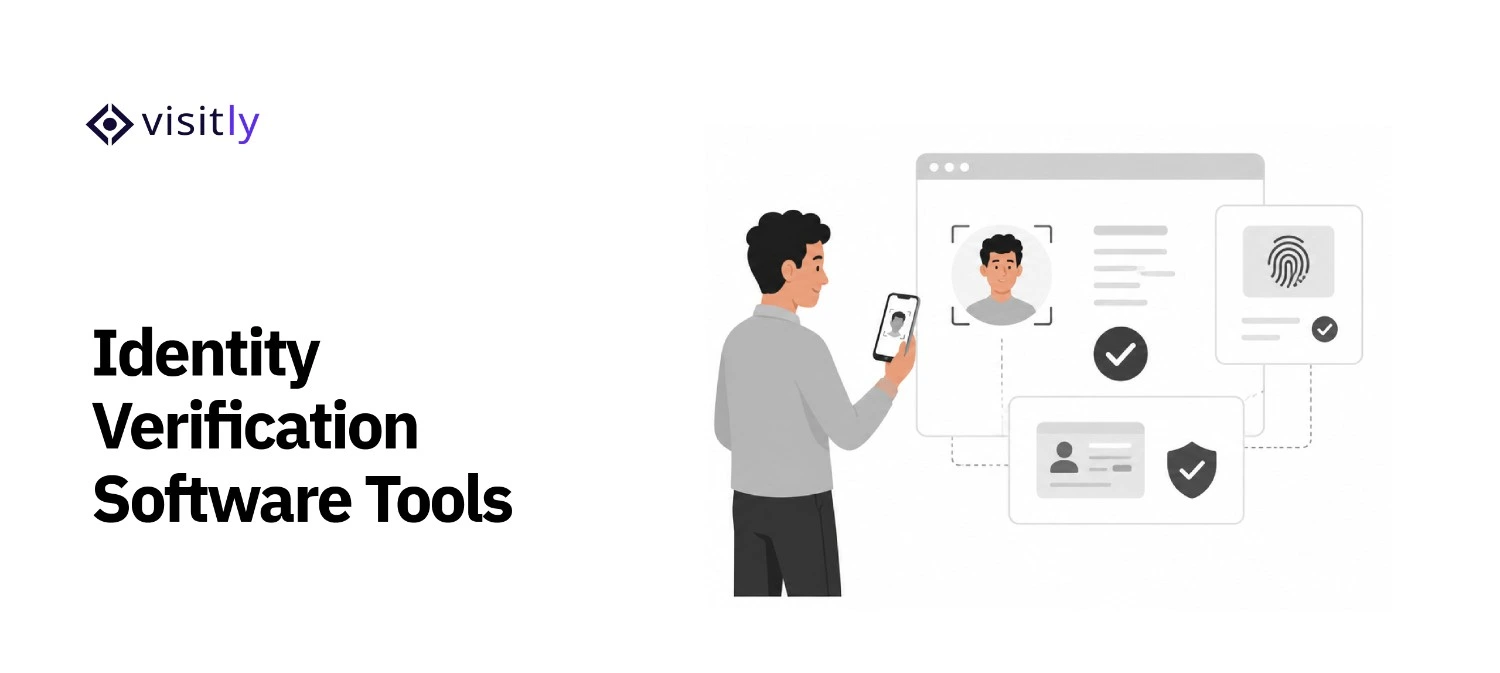
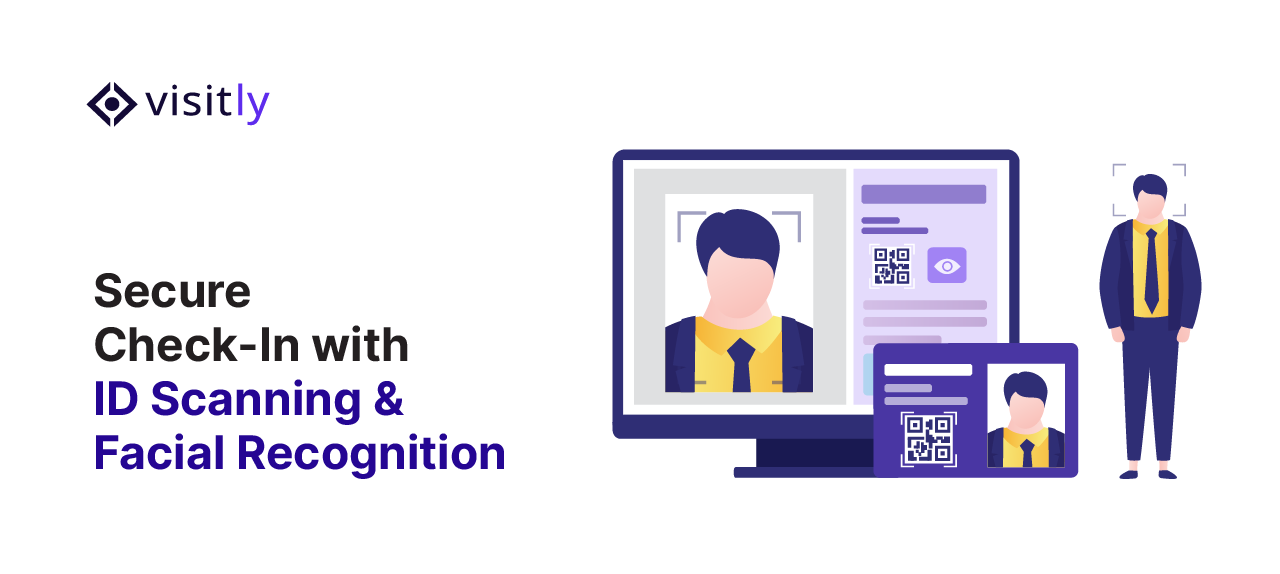
These three requirements map directly to three capabilities: ID scanning, facial recognition, and watchlist matching. In regulated environments, these are not optional add-ons. They are the minimum compliance infrastructure for visitor access governance.
ID Scanning: The Identity Foundation
Confirmed identity is the starting point of any secure check-in process. That means verifying a government-issued document rather than trusting a self-reported name field or a printed badge that anyone can reproduce.
What Smart ID Scanning Does
- Automatically extracts name, date of birth, document number, and expiry date from a government-issued ID or passport
- Detects expired documents and flags anomalies in real time, before a visitor moves further into the facility
- Creates a structured, timestamped identity record tied to the visit event and ready for compliance export
The Compliance Connection
The real outcome here is not a faster check-in experience, though that does follow. It is an identity record that can survive an audit, be cross-referenced with access logs, and help reconstruct the full timeline of a security event if one occurs.
Document verification tells you what a piece of plastic says. Facial recognition tells you whether the person holding that document is actually the person on it.
That distinction matters a lot in regulated environments. A document can be borrowed, altered, or shared. An identity cannot. Facial recognition closes the gap between what a document claims and who is actually standing at the checkpoint. It creates the biometric link that transforms check-in from a paperwork exercise into a real identity verification checkpoint.
Two Functions That Matter at Scale
Safelisting
- Pre-approved personnel such as regular contractors, cleared third-party vendors, and credentialed service partners are recognized and cleared automatically on future visits
- Removes repeat credentialing friction for large contractor populations on recurring schedules
- Especially useful in defense and manufacturing environments with rotating third-party workforces
Real-Time Flagging
- Detects individuals whose biometric profiles appear on internal restricted lists
- Sends immediate alerts to the security team before the individual moves past the lobby
- Turns unauthorized access from a post-incident discovery into a point-of-entry intervention
Watchlist Matching: The Real-Time Threat Layer
Identity verification tells you who someone is. Watchlist matching answers the question that comes next: should this person actually be here?
What Real-Time Watchlist Screening Covers
- Sex offender registry checks – automated, real-time cross-reference at the point of entry
- Custom internal watchlists – maintained by the organization’s security team for individuals with facility-specific restrictions
- Instant security alerts – routed directly to security personnel the moment a flag is generated, not after the visitor has already moved through
This is not a logged incident you discover in a post-hoc review. It is a live security intervention at the moment someone attempts access.
Documentation vs. Evidence: Understanding the Difference
For regulated industries, the compliance side of watchlist screening is just as important as the security side. SOC 2 Type II auditors and federal compliance reviewers expect documented proof that visitor screening took place, not just that a check-in event was recorded.
Your visitor log is a security vulnerability. Visitly turns it into your first line of defense.
The Value of All Three Working Together
Each capability holds its own compliance value. Together, they create something more significant: a complete, auditable chain of custody for every visitor access event.
How the Verification Stack Works
Step 1 – ID Scan > Verified identity record (name, DOB, document number, expiry)
Step 2 – Face Match > Biometric confirmation and safelist or restricted profile check
Step 3 – Watchlist > Real-time registry and internal threat list screening
Result – Audit Trail > Forensic-grade, timestamped compliance record per visit
The result is a check-in event that produces the kind of documentation that holds up in a regulatory audit, supports an internal investigation, and gives auditors confidence that physical access governance was treated seriously.
Where Visitly Fits In
Visitly is an enterprise visitor security platform built specifically for regulated environments. Here is what it brings to the table:
- SOC 2 Type II certified – security controls that hold up under audit scrutiny
- HIPAA-ready – compliant data handling for healthcare environments
- GDPR and CCPA compliant – aligned with major privacy frameworks
- 500+ enterprise organizations deployed globally
- 99.9% uptime SLA – reliability built for security-critical operations
All audit logs are exportable, tamper-resistant, and formatted for direct auditor review.
How This Plays Out Across Regulated Verticals
“Visitly has made a very positive impression on our customers… it has made it easy for us to meet necessary compliance requirements.” Judy Dugas, President, Advanced Research Corporation
What to Look for When Evaluating a Visitor Security Platform
When assessing platforms for regulated environments, apply a clear set of criteria. These questions naturally reveal the gap between a general-purpose check-in tool and a genuine identity verification platform.
Evaluation Checklist
- Identity provider integration – Does it connect natively with Okta, Azure Active Directory, and SAML-based SSO so visitor records align with your existing identity governance?
- Exportable, auditor-ready compliance logs – Are logs structured, timestamped, and formatted to answer SOC 2, HIPAA, and ITAR audit questions without requiring manual work?
- Multi-location management – Can security teams manage all locations from one dashboard with location-specific configurations?
- SOC 2 Type II certification – Does the vendor hold certification, not just claim compliance readiness?
- HIPAA-ready infrastructure – Is this confirmed for healthcare and life sciences deployments?
- Real-time watchlist screening – Is screening happening at the moment of entry, not in a batch process run after the fact?
If a platform cannot check these boxes, it is not competing at a different price point. It is designed for a different use case entirely.
The Entry Point Is the Vulnerability
Your digital security posture does not matter much if the physical front door of your facility is the weakest link in your threat model.
In regulated industries, visitor access is not an administrative function. It is a security event with compliance implications, audit exposure, and real risk. It deserves the same level of infrastructure discipline you apply to every other part of your security stack.
See how Visitly’s identity verification stack meets your compliance requirements. Book a demo today.
Frequently Asked Questions
1. How does ID scanning improve visitor security?
ID scanning verifies visitor identity by capturing and validating government-issued IDs. It reduces fraud, prevents unauthorized access, and creates a secure, audit-ready record for compliance in regulated environments.
2. What is facial recognition in visitor management systems?
Facial recognition is a biometric technology that matches a visitor’s face with stored data or ID records. It enables fast, contactless check-in while improving accuracy and strengthening security protocols.
3. Are ID scanning and facial recognition compliant with regulations?
Yes, when implemented correctly, these technologies support compliance with standards like ITAR, GDPR, HIPAA, and ISO 27001 by providing verified identity logs, access tracking, and secure data handling.
4. Why do regulated industries need advanced check-in systems?
Industries like defense, healthcare, and manufacturing require strict access control. Advanced systems ensure only authorized individuals enter restricted areas while maintaining detailed audit trails.
5. Can facial recognition replace traditional visitor check-ins?
Yes. Facial recognition can fully replace manual check-ins by enabling automated, touchless entry, reducing wait times, and eliminating human error in identity verification.