


Data privacy is no longer just a buzzword—it’s a critical concern for businesses worldwide. In fact, research highlighted that 79% of consumers are increasingly worried about how their personal information is handled, and over 43% of cyberattacks target small businesses.
According to IBM reports, with data breaches costing companies more than €2.5 billion annually, the urgency for better privacy measures has never been clearer.
Traditional visitor management systems, still in use by many organizations, are no longer sufficient to protect sensitive information. These outdated systems face critical vulnerabilities such as:
- Excessive data collection that increases the risk of data misuse
- Susceptibility to data breaches that can cost businesses both financially and reputationally
- Non-compliance with evolving privacy regulations like GDPR and CCPA
- Slow, manual processes that frustrate both businesses and visitors
- Lack of transparency, leaving visitors uncertain about how their data is being used
As businesses face tighter security and compliance requirements and a growing need for transparency and privacy, privacy-first visitor check-in system is emerging as a solution. These innovative systems minimize unnecessary data collection while bolstering security with cutting-edge technologies such as biometrics and encrypted databases. Thereby, it ensures compliance with the latest data protection laws.
In this blog, we’ll explore how privacy-first systems are reshaping the future of visitor management, offering not just security and compliance but also enhanced user experiences and efficiency gains.
Let’s dive into how these electronic sign-in systems are setting new standards in data protection and why your business can’t afford to fall behind.
Why Privacy Matters in Visitor Check-In
With data breaches becoming more frequent, the real question shifts from whether your data is at risk to how effectively it’s being protected.
In fact, recent statistics revealed that 43% of cyberattacks target small businesses, putting sensitive visitor data at risk. As concerns over data privacy rise, businesses must rethink their visitor check-in process to avoid significant vulnerabilities.
The increasing concerns about data collection and security breaches are clear:
- Personal data misuse: Many systems collect unnecessary personal details that increase the chances of misuse.
- Cybersecurity risks: Traditional systems are often vulnerable to cyberattacks, exposing sensitive visitor data.
- Lack of data transparency: Visitors are often unaware of how their data is being handled or shared.
- Inconsistent compliance: Organizations may struggle to meet evolving data privacy regulations.
Privacy regulations are tightening, placing increasing pressure on businesses to adopt more secure and compliant solutions.
The introduction of GDPR and CCPA has raised the bar for data protection, requiring businesses to be transparent and accountable in how they manage customer information.
Why should businesses risk non-compliance when the stakes are so high? The risks of traditional visitor logs are becoming increasingly apparent.
Traditional methods, such as paper logs, fail to offer adequate protection, leaving sensitive information exposed. The lack of access control systems increases the likelihood of unauthorized access, potentially compromising both workplace safety and the integrity of visitor data. The threat of data leaks is a real risk, and businesses must move toward privacy-first solutions to mitigate these dangers.
Benefits of Privacy-First Visitor Check-In System
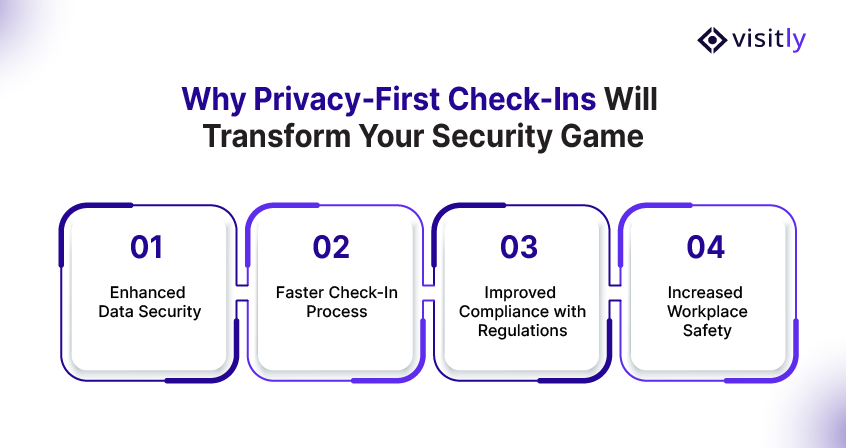
The future of visitor check-in is privacy-first, and the benefits are clear. As organizations strive to protect personal data, a privacy-first approach not only ensures compliance but also enhances the visitor experience.
Here are some key benefits of Privacy-First Visitor Check-In System:
- Enhanced Data Security: With minimal data collection and robust encryption, privacy-first systems reduce the risk of data breaches. This means sensitive visitor information remains secure, offering peace of mind to both businesses and visitors.
- Faster Check-In Process: Privacy-first systems streamline the check-in process by using facial recognition security or QR codes, eliminating the need for paper logs or manual data entry. This results in a smoother, faster experience for visitors, reducing wait times and enhancing overall satisfaction.
- Improved Compliance with Regulations: With strict privacy regulations like GDPR and CCPA, these systems help businesses stay compliant by limiting data collection and ensuring proper consent. Businesses can easily manage visitor information and avoid costly penalties for non-compliance.
- Increased Workplace Safety: By implementing an advanced access control entry system, businesses can better monitor visitor activity and restrict access to sensitive areas. This adds an extra layer of protection against workplace threats, ensuring only authorized individuals are allowed entry.
Visitly: A Leader in Privacy-First Visitor Management
Visitly is transforming the future of visitor management by prioritizing privacy and security.
As businesses face increasing privacy concerns and stricter regulations, Visitly’s innovative solutions offer a seamless way to manage visitor check-ins while keeping personal data secure.
Key Visitly Features Aligned with Privacy Regulations:
- Watchlist Rules: Visitly’s advanced watchlist feature lets businesses flag specific individuals or criteria, triggering instant alerts when a visitor matches those conditions. This ensures heightened workplace security and a proactive approach to managing potential threats.
- Reports & Dashboard: The platform’s real-time tracking, easy log exports, and comprehensive dashboard offer businesses valuable insights into visitor activity. It enables organizations to manage multiple locations from one central platform, monitor key metrics, and make data-driven decisions to maintain security and compliance.
- Policy & NDA Signing: Visitors can digitally sign required documents, such as NDAs and policies, during check-in. This feature not only enhances compliance with regulations but also ensures secure storage of signed documents for future reference, adding another layer of protection.
- Visitor Badges: Visitly’s customizable visitor badges include essential information such as photos, company names, timestamps, and the visit purpose. This helps businesses easily identify visitors, enhancing on-site security by verifying identities.
- Capture Visitor Photos: The system captures visitor photos at check-in and integrates them into ID badges for further security. This real-time photo integration ensures that visitor identities can be easily verified at all times, minimizing the risk of unauthorized access.
- Visitor Approvals: Prior to entry, each visitor must be approved by authorized personnel. This feature ensures full control over access, allowing businesses to monitor and restrict who enters their premises, thus safeguarding both workplace safety and data privacy.
With these features, Visitly sets the standard for secure, efficient, and privacy-conscious electronic visitor management systems.
Read More: 7 Top Features to Look for in a Visitor Management App

Conclusion
The future of visitor management is rooted in privacy-first solutions. Adopting privacy-first visitor check-in system not only protects sensitive information but also aligns businesses with increasingly stringent privacy regulations. This shift towards secure, transparent processes is essential in building a secure environment where both visitors and businesses are confident their data is safeguarded.
Businesses must take proactive steps to prioritize visitor data protection, acknowledging that privacy is a fundamental aspect of good business practice. Book a demo with Visitly today to explore how our privacy-first approach can elevate your visitor management while ensuring top-tier security and compliance.
FAQs on Visitor Check-In
1. What is a visitor management system?
A visitor management system helps businesses track, monitor, and manage visitors, ensuring security and compliance while enhancing operational efficiency.
2. Why is data security important in visitor management?
Data security ensures sensitive visitor information is protected from breaches, aligning with privacy laws and safeguarding against unauthorized access.
3. What is the difference between a traditional and privacy-first visitor management system?
Traditional systems collect excessive data and are prone to security risks, while privacy-first systems minimize data collection and ensure compliance with regulations like GDPR.
4. How can visitor management systems benefit healthcare facilities?
These systems ensure compliance with health regulations, secure visitor information, and streamline the check-in process, enhancing patient safety and privacy.
5. How do visitor management systems help with GDPR compliance?
Privacy-first systems ensure data collection is minimized, give visitors control over their data, and help businesses maintain transparent data practices to comply with GDPR.