


80% of businesses struggle with unauthorized access stemming from an outdated visitor management system and processes.
In today’s security-driven world, a robust visitor badging system is essential for safeguarding your premises. From high-traffic offices to hospitals and schools, visitor badging streamlines the check-in process while providing real-time identification and secure access control.
But not all systems offer the same level of protection. Workplace security teams expect features that ensure safety, compliance, and efficiency.
If you’re still relying on manual processes or basic badging, act now to upgrade your security.
In this blog, we’ll uncover the 10 key visitor badging system features that every security team needs to ensure complete control and protection over their facility’s entry points.
Take the next step toward stronger visitor security management.
What are the 10 Key Visitor Badging System Features Security Teams Expect?
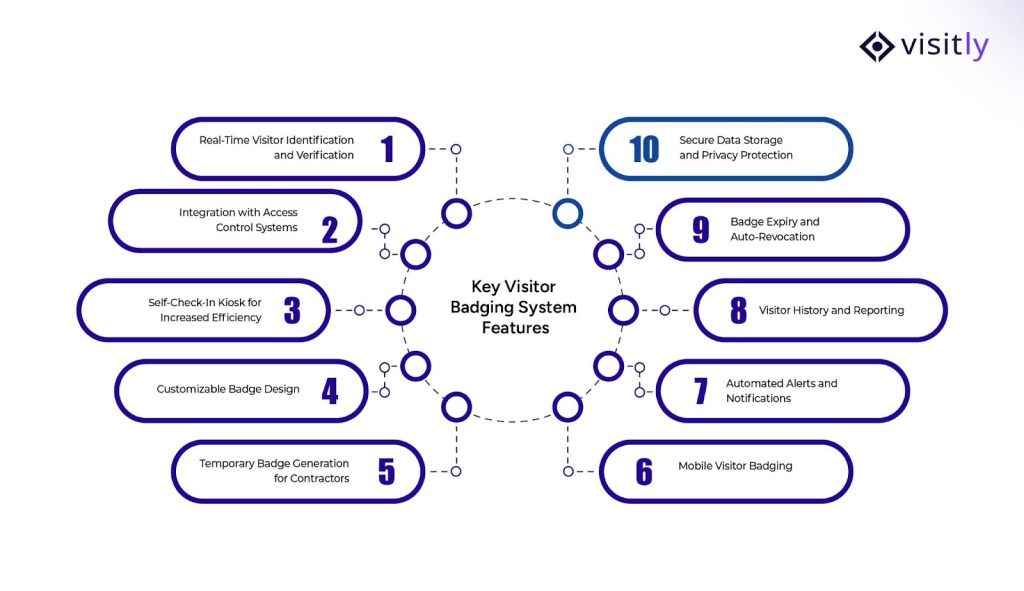
The 10 key visitor badging system features security teams expect are:
- Real-Time Visitor Identification and Verification
- Integration with Access Control Systems
- Self-Check-In Kiosk for Increased Efficiency
- Customizable Badge Design
- Temporary Badge Generation for Contractors
- Mobile Visitor Badging
- Automated Alerts and Notifications
- Visitor History and Reporting
- Badge Expiry and Auto-Revocation
- Secure Data Storage and Privacy Protection
As security management systems become a top priority for businesses, visitor badging systems have become a vital tool for managing access.
These systems give security teams real-time control over access, enhancing workplace safety, compliance, and operational efficiency. Whether in busy offices, hospitals, or schools, a robust visitor badging system reduces security risks and streamlines check-in.
In this section, we highlight the 10 essential features security teams expect from an effective visitor badge to ensure a compliant, secure visitor management system.
1. Real-Time Visitor Identification and Verification
- Why It Matters:
Real-time visitor identification is the backbone of a secure building. It allows security teams to instantly verify visitors upon entry.
- Benefit:
By validating visitors in real time, businesses grant entry only to authorized individuals, effectively preventing unauthorized access and mitigating the risk of security breaches. This ensures overall safety and gives staff confidence in the security process.
- How It Works:
The visitor management system instantly pulls up data associated with visitor badges, ensuring the visitor’s details are matched to the pre-registered list. A digital ID scan, along with photo capture, makes this a seamless process, boosting security without adding complexity for security teams.
2. Integration with Access Control Systems
- Why It Matters:
Visitor badging systems work best when they integrate with existing physical access control infrastructure. This creates a unified security ecosystem.
- Benefit:
This integration eliminates silos between your secure visitor management system and ensures smooth, real-time control over access. It helps avoid any gaps or manual entry points that could compromise security, making operations more efficient and reducing the risk of human error.
- How It Works:
The system directly links to keycard readers, facial recognition systems, biometric scanners, or mobile access systems. This allows your visitor badges to automatically provide entry to designated areas, preventing unauthorized access while maintaining a seamless flow.
3. Self-Check-In Kiosk for Increased Efficiency
- Why It Matters:
Self-service kiosks not only speed up the check-in process but also reduce staff workload, allowing them to focus on more important tasks.
- Benefit:
Visitor sign-in kiosks are the perfect solution for businesses with high visitor volumes. They streamline the check-in process, reduce wait times, and ensure visitor data is accurately entered without manual intervention. This also improves the visitor experience by keeping processes moving quickly.
- How It Works:
Visitors approach the kiosk, enter their details, select the host they are meeting, and print their own visitor badge. This process is automated, ensuring accuracy and reducing the need for additional front-desk resources.
4. Customizable Badge Design
- Why It Matters:
Visitor badges must display essential information. Customizable designs can show names, access levels, hosts, and event details.
- Benefit:
Custom badges make it easy to distinguish among different types of visitors, such as contractors, VIPs, and standard visitors. This not only helps staff and security identify them quickly but also reinforces your brand identity and security standards.
- How It Works:
The system lets you create personalized badges with a range of design options. You can incorporate logos, specific colors, and unique identifiers to designate different visitor types and access levels. The design is adaptable for quick changes, making it ideal for varying needs.
5. Temporary Badge Generation for Contractors
- Why It Matters:
Contractor management often requires limited access to specific areas, and their access should be closely monitored. Temporary badges give you precise control over their access duration and location.
- Benefit:
Temporary badges are ideal for guests requiring short-term access. They enable efficient management by limiting access to authorized areas for a set period and reducing security risks.
- How It Works:
You can create time-sensitive, restricted badges for contractors with defined expiration times. Once the time expires, the badge automatically becomes invalid, preventing anyone from using it after the approved period.
6. Mobile Visitor Badging
- Why It Matters:
Mobile visitor badging is a modern solution that improves security while delivering a contactless experience. It enhances convenience and reduces physical contact, both of which are important for hygiene in post-pandemic environments.
- Benefit:
Mobile badging offers a fast, secure way to verify visitors without physical cards. Visitors receive badges on their smartphones, improving convenience and reducing wait times.
- How It Works:
Visitors receive a digital badge on their mobile device after completing the pre-registration process. They simply show the mobile badge at entry points, where security staff can scan the code for immediate access.
7. Automated Alerts and Notifications
- Why It Matters:
Real-time alerts and emergency notifications help security teams and hosts stay informed the moment a visitor arrives. This proactive approach ensures that security teams are always prepared for the next steps in managing visitor flow.
- Benefit:
Instant notifications alert hosts upon guest arrival, improving operations and keeping the security team informed of all visitors.
- How It Works:
As soon as a visitor checks in, the system automatically sends alerts via SMS, email, or app notifications to the host. Security teams can also be alerted to any discrepancies or suspicious activity.
8. Visitor History and Reporting
- Why It Matters:
Tracking visitor data is crucial for security audits and maintaining detailed logs for regulatory purposes. A historical log provides a comprehensive view of all visitor activity in the facility.
- Benefit:
Having a record of who visited, when, and for what purpose ensures accountability and supports investigations, compliance audits, and legal requirements. It also helps businesses track and improve their visitor management practices over time.
- How It Works:
Visitor management software stores detailed records of all visitors, including their check-in and check-out times, access points, and purpose of visit. Security teams can pull up reports for auditing, regulatory compliance, or operational assessments.
9. Badge Expiry and Auto-Revocation
- Why It Matters:
It’s vital to ensure that visitor badges don’t provide extended access beyond the authorized period. Automatic expiry and revocation prevent the misuse of access privileges.
- Benefit:
This feature helps prevent unauthorized access after the visitor’s scheduled time has passed. Automatic revocation enhances security and ensures badges are only valid during authorized times.
- How It Works:
Once the badge’s set expiration time is reached, the system automatically revokes the badge’s access, rendering it invalid. This process is seamless and requires no manual intervention, ensuring continuous security.
10. Secure Data Storage and Privacy Protection
- Why It Matters:
The security of personal and visitor data is a critical concern, especially amid increasing regulatory requirements such as GDPR.
- Benefit:
Ensuring that visitor data is stored securely and handled in compliance with data protection laws helps businesses avoid potential legal and reputational risks.
- How It Works:
All visitor information is securely encrypted and stored in compliance with data protection regulations. Only authorized personnel may access visitor data, and it is securely destroyed once its retention period has expired.
How Visitly Enhances Security with Its Visitor Badging System?
Managing visitors is crucial for businesses across all industries.
Visitly’s Visitor Badging System provides seamless check-in while enhancing safety and compliance for organizations.
Let’s explore how Visitly elevates security and compliance with its system.
1. Seamless Visitor Check-Ins and Enhanced Security
With Visitly’s user-friendly visitor badging system, guest check-in becomes a streamlined, secure process. Upon arrival, visitors easily provide their information, which is instantly verified.
Their badge is generated in real time, ensuring only authorized visitors can access restricted areas. Security teams can promptly identify who is on-site, reducing the chance of unauthorized access or security breaches.
Benefit: Faster check-ins, reduced errors, and a secure visitor log for a real-time access control entry system.
2. Integration with Workplace Safety Protocols
Visitly’s visitor badging system integrates effortlessly with workplace safety software and protocols.
By linking visitor check-ins to fire alarms, emergency exits, or access control systems, businesses can automatically account for all visitors during emergencies.
This integration ensures safety measures are in place, enabling smooth evacuations and real-time compliance.
Benefit: Improved safety coordination and compliance with industry regulations, ensuring employee check-in and visitor safety during emergencies.
3. Data Security and Compliance in Visitor Management
One of the primary concerns with a digital visitor management system is the secure handling of sensitive data. Visitly ensures that all visitor data is stored and managed in compliance with relevant data privacy regulations, including GDPR and HIPAA.
With encrypted databases and secure digital document signing features, businesses can protect sensitive information while ensuring full compliance with privacy laws.
Benefit: Meets privacy regulations, safeguards sensitive data, and provides peace of mind to both businesses and visitors.

Closing Thoughts
A robust visitor badging system enhances security, operational efficiency, and compliance, making it essential for businesses of all sizes.
Key features such as real-time visitor identification, integration with access control systems, customizable badges, and automated alerts can help prevent security breaches, streamline check-in processes, and ensure only authorized visitors access restricted areas. These features not only protect your premises but also improve the overall visitor experience.
Visitly’s visitor badging system offers all these capabilities, helping you simplify check-ins while maintaining high security and compliance standards.
Ready to elevate your security protocols?
Explore how Visitly can help streamline your visitor management and improve safety today.
Get started now and contact Visitly today for more information.
FAQs on Visitor Badging System
1. What is a visitor badging system?
A visitor badging system is a digital solution that automates guest check‑in, identification, and badge issuance to securely manage access. It replaces manual sign‑in books with touchscreens or kiosks, improving accuracy and tracking. This system helps validate visitor identity, control access to restricted areas, and maintain digital visitor logs for security and compliance.
2. How does a visitor management kiosk work?
A visitor management kiosk lets guests self‑register by entering their details on a tablet or touchscreen. The system captures visitor information, verifies identity, prints badges, and notifies hosts instantly. This speeds up check-ins, reduces front desk workload, and enhances security by ensuring every visitor is logged and identifiable on arrival.
3. Why do businesses need management system software?
Modern visitor management software strengthens security, streamlines check-ins, and maintains accurate visitor logs. It reduces manual work, enhances compliance with protocols, and improves the guest experience across facilities.
4. Can visitor management systems integrate with access control?
Yes. Many visitor badging systems can integrate with a building’s electronic access control system. This means the badges automatically give visitors the correct level of access to certain areas. This setup enhances security by controlling entry based on visitor status and preventing access to off-limits areas.
5. What are the benefits of a digital visitor management system?
Digital visitor systems enhance security, reduce wait times, and maintain digital visitor logs. They improve compliance, enable faster check-ins, and offer badge printing with real-time host alerts. These features help organizations understand visitor patterns and streamline operations.