


“An ounce of innovation is worth a pound of tradition.” – Albert Einstein
The world of work has changed more in the past few years than it did in the last few decades. And as we race into 2025, companies are facing the need to adapt faster than ever before.
Did you know that 70% of the global workforce will be working remotely at least five days a month?
That’s a game-changer! So, it’s no longer enough to keep doing things the same old way. Instead, it’s time to roll up our sleeves and get creative in how we manage workplaces.
The role of innovative technologies, like AI, automation, and integrated workplace management systems, is increasingly crucial. These tech solutions will help businesses manage spaces, employees, visitors, and even security seamlessly.
In this blog, we’ll explore the key workplace management trends that will shape how businesses operate in 2025. Let’s look into these strategies and understand why they’re not just good ideas but essential for future success.
Key Workplace Management Trends To Watch Out
We’ve heard it a million times – adapt or fall behind. In 2025, the businesses that embrace change will be the ones that lead.
Let’s look at the following workplace management trends and strategies:
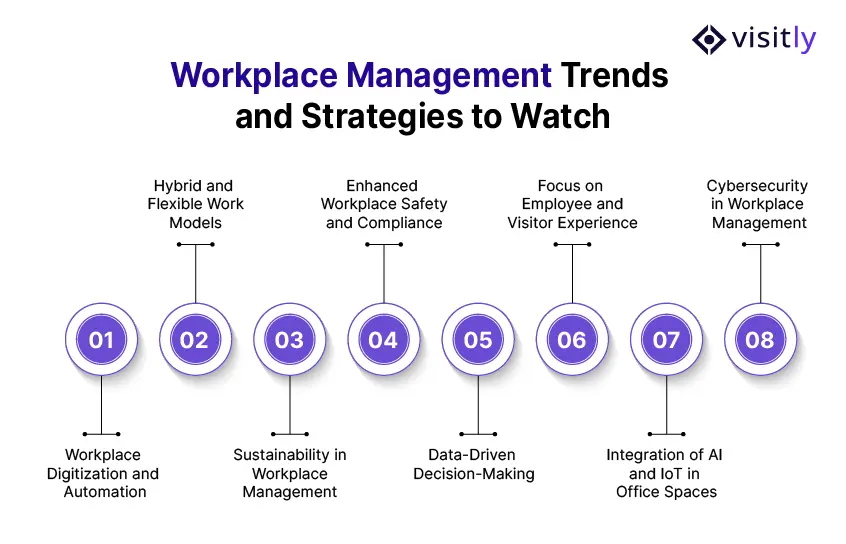
- Workplace Digitization and Automation
Gone are the days when automation was optional. Now, it’s the heartbeat of modern workplaces. Thus, businesses must digitize operations to streamline processes and improve productivity. This includes automating repetitive tasks, utilizing AI for analytics, and implementing smart systems to enhance the overall workplace experience.
Employees expect seamless operations, and automation helps businesses deliver just that, reducing human error and increasing efficiency. Additionally, automating administrative tasks gives managers and staff more time to focus on strategic goals.
- Reduces manual work, boosting productivity.
- Lowers the risk of human error.
- Streamlines communication and operations.
- Increases operational efficiency and cost savings.
- Helps businesses adapt to ever-changing market demands.
- Hybrid and Flexible Work Models
The hybrid work model has taken off and it’s expected to be the norm. Companies are now embracing flexible work schedules, allowing employees to work from home or the office, depending on their needs. This trend empowers employees to balance their personal and professional lives, leading to higher job satisfaction.
Companies must invest in digital tools, such as video conferencing and collaboration platforms, to make this model effective. By offering more flexible work options, businesses not only increase employee happiness but also tap into a global talent pool.
- Boosts employee morale and work-life balance.
- Increases access to talent beyond geographical boundaries.
- Reduces overhead costs associated with office space.
- Improves employee retention rates.
- Increases productivity by giving employees more control over their work environment.
- Sustainability in Workplace Management
Sustainability is a business imperative. Hence, businesses will need to focus on creating eco-friendly workspaces, reducing waste, and minimizing their carbon footprint. This includes using renewable energy sources, recycling, and implementing energy-efficient technologies. Companies that utilize sustainable business practices are able to save between 2-4% on operating costs annually.
A sustainable workplace not only contributes to the planet’s well-being but also appeals to employees and customers who care about environmental issues. Going green will be a key differentiator for businesses aiming to stay competitive and attract top talent.
- Reduces operational costs through energy-efficient solutions.
- Enhances corporate reputation among eco-conscious customers.
- Complies with increasingly stringent environmental regulations.
- Attracts top talent who prioritize sustainability.
- Contributes to long-term environmental goals.
- Enhanced Workplace Safety and Compliance
Workplace safety is crucial with new challenges emerging from both a health and security standpoint. Companies must ensure compliance with evolving safety regulations, especially as remote and hybrid models become more common.
Technology will play a significant role in monitoring workplace safety, with sensors, AI, and automated systems to ensure compliance. Ensuring physical and mental safety in the workplace will help reduce employee burnout and protect against workplace threats.
- Reduces workplace accidents and injuries.
- Promotes mental well-being for employees.
- Ensures compliance with legal and regulatory standards.
- Prevents costly legal actions and fines.
- Builds a culture of care and safety, enhancing employee trust.
- Data-Driven Decision-Making
Data is the new goldmine and businesses must learn how to tap into it. Using data analytics, companies can make informed decisions about everything from employee productivity to resource allocation. Data-driven decision-making helps identify patterns, improve operational processes, and predict future trends.
Further, companies can collect and analyze data to improve workplace efficiency by utilizing integrated workplace management systems. This approach ensures decisions are based on facts rather than guesswork, leading to more accurate outcomes.
- Provides deeper insights into business operations.
- Improves resource management and efficiency.
- Enhances decision-making accuracy and effectiveness.
- Helps identify opportunities for growth and improvement.
- Enables predictive analysis for future trends.
- Focus on Employee and Visitor Experience
The employee and visitor experience will be a focal point for businesses in coming years. Creating a seamless, engaging experience for employees is crucial for retention, while an effective visitor management system is vital for security and customer satisfaction.
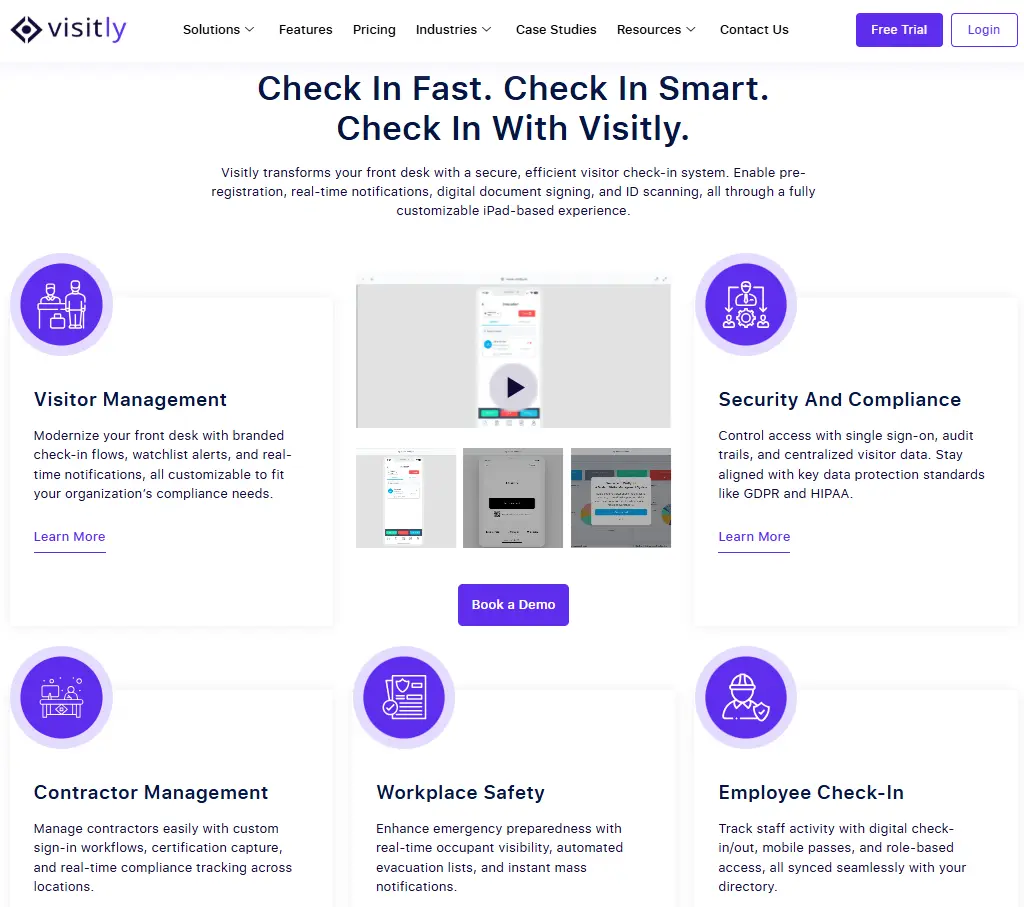
For instance, Visitly is a modern visitor management system designed to streamline the check-in and check-out processes for visitors, contractors, and employees.. It is equipped with exceptional features like watchlist alerts, Face ID, emergency evacuation & many more – all without downloading any app.
- Ensures a smooth, secure check-in for visitors.
- Enhances employee satisfaction and engagement.
- Helps improve workplace security and compliance.
- Reduces waiting times and administrative burden.
- Increases customer satisfaction and trust.
- Integration of AI and IoT in Office Spaces
The rise of AI and IoT in office spaces is transforming how companies manage their workplaces. Thus, businesses will rely on connected devices and AI algorithms to monitor everything from temperature and lighting to security and workflow. Smart office systems will make workplaces more comfortable, efficient, and productive.
IoT-enabled devices can optimize energy usage, while AI can predict maintenance needs, ensuring the office runs smoothly without disruption. These technologies will enhance both employee productivity and the overall workplace experience.
- Improves energy efficiency and reduces costs.
- Enhances workplace security through smart systems.
- Increases employee comfort and satisfaction.
- Enables predictive maintenance and quick issue resolution.
- Streamlines operations and reduces manual intervention.
- Cybersecurity in Workplace Management
As businesses embrace digital transformation, cybersecurity becomes even more crucial in 2025. Companies must ensure their workplace management systems are secure from cyber threats. Cybersecurity strategies will need to evolve alongside technology, with advanced encryption, multi-factor authentication, and continuous monitoring systems in place.
A breach in cybersecurity can expose sensitive data, compromise employee safety, and damage a company’s reputation. Protecting against workplace threats will be a top priority for businesses that value security and compliance.
- Reduces the risk of data breaches and cyberattacks.
- Ensures business continuity and protects sensitive information.
- Builds trust with customers, employees, and partners.
- Complies with regulatory standards for data protection.
- Enhances overall business resilience and reputation.
How to Choose the Right Workplace Management System for Your Business
The selection of a workplace management system directly impacts efficiency, employee happiness, and long-term scalability. With so many options, companies should assess systems based on how well they fit their growth strategy and operational objectives in addition to their features.
- Scalability
At the forefront of your list should be scalability. A system should expand with your company while also meeting your present needs. As your company grows, the ideal software should be able to support an increasing number of users, locations, and integrations without compromising performance. The software should scale operations, add remote staff, or extend to other sites without requiring expensive upgrades or causing performance problems.
- Compliance
One cannot ignore compliance. The correct system should help you remain audit-ready in light of changing health, safety, and data privacy standards. Look for features like secure data storage, automated compliance tracking, and support for local laws like HIPAA or GDPR.
- Integration
Integration is yet another critical component. The ecosystem of tools used in modern businesses includes Slack, Microsoft Teams, Salesforce, HR platforms, and more. These solutions should be easily integrated with your workplace management system to consolidate data, save manual labor, and optimize workflows.
- User Experience
Lastly, pay attention to the user experience. A complex interface may lower adoption rates. Select a platform that is user-friendly, mobile-friendly, and straightforward for both facility management and staff and guests. Successful implementation depends on smoother onboarding, fewer mistakes, and increased engagement, all of which are ensured by a great user experience.
The Future of Workplace Management
The way we manage workplaces today will look completely different in just a few years. AI, automation, and data-driven insights will redefine how businesses operate, making workplaces smarter and more efficient.
Will technology completely replace human decision-making?
Not entirely. But, it will enhance & optimize it like never before.
Companies will shift from reactive management to proactive strategies, using predictive analytics to anticipate needs before they arise. A study by Deloitte suggests that organizations implementing predictive analytics in workforce management have reported a 15% increase in employee productivity
Hybrid work will evolve further, with virtual offices powered by augmented and virtual reality, creating seamless collaboration experiences. Security and compliance will become more dynamic, with AI-driven monitoring systems ensuring safety in real time.
The future workplace won’t just be smart. It will be intuitive, adapting to needs before they even arise.
As workplaces become more intelligent, one question remains – how will businesses balance technology and the human experience? Let’s see.
Why Choose Visitly as a Workplace Management System for Your Business
Visitly is an innovative workplace management system designed to improve security, expedite processes, and improve the experiences of both employees and guests. Visitly is a scalable, secure, and user-friendly solution that responds to the changing needs of the workplace, going beyond simple visitor management with its extensive array of enterprise-grade capabilities.
- All-in-One Platform
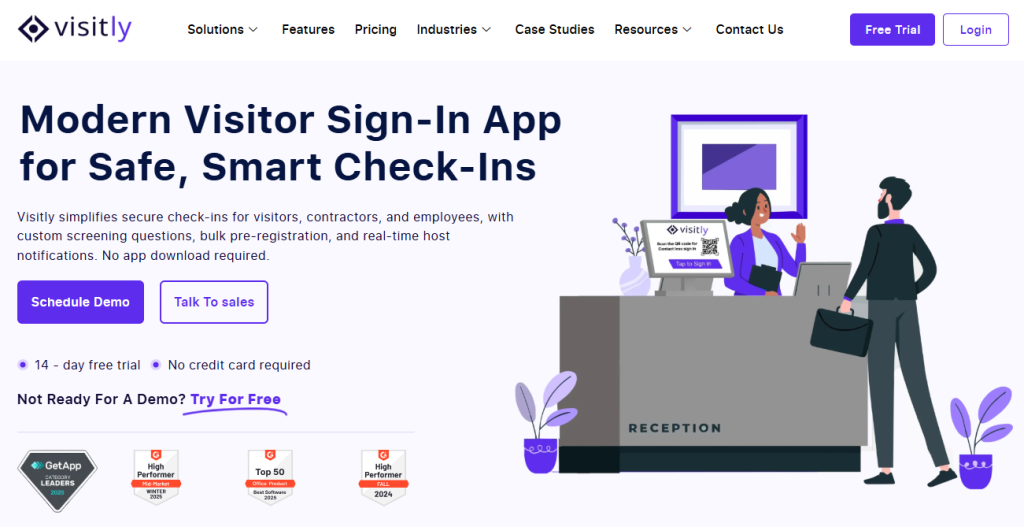
Visitly simplifies the management of visitors, staff, contractors, and deliveries into a single, robust interface. Every facet of workplace operations is handled—digitally and effectively—from pre-registration and badge printing to watchlist screening and emergency evacuations.
- No App, Hassle-Free Check-In
No app download is necessary for guests to check in via iPad kiosks or QR codes. This seamless experience guarantees quick, secure access, lessens front desk traffic, and enhances first impressions.
- Strong Integrations
Visitly has integrations with Google Workspace, Okta, Azure AD, Slack, and Microsoft Teams. These links enhance communication and save time by automating notifications, enabling secure employee syncing, and eliminating laborious administrative procedures.
- Enterprise-Level Security & Compliance
Visitly is designed for regulated sectors and has SOC 2 Type II certification, GDPR readiness, and configurable NDAs or safety protocols. Features that help guarantee adherence to the strictest international standards include document signature, watchlist alerts, and real-time evacuation reports.
- Customizable and Scalable
Visitly offers centralized management, allowing you to tailor procedures for each site, whether you manage a single location or an international portfolio. Customized permissions, badge designs, and branded check-in procedures guarantee consistency with your internal procedures.
Conclusion
To wrap things up, the workplace of 2025 is one where flexibility, innovation, and efficiency rule. From workplace digitization to a focus on sustainability and enhanced safety, businesses must adapt to stay competitive. A seamless blend of technology and human-centered strategies will be essential for success.
And when it comes to improving visitor management and streamlining workplace operations, Visitly stands out. With its advanced features, Visitly makes managing both employees and visitors easier and more secure, ensuring businesses stay ahead of the curve.
So, what are you waiting for? Book a demo today and explore how Visitly can help you create the workplace of the future.
FAQs
1. What are the key workplace management trends in 2026?
In 2026, trends include hybrid work models, AI-driven automation, employee well-being programs, flexible workspace design, and data-driven decision-making to improve productivity, collaboration, and employee satisfaction.
2. How is AI transforming workplace management?
AI optimizes operations by automating tasks, analyzing workforce data for performance insights, and improving decision-making, leading to increased efficiency and personalized employee experiences.
3. What strategies will be crucial for managing hybrid work in 2026?
Key strategies include flexible scheduling, digital collaboration tools, clear communication protocols, and cloud-based systems that support seamless transitions between in-office and remote work environments.
4. How can employee well-being be integrated into workplace management?
By implementing mental health programs, ergonomic workspaces, work-life balance policies, and wellness initiatives, companies can prioritize employee health and satisfaction, driving productivity and retention.