


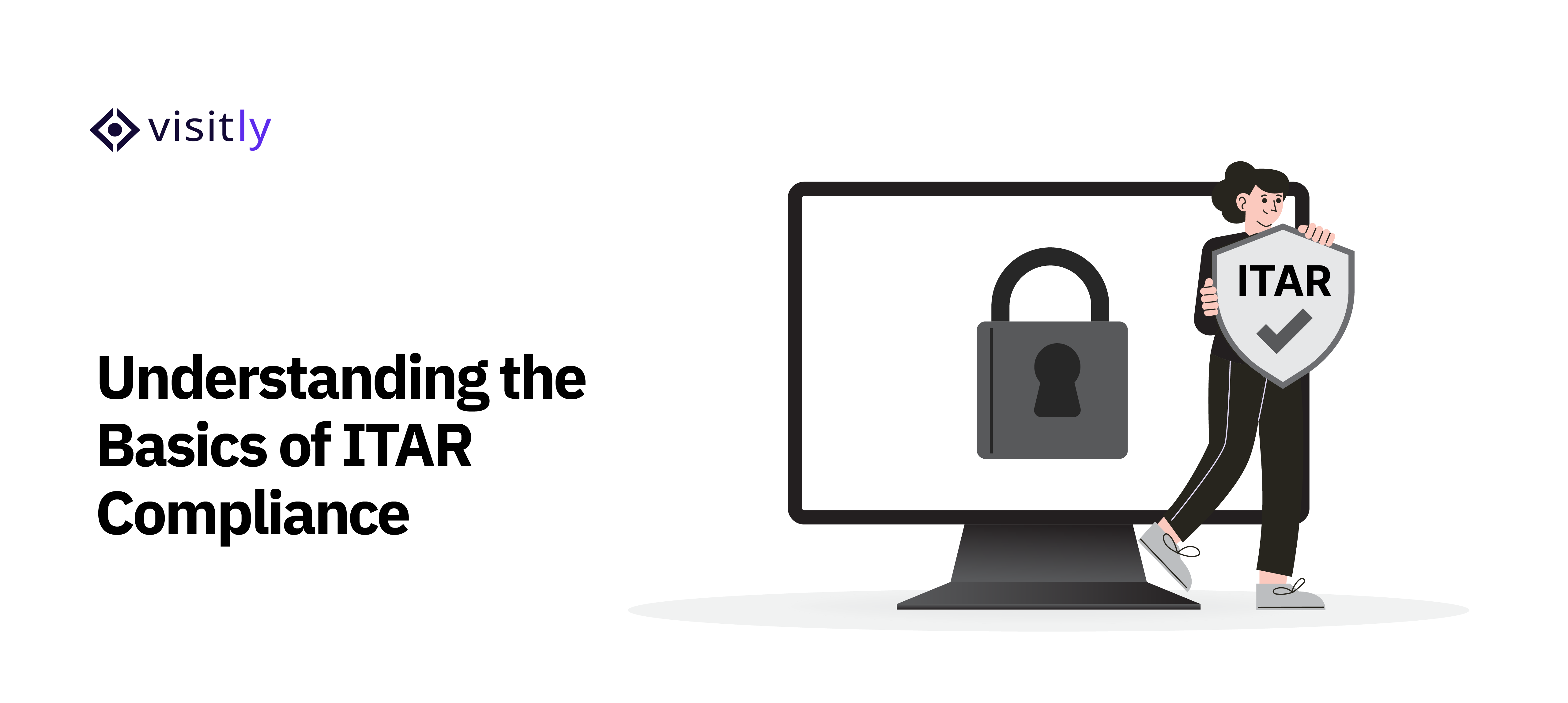
In 2027, ITAR compliance is vital for businesses handling defense-related technologies. Adhering to the U.S. International Traffic in Arms Regulations (ITAR) ensures robust security and compliance with stringent export controls and protects sensitive military data.
Failure to meet the ITAR compliance program guidelines can lead to severe penalties, including hefty fines, criminal charges, and revoked export privileges. This comprehensive guide covers the essential ITAR regulations list, best practices, and the role of ITAR compliance software in automating processes, enhancing data security, and ensuring regulatory adherence.
Stay compliant and secure by implementing effective measures to avoid costly violations and maintain smooth international operations.
What is ITAR Compliance?
ITAR Compliance refers to adhering to the regulations set by the U.S. International Traffic in Arms Regulations (ITAR). Companies must control the export and import of defense-related articles, services, and technical data, ensuring they only transfer such information to authorized parties. This prevents sensitive military technology from falling into the wrong hands, safeguarding national security.
Still in doubt? Let us make it clear:
What happens when sensitive defense technology is exposed to unauthorized individuals?
That’s precisely what ITAR aims to prevent.
ITAR compliance is absolutely essential for businesses dealing with defense-related technology. To maintain compliance, many organizations turn to ITAR compliance software to streamline the process, ensure accurate tracking, and enhance security. In addition, working in an ITAR-compliant facility is vital for those handling sensitive data and items. This ensures that your business follows the correct procedures, reducing the risk of non-compliance.
For a deeper understanding of requirements, an ITAR compliance guide is essential to help businesses navigate the complexities of ITAR. Staying informed by consulting the ITAR regulations list is crucial for up-to-date information on what is controlled. Many businesses also rely on it to maintain full regulatory adherence and avoid costly penalties.
ITAR Compliance Dos and Don’ts
Managing the complexities of ITAR regs can be as precarious as walking a fine line. One wrong step can lead to serious repercussions. Let’s look at the dos and don’ts to help you stay on the right side of the law.
ITAR Compliance Requirements
It requires a tailored approach to meet specific regulatory requirements. It demands a thorough understanding and implementation of several key requirements.
Let’s look into these critical aspects of ITAR compliance.
The six key ITAR compliance requirements are:]
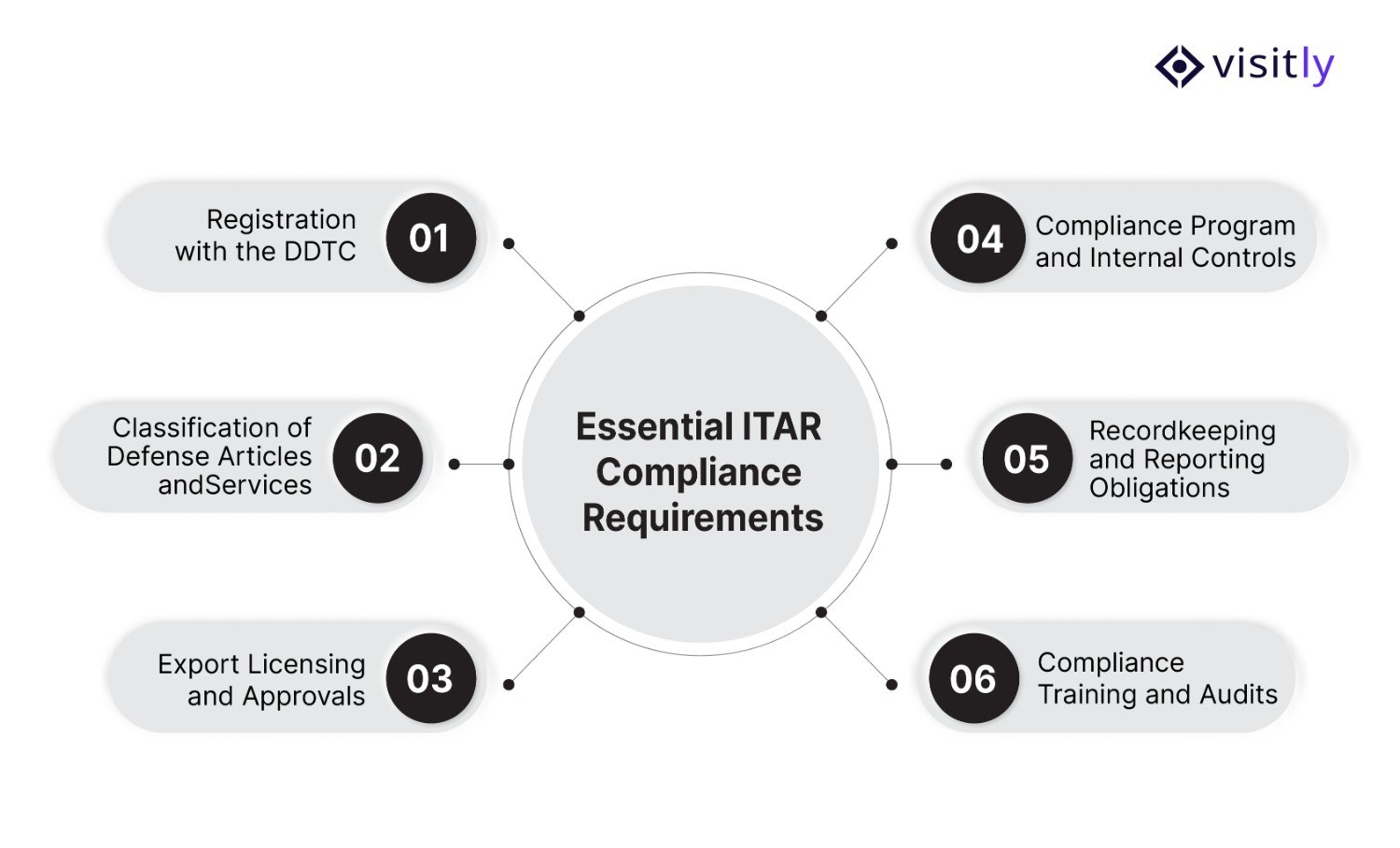
1. Registration with the Department of State:
Think of registering with the Directorate of Defense Trade Controls (DDTC) as your first step on the ITAR compliance journey. Companies involved in defense-related exports must register with the DDTC. This process involves submitting a registration form, paying a fee, and providing detailed company information. Registration itself doesn’t grant export authorization, it’s simply the starting point. It lays the groundwork for all subsequent compliance activities.
- Importance: Establishes legal standing for defense-related businesses.
- Importance: Provides the DDTC with essential company information.
- Importance: A prerequisite for obtaining export licenses.
2. Proper Classification of Items and Technical Data:
Is it a harmless widget or a strategic piece of military equipment? Accurate classification is paramount in ITAR compliance. Businesses must determine if an item falls under the U.S. Munitions List (USML) or the Commerce Control List (CCL). USML-listed items require strict ITAR compliance, while CCL-listed items fall under Export Administration Regulations (EAR). Accurate classification is the cornerstone of determining export license requirements.
- Importance: Determines the applicable export regulations.
- Importance: Guides licensing requirements and compliance procedures.
- Importance: Prevents inadvertent export of controlled items.
3. Obtaining Export Licenses:
Just like you can’t drive a car without a license, you can’t export ITAR-controlled items without the proper authorization. Businesses must apply for export licenses through the DDTC before exporting such items. This application process demands detailed information about the item, its intended end-use, and the recipient. Approval can be a lengthy process, sometimes taking weeks or even months. Businesses must strictly adhere to all conditions specified in the license.
- Importance: Legal authorization for exporting controlled items.
- Importance: Ensures exports align with national security interests.
- Importance: Prevents unauthorized proliferation of defense technology.
4. Training and Documentation:
Knowledge is power, especially when it comes to ITAR. Employees involved in ITAR-related activities must receive regular, comprehensive training. Businesses must meticulously document these training efforts to demonstrate compliance. Detailed documentation of classification, licensing, and all other compliance actions is also required. This documentation serves as proof of your commitment to following the rules.
- Importance: Ensures employees understand ITAR regs.
- Importance: Demonstrates a commitment to compliance.
- Importance: Facilitates audits and regulatory inquiries.
5. Recordkeeping:
Imagine trying to reconstruct a complex puzzle without any of the pieces. That’s what it’s like to face an ITAR audit without proper records. ITAR regulations mandate that businesses maintain export records, sales logs, and transfer details. These records must be stored securely and kept for a minimum of five years. Proper recordkeeping is crucial for demonstrating compliance and responding effectively to audits and regulatory inquiries.
- Importance: Provides evidence of compliant export activities.
- Importance: Facilitates audits and regulatory inquiries.
- Importance: Protects the business in case of disputes.
6. Compliance with End-Use Restrictions:
Where will it end up? Who will use it? These are critical questions in ITAR compliance. Businesses must conduct due diligence on customers, partners, and end-users. Working with unauthorized entities or sanctioned countries is strictly prohibited. Monitoring and tracking ITAR-controlled items is essential to prevent misuse and illegal diversion.
- Importance: Prevents diversion of controlled items to unauthorized parties.
- Importance: Safeguards national security interests.
- Importance: Protects the business from reputational damage.
Brownie Tip: Regularly review and update your ITAR compliance program. The regulatory landscape is constantly evolving, so staying up-to-date is crucial.
Penalties for Non-Compliance
Ignoring ITAR regs is like playing with fire; you're bound to get burned. The penalties for non-compliance are severe and can cripple a business.
In March 2023, a U.S. manufacturer faced a staggering $27 million in fines for ITAR violations, serving as a stark reminder of the financial risks involved. Enforcement trends in 2025 suggest increased scrutiny and potentially even higher penalties for non-compliant companies.
ITAR Compliance and Cybersecurity: Protecting Sensitive Defense Data
ITAR compliance is no longer limited to controlling physical access to facilities. As defense organizations increasingly store and share technical data digitally, cybersecurity plays a critical role in protecting ITAR-controlled information and Controlled Unclassified Information (CUI).
A strong compliance program combines physical security with technical safeguards to reduce the risk of unauthorized access, data breaches, and accidental disclosures.
Key cybersecurity practices include:
- Role-based access control system to limit access to authorized personnel
- Encryption for sensitive data at rest and in transit
- Multi-factor authentication (MFA) to strengthen user authentication
- Continuous monitoring to detect suspicious activity and security threats
- Secure cloud environments that protect ITAR-controlled technical data
- Identity and access management (IAM) to manage user permissions throughout the data lifecycle
Many U.S. defense contractors also align their cybersecurity programs with recognized federal security frameworks that complement ITAR requirements. While these frameworks do not replace ITAR, they help organizations strengthen security management systems controls and demonstrate a more mature compliance posture.
Commonly adopted frameworks include:
- NIST SP 800-171 Rev. 3 – Protects Controlled Unclassified Information (CUI) in non-federal systems.
- Cybersecurity Maturity Model Certification (CMMC) – Establishes cybersecurity requirements for organizations within the Defense Industrial Base (DIB).
- NIST SP 800-172 – Defines enhanced security controls for organizations handling highly sensitive controlled information.
By combining strong cybersecurity controls with physical security measures such as visitor management, access monitoring, and facility security, organizations can build a more resilient ITAR compliance program while better protecting sensitive defense information.
The Role of Visitor Management Systems in ITAR Compliance
Ignoring compliance can cost you big fines, legal trouble, and lost business. Even routine operations can unexpectedly raise ITAR compliance concerns.
Think about a visitor management system.
A robust visitor management system in the US is critical to safeguarding sensitive information and maintaining ITAR compliance.
- Enhanced Security: Controls access to restricted areas and tracks visitor movements.
- Data Protection: Prevents unauthorized access to sensitive data and technology.
- Compliance Audits: Provides detailed visitor logs for compliance audits.
- Employee Accountability: Ensures employees are aware of visitor restrictions.
- Streamlined Processes: Simplifies visitor pre-registration and management.
For example, a visitor management system can flag visitors from restricted countries or entities, preventing them from accessing areas containing ITAR-controlled information. This is a crucial workplace management trend. It can also track which visitors interact with, providing valuable information for investigations.
How Visitly Helps Support ITAR Compliance
Maintaining ITAR compliance requires more than meeting export control requirements. Organizations must also protect controlled environments by managing visitor access, documenting facility entry, and maintaining accurate records for internal reviews and regulatory audits.
Manual sign-in sheets and paper-based processes can make it difficult to consistently enforce these security standards and measures.
Visitly helps organizations modernize visitor management by digitizing check-in workflows, strengthening physical access controls, and creating a centralized record of visitor activity.
While visitor management is only one part of a broader ITAR compliance program, it plays an important role in improving workplace security and supporting audit readiness.
With Visitly, organizations can:
- Digitize visitor registration to replace paper logbooks with secure digital records.
- Pre-register visitors and contractors to streamline arrivals and improve access control.
- Verify visitor identities using photo capture and ID verification during check-in.
- Issue customized visitor badges to clearly identify authorized guests.
- Capture digital NDAs and policy acknowledgements before granting facility access.
- Maintain time-stamped entry and exit logs to support compliance reviews and audits.
- Notify employees instantly when approved visitors arrive onsite.
- Generate searchable visitor reports for security reviews and compliance documentation.
- Manage multiple facilities from a single dashboard with standardized visitor workflows.
- Customize visitor screening and approval processes based on your organization's security requirements.
Conclusion
ITAR compliance is a crucial element of responsible business practices, particularly for companies managing defense-related goods and sensitive technical data. With the regulatory landscape in 2027 tightening enforcement, ensuring proactive compliance has never been more important.
Organizations must remain vigilant, conduct routine audits, and ensure that all employees are fully trained on ITAR regulations to stay ahead of potential pitfalls. By prioritizing ITAR compliance, businesses can avoid costly penalties, safeguard their reputation, and operate securely within a highly regulated global market.
Visitly plays a key role in enhancing your ITAR compliance efforts by providing innovative solutions for managing visitor access, securing sensitive data, and maintaining ITAR-compliant facilities. With Visitly's ITAR compliance services, your company can streamline its security protocols and ensure full compliance with ease.
Don’t wait until it’s too late, ensure your business stays secure and compliant.
Contact Visitly today to learn how we can help you meet your ITAR compliance needs and protect your operations from costly violations.
FAQs
1. What is ITAR compliance?
ITAR compliance means adhering to the International Traffic in Arms Regulations (ITAR), which govern the export, import, and transfer of defense-related articles and services to protect U.S. national security.
2. Who needs to comply with ITAR?
Any company or individual involved in manufacturing, exporting, or brokering defense-related products, technical data, or services must comply with the ITAR.
3. What are the penalties for ITAR non-compliance?
Violating ITAR compliance can lead to hefty fines, loss of export privileges, and even criminal charges, with penalties reaching millions of dollars per violation.
4. How can a company ensure ITAR compliance?
Companies can maintain ITAR compliance by registering with the Directorate of Defense Trade Controls (DDTC), implementing strict access controls, conducting employee training, and maintaining proper records.
5. Does ITAR compliance apply to cloud storage and data transfers?
Yes, ITAR compliance applies to digital data. Companies must ensure that ITAR-controlled technical data is stored and transferred only within the U.S. or through secure, ITAR-compliant cloud services.