

The Moment Something Had to Change
When you're adding offices faster than most companies add headcount, the gaps in your operations don't stay small for long. For a leading AI organization operating across more than twenty global locations, visitor management had quietly become one of those gaps. Guests were arriving at offices with no consistent sign-in process. Security policy — including strict controls on office hours and guest access — was dependent on manual enforcement that varied by location. The records existed in different formats, if they existed at all. And when they needed answers about who was on-site at any given moment, there were none to give.
The previous vendor wasn't failing on features. They were failing on the thing that matters most when an organization is growing at speed: the ability to keep up. Support requests went unanswered or unresolved. Custom requirements were acknowledged but not acted on. The gap between what the organization needed and what the vendor could deliver was widening with every new office. Something had to change — and it wasn't just the software.
Company Context
The organization at the center of this story is one of the most closely watched companies in the world. As a leading AI research and deployment organization, it operates under a security posture that goes well beyond standard corporate requirements. Visitor access is tightly controlled. Office hours are enforced strictly. Guest policies exist not as bureaucratic formality but as genuine operational requirements — and the consequences of a gap are real.
With over 9,000 employees across 23 global locations, the organization has scaled rapidly. That growth is the context for everything that follows: the visitor management challenge isn't a tooling problem, it's a growth problem. Any system — and any vendor — has to be able to move as fast as the organization does.
The Breaking Point
The previous visitor management system had been in place long enough to reveal its limitations clearly. The proximate cause of the switch was customer support — inconsistent, slow to resolve, and ultimately unable to accommodate the pace at which the organization was growing. But the support failures had downstream effects that touched every dimension of the visitor experience.
Office hours enforcement — a non-negotiable given the strict guest policy — was dependent on manual processes that didn't scale. Visitor visibility across locations was inconsistent: some offices had reliable records, others didn't. Manual record-keeping created compliance risk. There was no reporting or analytics to speak of. And in an emergency, the ability to account for everyone on-site was limited by the quality of records that varied site to site. The framing that drove the search for a replacement wasn't "find a better product." It was "find a team that can keep up with us."
What They Needed:
The requirements going into the evaluation were specific and non-negotiable:
Why Visitly
The evaluation included Envoy and OfficeSpace — two well-established platforms with strong market presence. The decision to choose Visitly wasn't driven by a feature advantage. It was driven by something harder to find in a vendor evaluation: evidence that the team on the other side would actually show up.
Visitly's response time during the evaluation process was notably different from the alternatives. Custom requirements were engaged with directly, not deferred. The organization ran a pilot before committing to a full subscription — and what they saw during that pilot was a vendor that operated like a partner rather than a platform. SOC 2 Type II certification was confirmed. Custom development requests were scoped and addressed. The decision, in the end, was less about the product and more about the relationship it came with.
They found Visitly through Google Search and ChatGPT — a search process that reflects how the evaluation was approached: methodical, direct, and outcome-focused.
What Changed
The operational impact of implementing Visitly fell into two categories: things that now work that didn't before, and a global standard that simply didn't exist before.
Office hours enforcement — the feature that mattered most given the organization's strict guest policy — is now automatic. The manual processes that previously created enforcement gaps have been replaced by configurable controls that apply consistently across every location. User group customization allows individual offices to be configured for their specific requirements without breaking the global standard. And for the first time, all 23 offices are operating from the same system with the same baseline — a consistency that was impossible to achieve with the previous vendor.
The before-vs-after difference across the organization was significant across every dimension of the visitor process:
The Relationship
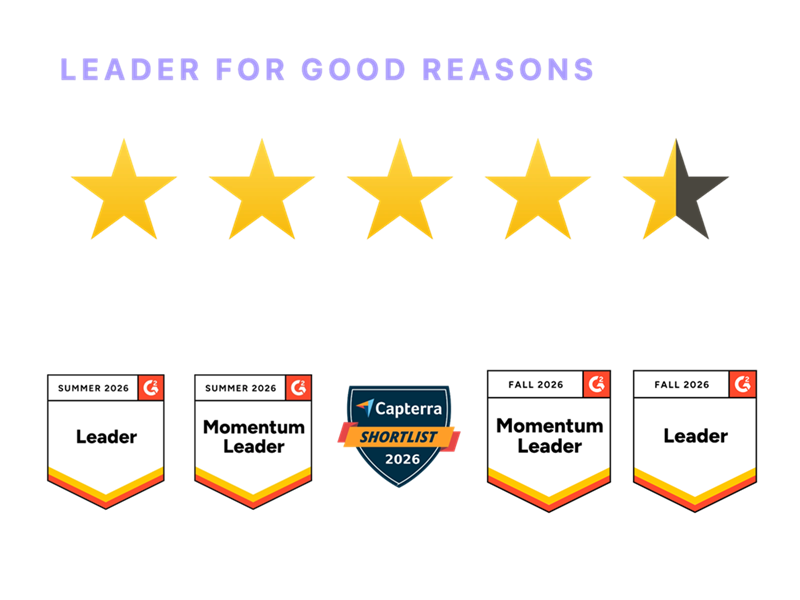
In a case study about an organization whose previous vendor failed them on support, the measure of the new relationship matters more than any feature. The customer success experience at Visitly was described simply and directly: a perfect score.
What sits behind that rating is the thing that's hardest to find in a vendor relationship at scale: the combination of responsiveness and genuine problem-solving ability. When something comes up, it gets resolved. When a custom requirement is raised, it gets addressed. The experience of being treated as a partner — rather than as a support ticket — is what the organization points to when they explain why they'd recommend Visitly to others.
The Relationship
The recommendation from the Head of Workplace Operations isn't about features or certifications or price. It's about the model of relationship the platform comes with. For organizations that are growing fast — adding locations, adding complexity, adding requirements — the ability to find a vendor that adapts with you rather than simply delivering to you is rare. Visitly, in their experience, is that vendor.
The service, they noted, has a lot of potential. That framing is intentional: this isn't a completed story. It's an active partnership, with more to build. And for a 9,000-person AI organization operating across 23 global offices, that's exactly the kind of vendor relationship they need.
"Use Visitly if you value a partnership focused on building custom solutions tailored to your company's needs. Their team is responsive, collaborative, and helpful."
This case study features a leading AI research and deployment organization with 9,000+ employees across 23 global locations. The company name has been anonymized at their request. All operational details are accurate and verified.