


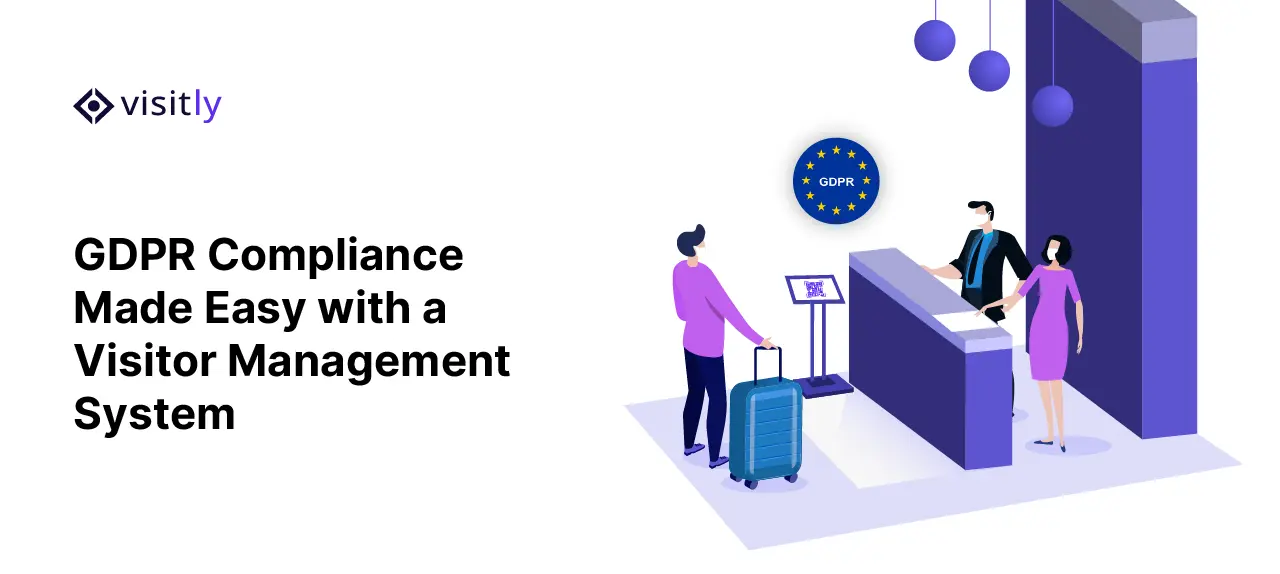
Protecting personal data has moved from being a luxury to a necessity. Businesses that neglect privacy risk more than just fines – they risk losing customer trust and credibility.
But how do you balance security and convenience in your workplace? The answer may lie in the unassuming yet powerful visitor management tool.
GDPR is leading the charge in data regulations, putting businesses under growing pressure to protect personal data – and visitor data is no exception. After all, how can you expect visitors to trust your company if their privacy isn’t taken seriously?
Let’s explore how a visitor management tool can help make your workplace GDPR-compliant, ensuring you meet legal requirements while keeping operations smooth and efficient.
Understanding GDPR and Its Relevance to Visitor Management
Before diving into how a visitor management tool can help with GDPR compliance, it’s important to understand what GDPR is and why it matters.
What is GDPR?
The General Data Protection Regulation (GDPR) is a set of regulations aimed at protecting the privacy and personal data of individuals within the European Union (EU). It was implemented in 2018, but its impact is global, as it affects any business that handles the personal data of EU citizens.
Quick Facts about GDPR:
- Global Reach: GDPR applies to any business that collects or processes the data of EU citizens, no matter where the business is located.
- Fines: Non-compliance can lead to fines up to €20 million or 4% of global annual revenue, whichever is higher.
- Data Breaches: Companies must notify authorities within 72 hours of discovering a data breach.
- Right to Erasure: Individuals have the right to request the deletion of their personal data, commonly known as the “Right to be Forgotten.”
For businesses, GDPR compliance is a must. It focuses on data protection principles such as transparency, accountability, and privacy by design. Organizations are required to ensure that data is collected lawfully, stored securely, and only kept for as long as necessary. Failure to comply can lead to hefty fines, so getting it right is critical.
Why Visitor Data Matters?
When visitors enter your workplace, they often provide personal details such as their name, contact information, and the purpose of their visit. Under GDPR, this is considered personal data, and businesses must manage visitors with the same level of care as employee or customer data..
This means that managing visitors at your workplace isn’t just about tracking arrivals – it’s about ensuring that visitor data is collected, stored, and used in a GDPR-compliant manner.
Why GDPR Compliance for Visitor Data is Critical:
- Privacy Protection: Ensures that visitor data is only accessible to authorized personnel and is not shared without consent.
- Security Measures: Helps safeguard personal data through encryption and secure storage, preventing data breaches.
- Clear Consent: Visitors can give explicit consent for their data to be collected, ensuring transparency and trust.
- Audit Trail: A visitor management tool tracks when and how data was collected, making it easier to demonstrate GDPR compliance during audits.
A visitor management tool can streamline this process, ensuring that data collection and storage practices align with GDPR’s strict requirements.
How Visitor Management Tools Help Meet GDPR Requirements
So, how can a visitor management tool help your workplace stay GDPR compliant? Let’s break it down:
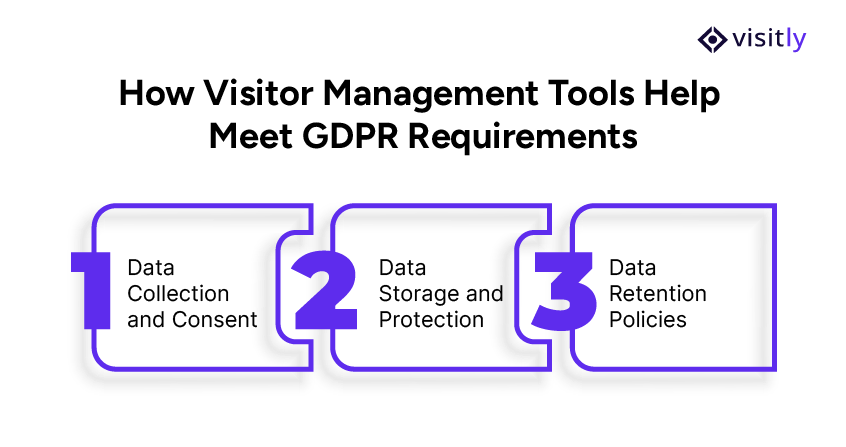
Data Collection and Consent
One of the most important principles of GDPR is obtaining explicit consent from individuals before collecting their personal data. With a visitor management tool, consent can be seamlessly integrated into the check-in process.
- Visitor Consent Forms: These tools can prompt visitors to digitally sign consent forms at check-in, confirming that they agree to the collection and processing of their data.
- Transparent Policies: The tool can display your organization’s privacy policy to ensure visitors are aware of how their data will be used.
This level of transparency not only keeps you GDPR-compliant but also helps build trust with your visitors.
Data Storage and Protection
Under GDPR, businesses are required to store personal data securely. Visitor data is no exception. A reliable visitor management tool encrypts data both at rest and in transit, making it inaccessible to unauthorized individuals.
- Secure Cloud Storage: Many visitor management tools store data in the cloud, which offers secure, redundant storage solutions that meet GDPR’s stringent requirements.
- Role-Based Access: Only authorized personnel should have access to visitor data. A visitor management tool ensures this by providing role-based access controls.
Data Retention Policies
GDPR emphasizes that personal data should not be kept longer than necessary. For visitor data, this means setting clear retention periods. A visitor management tool makes it easy to configure automatic data deletion or anonymization after a specified period, ensuring compliance with GDPR’s data retention rules.
- Automated Deletion: Many systems can be programmed to delete visitor data after a set number of days, ensuring that your business doesn’t retain unnecessary information.
Automating this process helps businesses avoid human error and ensures that visitor data is never kept longer than required. This approach not only improves efficiency but also enhances data security, ensuring compliance with GDPR guidelines.
Key Features of a GDPR-Compliant Visitor Management Tool
Not all visitor management tools are created equal.
For a tool to be truly GDPR-compliant, it needs to include certain features that make it easy to manage visitor data responsibly. Here are some notable features of a GDPR-compliant visitor management tool:
Privacy Policy Integration
A GDPR-compliant visitor management tool should allow you to easily integrate your privacy policy into the system. Visitors should be able to read and acknowledge this policy when they check in.
Visitor Consent Forms
In addition to providing transparency, GDPR requires businesses to obtain consent for data processing. A visitor management tool should offer customizable consent forms that visitors can digitally sign, confirming their agreement.
Access Control and Data Security
A key feature to look for in any visitor management tool is robust data security. The system should be equipped with encryption, secure cloud storage, and strict access controls to ensure that sensitive visitor data is protected from unauthorized access.
Data Access and Portability
GDPR also grants individuals the right to access their personal data and request its deletion. A good visitor management tool will make it easy for visitors to request copies of their data or ask for it to be deleted from your records.
Benefits of Using a Visitor Management Tool for GDPR Compliance
Now that we’ve covered the basics, let’s explore some of the key benefits of implementing a visitor management tool in your workplace:
- Efficient Data Handling: A visitor management tool streamlines data collection, reducing the likelihood of human error. With automated forms, digital consent, and secure storage, the tool helps you manage visitor data with minimal effort.
- Audit Readiness: GDPR compliance isn’t just about following the rules – it’s also about being prepared for audits. A visitor management tool can generate detailed reports on visitor data collection, consent, and retention, making it easy to demonstrate compliance during audits.
- Improved Security and Privacy: The security features of a visitor management tool – including encryption, cloud storage, and role-based access – ensure that visitor data is kept safe from unauthorized access, minimizing the risk of data breaches.
How to Choose the Right Visitor Management Tool for GDPR Compliance?
Selecting the right visitor management tool is crucial for ensuring GDPR compliance. Here are some factors to consider when making your choice:
- Evaluating Features: Look for a tool that offers robust data security features, customizable consent forms, and easy integration with your privacy policy.
- Vendor Responsibility: Your visitor management tool provider should also be GDPR-compliant. Make sure the vendor offers guarantees regarding data storage, security, and privacy.
- Cost vs. Compliance: While it may be tempting to go for a cheaper solution, consider the cost of non-compliance. A robust, GDPR-compliant system may cost more upfront but will save you from hefty fines down the line.
How to Implement GDPR-Compliant Visitor Management
Once you’ve chosen the right tool, it’s time to put it into practice. Here are some best practices to ensure that your visitor management system helps you stay compliant:
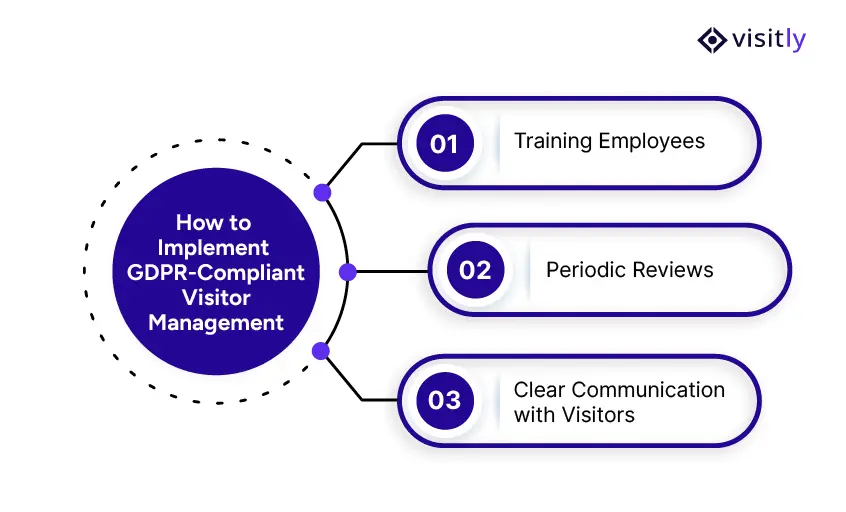
- Training Employees: Ensure all staff members understand GDPR and how to use the visitor management system to collect, store, and access visitor data.
- Periodic Reviews: Regularly review your data retention and access policies to ensure they remain in line with GDPR guidelines.
- Clear Communication with Visitors: Make sure visitors are fully aware of how their data will be used and stored. Transparency is key to building trust and staying compliant.
Visitly: Your Partner in GDPR Compliance
If you’re looking for a reliable, GDPR-compliant visitor management tool, Visitly is an excellent choice. Designed to streamline visitor check-ins, enhance workplace safety, and protect sensitive data, Visitly supports your GDPR program.
Here are some key points from Visitly’s GDPR compliance practices:
- Data Processing Addendum (DPA):
- Visitly provides a standard Data Processing Addendum (DPA) for customers collecting data from the EU.
- The DPA meets GDPR requirements for a processor agreement. Your own obligations as the data controller remain yours.
- Visitly signs its own DPA with customers at contract and does not sign customer-provided DPAs. The standard DPA is available to download, and changes to it can be negotiated on custom deployments. One of our compliance experts can walk you through it.
- Consent and Transparency:
- Visitly has updated its cookie policy for full transparency about the cookies being set and their purpose.
- Clear and concise Terms of Service and Privacy Policy describe how personal data is collected, processed, shared, and stored.
- Data Subject Rights:
- Visitly ensures that users can access, update, retrieve, and delete their personal data easily.
- Visitor data retention is configurable per customer, and the default for visitor personal data is 90 days. When an account is deleted, the data is disposed of in accordance with Visitly’s Terms of Service and Privacy Policy.
- Risk Assessments (DPIA):
- A Data Protection Impact Assessment (DPIA) process is in place to identify and minimize privacy risks.
- Visitly’s engineering team conducts thorough privacy and security assessments before implementing any changes that could impact personal data.
- Breach Management:
- Visitly has a breach management plan in place, ensuring GDPR-compliant processes for escalating and notifying data subjects in the event of a breach.
Visitly’s Commitment to GDPR Compliance
Visitly ensures that all personal data, including visitor data, is handled with care and in full compliance with GDPR guidelines. The company prioritizes transparency, security, and privacy, empowering businesses to manage their visitor data efficiently while adhering to GDPR’s strict standards.
Visitly simplifies the process of managing visitors at the workplace while supporting your GDPR compliance.
Final Thoughts
Ignoring GDPR compliance these days is like leaving the front door wide open – you’re asking for trouble. It’s not just a legal obligation; it’s essential for protecting your business and earning the trust of your visitors.
With a visitor management tool like Visitly, your workplace can efficiently collect, store, and manage visitor data while staying compliant with GDPR’s strict guidelines. By implementing such a tool, you’ll not only safeguard personal data but also improve your business’s security and privacy practices.
Ready to make your workplace GDPR-compliant and boost your visitor management process? Book a demo with Visitly today to see how it can help your business stay secure, compliant, and efficient.
FAQs
Does GDPR apply to visitor sign-in data?
Yes. A visitor's name, contact details, photo and ID are personal data under GDPR. The regulation covers organizations established in the EU and those outside it that offer goods or services to people in the EU or monitor their behavior. A US company with an EU office is covered for that office's visitors.
Do I need a visitor's consent to collect sign-in data under GDPR?
Not always. Consent is one of six lawful bases under GDPR, and many organizations rely on legitimate interests for building security instead. Whatever the basis, visitors must be told at sign-in what is collected and why. Your data protection officer or counsel decides which basis fits each type of data you collect.
How long can visitor records be kept under GDPR?
GDPR sets no fixed period; personal data may be kept only as long as it is needed for the purpose it was collected for. Set a retention period per record type and delete on schedule. In Visitly, retention is configurable per tenant, and visitor personal data is removed after 90 days by default.
What should a visitor management system include to support GDPR?
Look for a privacy notice shown at check-in, retention periods you can set with automatic deletion, and role-based access to visitor records. Add encryption in transit and at rest, and a way to find, export or delete one person's data on request. The vendor should also sign a data processing agreement.
Does a visitor management system make my workplace GDPR compliant?
No. Your organization is the data controller and stays responsible for lawful basis, notices and retention; the vendor is your processor. What the vendor owes you is a data processing agreement and sound security. Visitly signs a DPA at contract, uses Standard Contractual Clauses and publishes its sub-processor list.
Where is visitor data stored, and can it stay in the EU?
It depends on the vendor, so ask where data is hosted and which sub-processors touch it. Transfers of personal data out of the European Economic Area need a safeguard such as Standard Contractual Clauses. Visitly hosts in the US by default and offers EU region pinning. Our team can walk you through how region pinning works.