


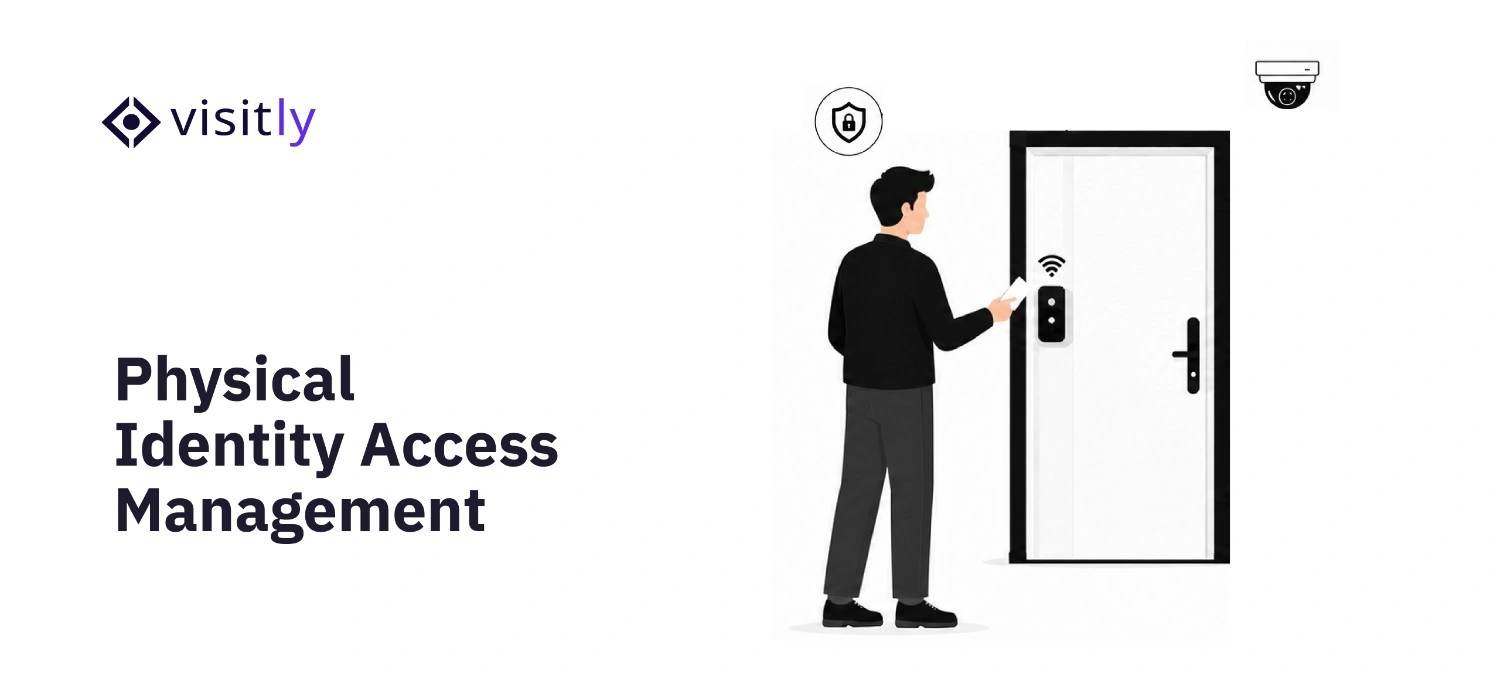
A visitor log confirms entry, but it cannot prove whether someone had the right access, entered approved areas, or retained valid permissions during their visit.
For enterprises managing contractors, vendors, and visitors across multiple locations, disconnected visitor and access systems can create gaps:
- Visitor identities may not link to physical access permissions
- Temporary credentials may remain active after approval periods
- Security teams may lack complete audit trails
- Visitor activity may be difficult to trace during incidents
Modern visitor management systems help organizations capture verified visitor identities, manage approvals, and maintain accurate access records. However, when visitor data remains disconnected from broader physical security workflows, enterprises still face visibility challenges.
Physical Identity and Access Management (PIAM) helps bridge this gap by connecting identity verification, access decisions, and physical security workflows. Supported by advanced visitor management software, PIAM enables organizations to coordinate visitor information with existing access control infrastructure, improving visibility, governance, and compliance.
What Is Physical Identity and Access Management (PIAM)?
Physical Identity and Access Management (PIAM) is an enterprise security framework that connects identity information with physical access decisions across facilities. It helps organizations determine who requires access, why access is needed, where access should be allowed, and when those permissions should expire.
Unlike traditional access control systems that mainly manage doors, badges, and credentials, PIAM focuses on identity governance across the physical environment.
PIAM typically connects:
- Identity sources: HR systems, identity providers, visitor records, and vendor databases
- Access control systems (PACS): Door systems, badge systems, and physical entry points
- Security workflows: Approvals, visitor policies, compliance checks, and audit records
For example, when a contractor is approved for a specific maintenance task, a PIAM framework can help ensure access permissions match the approved location and duration. Once the assignment ends, access can be reviewed or removed based on defined policies.
How Is PIAM Different From Traditional Access Control?
Traditional access control mainly focuses on controlling entry points and managing physical credentials. It answers the question, "Can this person open this door?”
Traditional access control typically includes:
- Granting door access
- Managing access cards or credentials
- Controlling physical entry points
PIAM goes beyond basic entry control by adding identity-based governance and visibility.
PIAM includes:
- Identity verification: Confirming who the individual is before providing access
- Visitor lifecycle management: Managing access from registration to exit
- Access approvals: Ensuring permissions are reviewed before being granted
- Identity records: Maintaining detailed user and visitor information
- Compliance visibility: Providing access history and records for security reviews and audits
PACS vs VMS vs PIAM: Understanding the Difference
Why Do Enterprises Need Physical Identity and Access Management for Visitor Security?
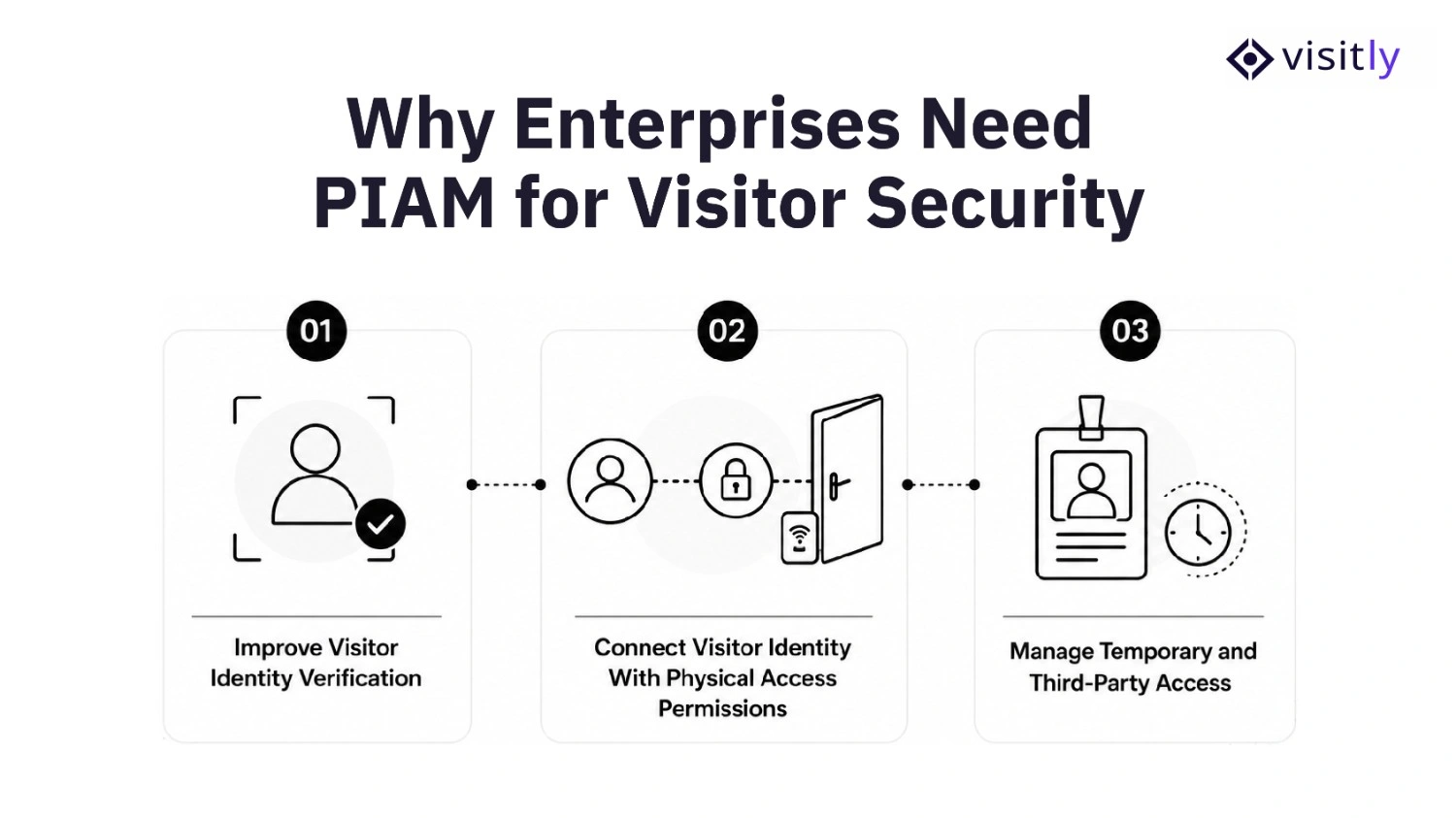
Enterprises need physical identity and access management for visitor security for these reasons:
1. Improve Visitor Identity Verification
2. Connect Visitor Identity With Physical Access Permissions
3. Manage Temporary and Third-Party Access
Physical Identity and Access Management solutions help enterprises connect visitor identity, access decisions, and security workflows. Unlike traditional visitor processes, PIAM provides better control over who enters facilities, why they enter, and what access they receive.
Enterprises often struggle with:
- Disconnected visitor and access control systems
- Limited identity verification
- Manual visitor records
- Poor visibility after check-in
- Managing temporary access
1. Improve Visitor Identity Verification
PIAM helps organizations verify visitors before granting access and maintain accurate identity records.
Key capabilities include:
- Capture visitor information
- Verify identities before entry
- Reduce unauthorized access risks
- Maintain visitor records
2. Connect Visitor Identity With Physical Access Permissions
PIAM links visitor identity with access decisions to ensure appropriate facility access.
Organizations can:
- Match access with visit purpose
- Restrict sensitive areas
- Improve security visibility
3. Manage Temporary and Third-Party Access
PIAM helps enterprises control external access throughout its lifecycle.
Key capabilities include:
- Manage contractor and vendor visits
- Control temporary permissions
- Track access activity
- Remove expired access
What are the 3 Core Security Failure Points Solved by PIAM Integration?
The 3 core security failure points solved by PIAM integrations are:
1. Unmanaged Third-Party and Contractor Access
2. Manual Identity Verification Gaps
3. Limited Audit Visibility Across Physical Access Systems
1. Unmanaged Third-Party and Contractor Access
The Risk:
Contractors and vendors often require temporary facility access, but manually managing their permissions can lead to outdated credentials and unnecessary access exposure.
The PIAM Approach:
- Connect contractor identity with approved access requirements
- Align permissions with work assignments and approved locations
- Review access duration based on business needs
- Support automatic removal of expired permissions through connected systems
2. Manual Identity Verification Gaps
The Risk:
Manual visitor verification processes can create inconsistencies and make it difficult to confirm visitor identity before granting access.
The PIAM Approach:
- Capture verified visitor identity information
- Connect visitor records with security workflows
- Support screening and approval processes before access is granted
- Maintain digital records for future reviews
3. Limited Audit Visibility Across Physical Access Systems
The Risk:
Security teams may have visitor records, access logs, and approval information stored across separate systems, making audits and investigations more difficult.
The PIAM Approach:
- Link visitor identity with access activity
- Maintain time-stamped security records
- Provide visibility into approved access and actual activity
- Support compliance reviews with organized documentation
How Does PIAM Improve Enterprise Visitor Security?
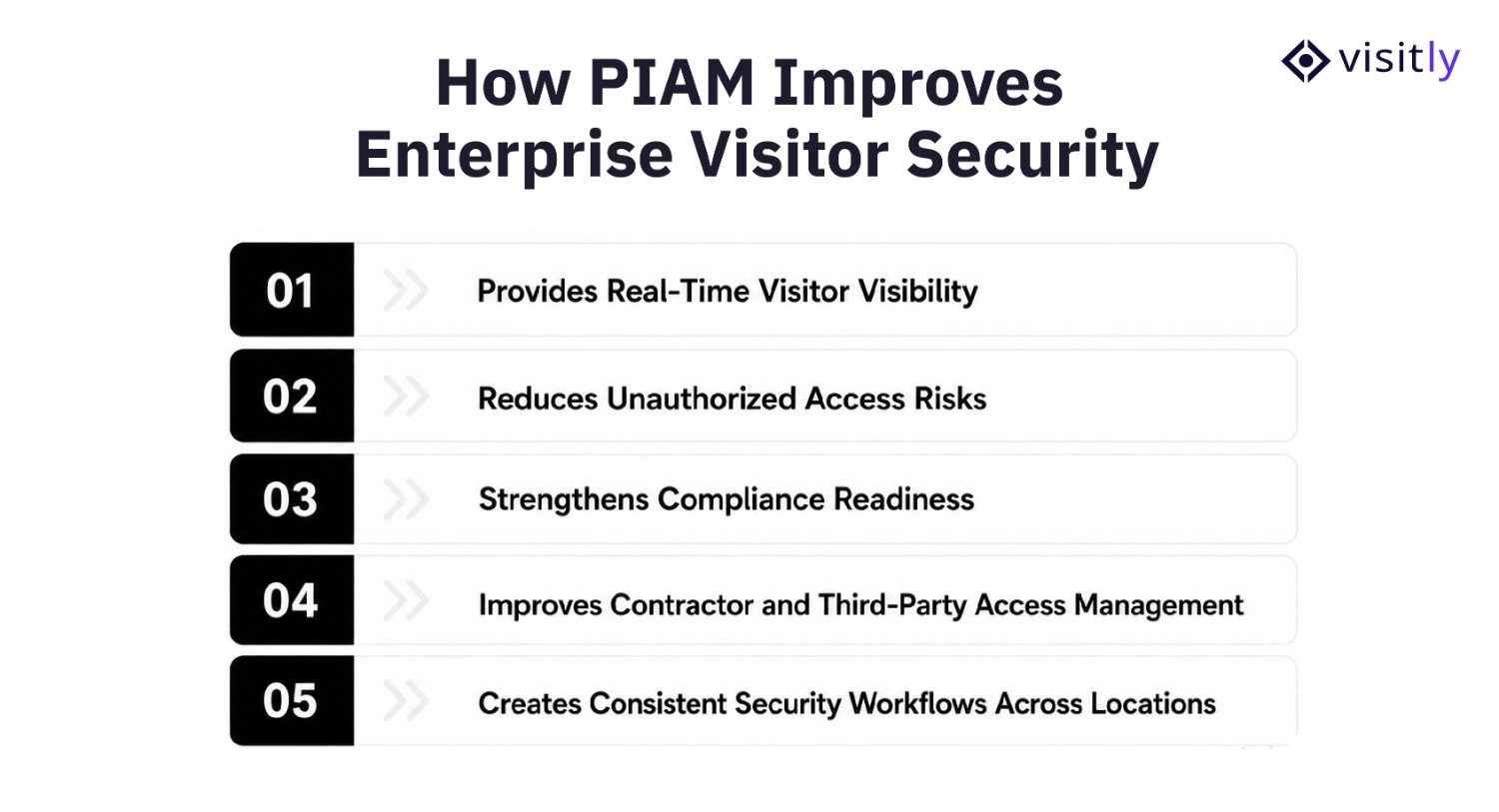
PIAM improves enterprise visitor security in these ways:
1. Provides Real-Time Visitor Visibility
2. Reduces Unauthorized Access Risks
3. Strengthens Compliance Readiness
4. Improves Contractor and Third-Party Access Management
5. Creates Consistent Security Workflows Across Locations
Visitor security becomes difficult when identity information, access permissions, and facility activity are managed separately. PIAM helps enterprises create a more controlled approach by ensuring every visitor, contractor, and third-party user is verified, approved, and tracked throughout their access lifecycle.
For security teams, this means moving from reactive visitor tracking to proactive access management. Instead of only knowing who checked in, enterprises gain better control over visitor authorization, facility access, and security response.
1. Provides Real-Time Visitor Visibility
Security teams need immediate visibility into who is present inside a facility, especially across large offices, campuses, and restricted environments. PIAM helps maintain accurate occupancy information and improves awareness of visitor activity.
Key benefits include the following:
- View current visitors inside facilities
- Track visitor check-in and check-out activity
- Quickly identify people inside a location during emergencies
- Support security teams with accurate occupancy information
- Improve response during incidents or investigations
2. Reduces Unauthorized Access Risks
Visitor access should be based on verified identity and business requirements, not only a sign-in record. PIAM helps organizations apply stronger controls before granting physical access control.
Key benefits include the following:
- Verify visitor identity before facility entry
- Ensure access requests follow approval workflows
- Limit access to authorized areas only
- Monitor visitor activity during the visit
- Reduce risks from unauthorized or unmanaged access
3. Strengthens Compliance Readiness
Enterprises need documented evidence that physical access is properly managed. PIAM helps security and compliance teams maintain records required for internal reviews and external audits.
Key benefits include the following:
- Maintain a digital visitor management system and access records
- Track historical access activity
- Provide evidence during security audits
- Improve documentation for ISO 27001, SOC 2, and compliance reviews
- Support consistent access governance practices
4. Improves Contractor and Third-Party Access Management
Contractors and vendors often require temporary access to facilities, making lifecycle management critical. PIAM helps enterprises track external users from approval through access removal.
Key benefits include the following:
- Monitor contractor and vendor visits
- Manage temporary access periods
- Maintain external user records
- Review third-party access activity
- Remove outdated permissions when access is no longer required
5. Creates Consistent Security Workflows Across Locations
Multi-location enterprises often face security gaps when each facility follows different visitor processes. PIAM helps standardize access procedures while providing centralized oversight.
Key benefits include the following:
- Apply consistent visitor security policies across locations
- Centralize access information
- Improve collaboration between enterprise security management and workplace teams
- Reduce manual access management efforts
- Support scalable security operations as organizations grow
How Does Visitly Support Physical Identity and Access Management?
Physical Identity and access management depend on accurate identity information, access control system workflows, and reliable records. Visitly strengthens this process by improving how enterprises manage visitor and contractor access at the workplace level.
Visitly helps enterprises manage visitor security through:
- ID scanning and identity verification to capture accurate visitor information
- Digital visitor registration for employees, contractors, and guests
- Visitor screening workflows to support security requirements
- Contractor management for third-party access tracking
- Digital visitor records for audits and investigations
- Access control integrations to connect visitor workflows with existing security systems
These capabilities help enterprises improve visibility into non-employee access while creating more structured workplace security processes.
1. Connect Visitor Identity With Workplace Security
Knowing who enters a facility is the foundation of effective physical access management. Visitly helps enterprises connect visitor identity with workplace safety checklists and workflows by creating a clear record of every visit.
Organizations can:
- Know who enters facilities and when
- Maintain complete visitor history
- Improve visibility into visitor activity
- Support faster security decisions during incidents
2. Improve Contractor and Third-Party Access Management
Contractors and vendors often require temporary access to enterprise facilities, making tracking and oversight essential. Visitly helps organizations manage third-party visits with better control and visibility.
Key capabilities include:
- Track contractor visits
- Maintain contractor management software for access records
- Monitor external user activity
- Reduce risks from unmanaged third-party access
3. Maintain Audit-Ready Visitor Records
Accurate records are essential for security reviews, investigations, and compliance requirements. Visitly helps enterprises maintain organized digital records instead of relying on manual visitor logs.
Organizations can access the following:
- Searchable visitor logs
- Historical access records
- Digital security documentation
- Visitor activity information for audits and reviews
Physical Identity and Access Management Checklist for Better Visitor Security for 2027
A strong PIAM approach requires more than registering visitors at entry points. Enterprises should regularly review identity verification, access controls, visitor records, and security documentation to ensure physical access remains controlled and auditable.
Use this checklist to evaluate your visitor security readiness:
Closing Thoughts
Visitor security cannot rely only on sign-in records in 2027. Enterprises need a connected approach that combines identity visibility, access control, and security workflows to understand who enters their facilities and how access is managed.
Physical Identity and Access Management (PIAM) helps bridge the gap between visitor identities, physical access permissions, and workplace security processes. By connecting these elements, enterprises can improve security, strengthen compliance readiness, enhance workplace safety, and gain better operational control.
As visitor and contractor access requirements continue to grow, organizations need solutions that provide accurate records, better visibility, and stronger access governance.
Book a demo with Visitly experts to see how you can improve visitor security with smarter identity verification, digital access records, and secure workplace workflows.
FAQs
1. What is Physical Identity and Access Management (PIAM)?
Physical Identity and Access Management (PIAM) is a framework that connects identity information with physical access permissions. It helps organizations manage who can access facilities, why they need access, and how permissions are controlled.
2. How does PIAM improve visitor security?
PIAM improves visitor security by connecting visitor identity verification, access permissions, and security workflows. It helps enterprises track visitors, control access, maintain records, and reduce unauthorized entry risks.
3. What is the difference between PIAM and traditional access control?
Traditional access control mainly manages physical entry points and credentials. PIAM adds identity management, visitor lifecycle tracking, access approvals, audit records, and better visibility into physical access activity.
4. Why do enterprises need Physical Identity and Access Management solutions?
Enterprises need PIAM solutions to manage growing visitor, contractor, and third-party access requirements. PIAM helps improve security visibility, compliance readiness, and control over physical access across facilities.
5. How does visitor management software support PIAM?
Visitor management software supports PIAM by managing visitor registration, identity verification, screening, notifications, and digital visitor records. It helps connect visitor identity with workplace security processes.