


You know exactly who signed in at your front desk this morning. But where are they right now?
That question exposes the biggest blind spot in most workplace security programs.
Organizations invest in visitor registration, badge printing, and sign-in kiosks, then stop tracking the moment someone walks past the lobby. The result: nobody can confirm who's actually inside during a security incident, an emergency evacuation, or a surprise compliance audit, and contractor access rarely gets reviewed at all.
This is the gap real Physical Security Management has to close.
Check-in tells you who arrived. It doesn't tell you who's still on-site, which areas they accessed, or whether their visit matches what was authorized. A basic sign-in sheet isn't a security strategy; a right visitor management system is built to track that full lifecycle and keep workplace safety intact from arrival to exit, not just the front door.
So, now let's understand what physical security management means.
What Is Physical Security Management?
Physical Security Management is the ongoing process of protecting people, physical assets, and facility access through policies, technology, and monitoring, covering everything from entry authorization to incident response. It's broader than the visitor check-in process alone.
Visitor management is one component.
Physical Security Management also governs employee access, contractor permissions, asset protection, and workplace safety protocols during emergencies, which is the full operational picture, not just who signed the log.
Many teams treat "visitor management" and "physical security management" as interchangeable. They're not. A visitor management system handles registration and check-in.
On the other hand, physical security management is the broader strategy; it asks whether that visitor's access matches policy, whether their movement is tracked in real time, and whether your team can answer "who's in the building right now?" without checking three disconnected systems.
What Are the Biggest Physical Security Management Gaps Enterprises Face?
The biggest physical security management gaps enterprises face are the following:
- No visibility into current visitors and occupants during emergencies
- Manual visitor logs disconnected from digital systems
- Unmanaged or expired contractor access
- Inconsistent visitor security policies across sites
- Lack of reliable audit trail for compliance reviews
- Delayed detection of unauthorized movement
Many enterprises have visitor check-in processes in place but still lack complete visibility after a visitor enters the facility. These gaps create challenges for security teams managing emergencies, compliance requirements, contractor access, and multi-location operations.
The most common Physical Security Management gaps include:

1. No Visibility Into Current Visitors and Occupants During Emergencies
Many organizations can record who entered a facility but cannot quickly identify who is still inside during an emergency. Without real-time occupancy visibility, security teams may struggle with evacuation management, visitor accountability, and emergency response coordination.
2. Manual Visitor Logs Disconnected From Security Systems
Paper-based logs and disconnected visitor records make it difficult to retrieve accurate information when needed. Manual processes increase the risk of incomplete records, duplicate entries, and delays during security investigations or compliance audits.
3. Unmanaged or Expired Contractor and Vendor Access Permissions
Contractors, vendors, and maintenance teams often require temporary facility access, but poor tracking can result in outdated permissions or unauthorized entry. Enterprises need clear processes to approve, monitor, and remove third-party access across locations.
4. Inconsistent Visitor Security Policies Across Multiple Locations
Organizations operating across multiple sites often face inconsistent visitor procedures, making security standards difficult to enforce. Without centralized workflows, different locations may follow check-in flow, screening, and access management practices.
5. Lack of Reliable Audit Trails for Compliance Reviews
Compliance frameworks such as ISO 27001 and SOC 2 require organizations to demonstrate effective physical security controls. Without accurate visitor history, access records, and digital audit trails, enterprises may struggle to provide evidence during security assessments.
6. Delayed Detection of Unauthorized Visitor Movement Inside Facilities
A visitor check-in record only confirms entry; it does not provide ongoing visibility into visitor activity. Without better monitoring and access workflows, security teams may detect unauthorized movement too late to prevent potential incidents.

How Physical Security Management Software Closes the Gap
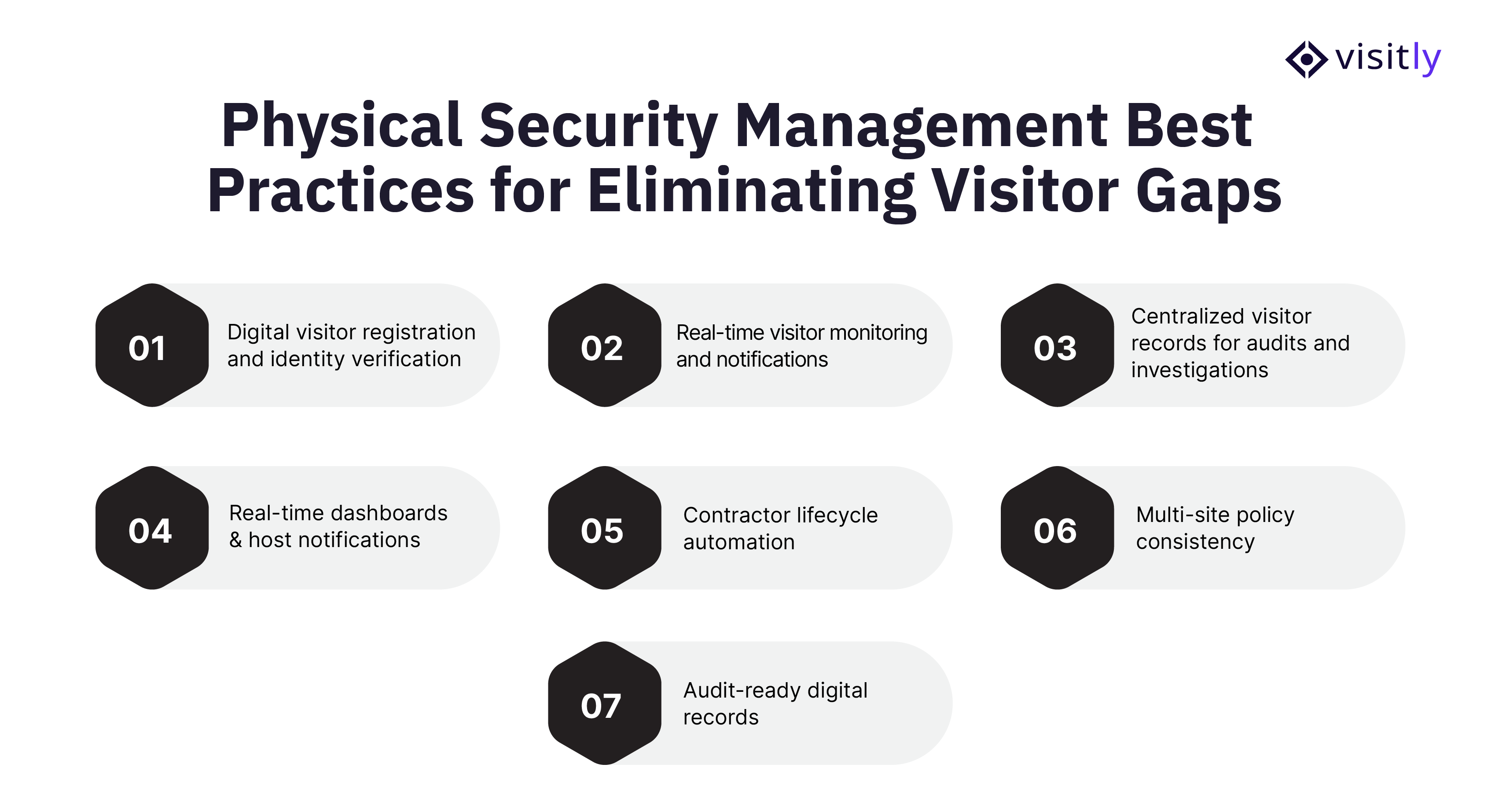
Physical security management software closes the gap in the following ways:
- Digital visitor registration and identity verification
- Real-time visitor monitoring and notifications
- Centralized visitor records for audits and investigations
- Real-time dashboards & host notifications
- Contractor lifecycle automation
- Multi-site policy consistency
- Audit-ready digital records
Modern physical security management software helps enterprises move beyond basic visitor registration systems by creating a complete security workflow across visitor access, identity verification, monitoring, compliance, and incident response.
Instead of relying on disconnected systems or manual records, organizations can centralize visitor data, improve access visibility, and maintain stronger workplace security policies and controls.
1. Digital Visitor Registration and Identity Verification
Traditional visitor logs only capture basic entry details and often leave security teams with limited information. Digital visitor management systems help enterprises collect accurate visitor information, verify identities, and ensure every visit follows approved security procedures.
Key capabilities include:
- Contactless check-in: Contactless technology allows visitors to register quickly while reducing manual front-desk processes.
- Visitor information capture: Records essential details such as visitor identity, purpose of visit, and host information.
- ID scanning and verification: Helps confirm visitor identity before granting facility access.
- Pre-registration: Visitor pre-registration enables employees or hosts to register expected visitors in advance and reduce unauthorized entry risks.
- Visitor screening questions: Allows organizations to collect security-related information before access is approved.
- Approval workflows: Ensure visitors, contractors, and third parties follow defined authorization processes.
2. Real-Time Visitor Monitoring and Notifications
Security visitor management does not end after check-in. Enterprises need continuous visibility into who is inside their facilities and whether visitor activity matches approved access.
Touchless visitor management platforms provide real-time monitoring through the following:
- Host notifications: Emergency notifications automatically alert employees when their visitors arrive.
- Security alerts: Notify security teams about unusual or unauthorized visitor activity.
- Current visitor visibility: Provide an accurate view of who is currently onsite.
- Emergency awareness: Help security teams quickly identify visitors present during emergencies.
3. Centralized Visitor Records for Audits and Investigations
Compliance teams often struggle when visitor information is stored across paper logs, spreadsheets, or disconnected systems. Physical security management software creates centralized records that improve audit readiness and investigation capabilities.
Key capabilities include:
- Searchable visitor history: Quickly retrieve past visitor details when required.
- Digital audit trails: Maintain accurate records of entry, exit, and access activity.
- Compliance reporting: Support security reviews and frameworks such as ISO 27001 and SOC 2.
- Incident investigation support: Help security teams analyze visitor activity during security events.
4. Real-Time Dashboards and Host Notifications
Large enterprises need a centralized view of visitor activity across facilities. Real-time dashboards provide security teams with visibility into visitor volume, active visitors, upcoming visits, and access trends.
These dashboards help organizations:
- Monitor visitor activity across locations
- Identify unusual access patterns
- Improve security decision-making
- Coordinate visitor management access control between teams
5. Contractor Lifecycle Automation
Contractors and third-party vendors often create additional security risks because their access requirements change frequently. An automated visitor management system helps organizations manage the entire contractor lifecycle.
This includes:
- Tracking contractor access periods
- Managing access expiry and renewals
- Revoking permissions when work is completed
- Maintaining contractor visit history
6. Multi-Site Policy Consistency
Enterprises operating across multiple offices need consistent visitor security management systems. Physical security management software enables organizations to apply standardized workflows across locations while maintaining centralized visibility.
Organizations can:
- Create standard visitor procedures
- Apply consistent screening requirements
- Manage multiple locations from one platform
- Maintain centralized security oversight
7. Audit-Ready Digital Records for ISO 27001 and SOC 2 Compliance
Physical security controls are an important part of security and compliance frameworks such as ISO 27001 and SOC 2. Enterprises must demonstrate that visitor access is controlled, monitored, and documented.
Digital visitor management helps organizations prepare audit evidence by enabling them to:
- Replace manual visitor logs with digital records
- Capture visitor information securely
- Maintain searchable access history
- Generate security reports for reviews
- Provide documented evidence during audits
How Visitly Solves These Physical Security Management Gaps
Visitly helps enterprises close visitor tracking gaps by transforming visitor management from simple check-in into a complete workplace security workflow. By combining digital registration, identity verification, contractor management, and real-time visibility, Visitly helps organizations improve physical security controls and maintain audit-ready records.
Learn more about Visitly’s security and compliance, contractor management, and visitor management system capabilities.
1. Secure Visitor Access Management
Visitly strengthens visitor access control with secure workflows that help enterprises verify, screen, and manage every visitor before granting facility access.
- Digital visitor registration
- ID scanning and verification
- Custom visitor screening questions
- Secure check-in workflows
- Pre-registration for expected visitors
2. Maintain Audit-Ready Visitor Records
Visitly helps security and compliance teams maintain accurate visitor records with centralized digital logs and searchable access history.
- Digital visitor logs
- Searchable visitor history
- Compliance-ready documentation
- Complete access visibility
3. Improve Workplace Security With Real-Time Visibility
Visitly gives enterprises better control over visitor activity by providing real-time updates and centralized visibility across workplace locations.
- Instant host notifications
- Contractor management platforms
- Emergency visitor tracking
- Multi-location security visibility

Closing Thoughts
Physical security is no longer just about controlling who enters a facility. Enterprises need complete visibility throughout the visitor lifecycle from pre-registration and identity verification to access tracking, emergency response, and audit documentation.
Digital visitor management helps organizations move beyond manual processes by improving security visibility, strengthening compliance readiness, and creating consistent access workflows across locations. The key shift is simple: check-in is only the first step, not the finish line.
Visitly helps enterprises build secure, audit-ready visitor workflows with digital records, real-time notifications, contractor management, and smarter workplace access controls.
Strengthen your physical security management strategy with Visitly’s visitor management platform. Improve visitor visibility, maintain compliance-ready records, and create a safer workplace.
Book a Visitly demo and explore the platform.
FAQs
1. What is physical security management?
Physical security management is the process of protecting people, facilities, assets, and sensitive information through access controls, visitor monitoring, security procedures, and technology-driven workflows.
2. Why is visitor tracking important for physical security?
Visitor tracking helps organizations maintain visibility into who enters and exits facilities, improve emergency response, investigate incidents, and provide accurate records for compliance audits.
3. How can companies improve physical security management?
Companies can improve physical security management by implementing digital visitor management systems, strengthening access controls, monitoring visitor activity, managing contractors, and maintaining accurate security records.
4. What are the common gaps in visitor management systems?
Common visitor management gaps include limited visibility after check-in, manual visitor logs, unmanaged contractor access, inconsistent security processes, and missing audit records.
5. How does physical security management software help enterprises?
Physical security management software helps enterprises automate visitor registration, verify identities, monitor visitor activity, maintain digital records, and improve compliance readiness.