


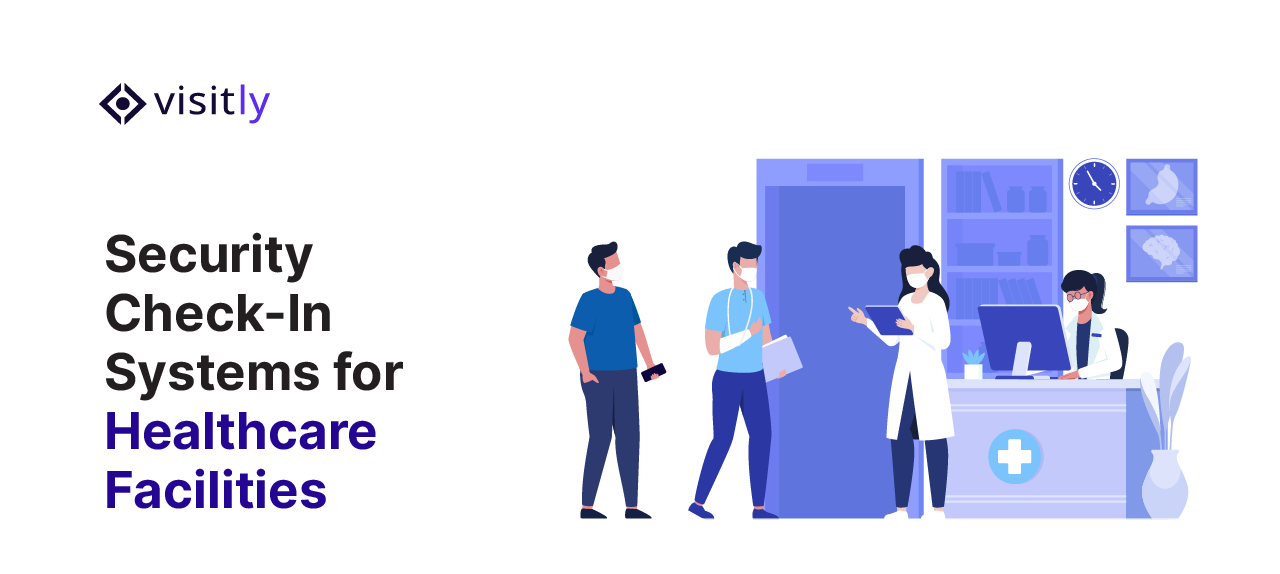
Here’s a critical question: Are your healthcare facility’s check-in systems exposing you to security and compliance failures?
Recent statistics show nearly 40% of healthcare facilities report unauthorised access issues. Meanwhile, 70% experience bottlenecks during peak visitor hours.
These issues impact patient experience and compromise workplace safety, compliance, and operational efficiency.
Consider this: Every visitor, contractor, and staff member entering a healthcare facility poses a potential security concern. Without the right systems in place, organizations are left in the dark and must deal with manual processes and outdated security management systems.
But here’s the good news: You can safeguard your facility and streamline your operations with the right security visitor management system.
A modern, secure check-in system can do far more than just manage visitors. It offers robust features like real-time alerts, compliance tracking, and data protection. This not only minimizes security risks but also enhances the visitor check-in process and contractor management, ultimately reducing bottlenecks and optimizing efficiency.
In this article, we explore the Top 5 Security Check-In Systems for Healthcare Facilities, diving into how these solutions tackle today’s most pressing security and compliance challenges.
Let us begin our review.
What are the Top 5 Security Check-In Systems for Healthcare Facilities?
The list of 5 security check-in systems for healthcare facilities is
- Visitly
- HID Global
- FacilityOS
- Helixbeat
- Certify Health
As healthcare visitor management grows more complex and busy, the need for efficient and secure systems becomes more urgent. Security check-in systems reduce entry bottlenecks and help ensure compliance with healthcare regulations, such as HIPAA. They are integral to maintaining smooth and secure operations.
These Top 5 Security Check-In Systems streamline operations, improve security, and drive compliance in healthcare facilities.
System 1: Visitly Security Check-In System
Overview:
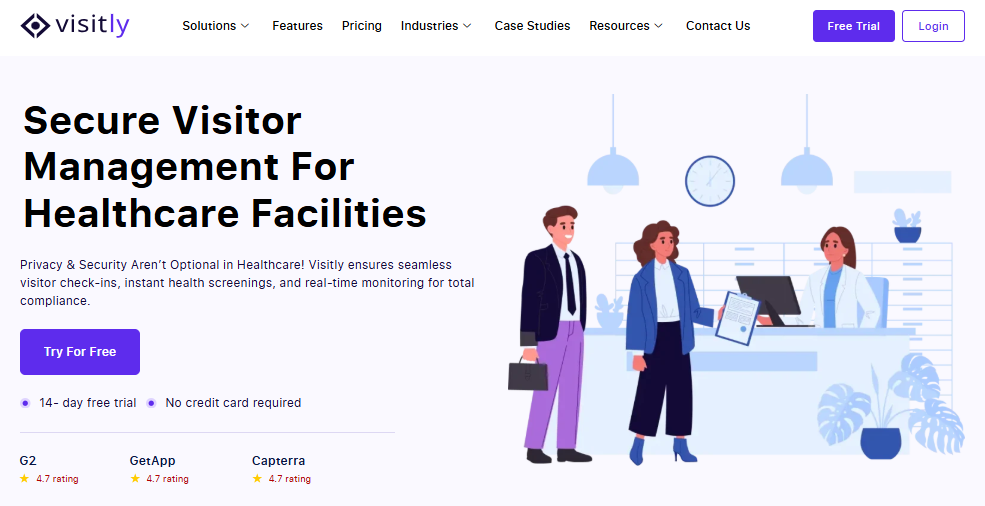
Visitly is a modern, touchless security check-in system designed for healthcare facilities.
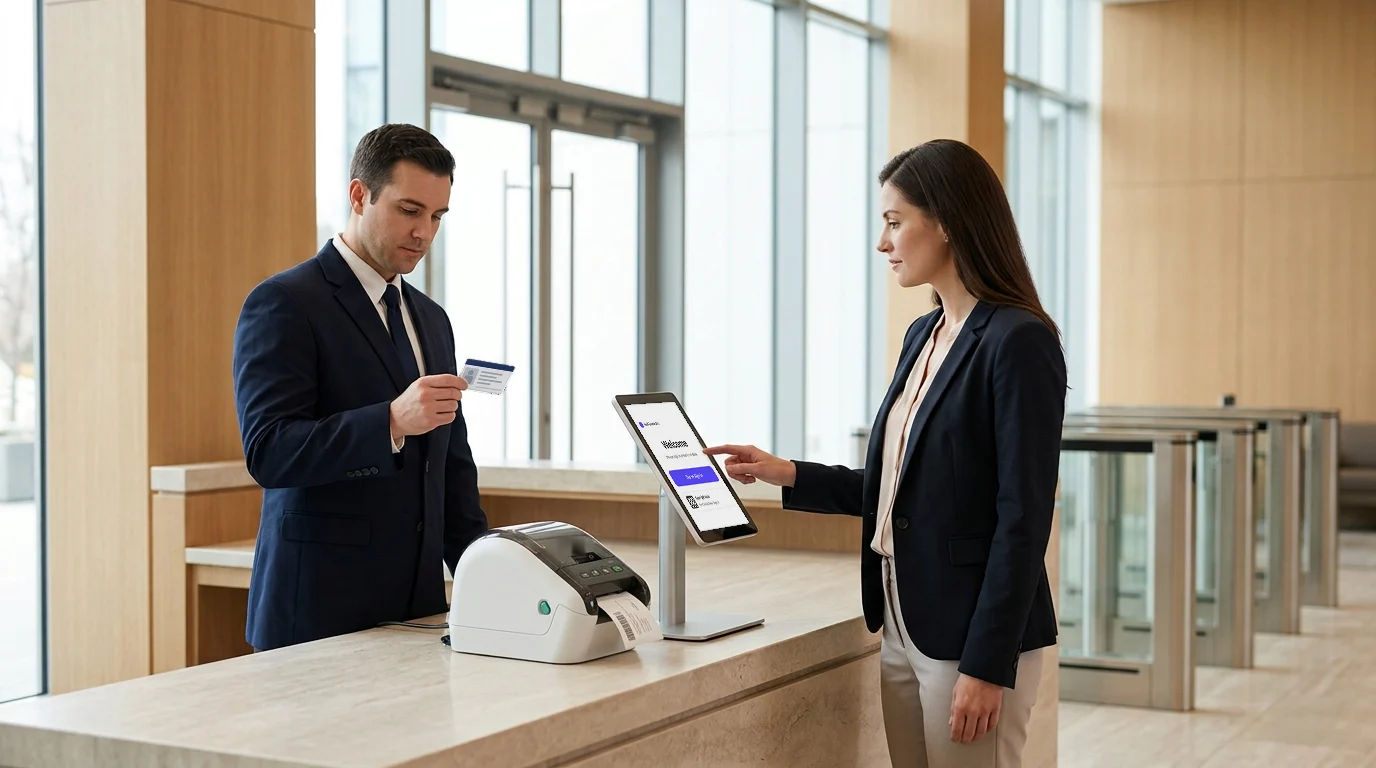
Visitly simplifies visitor and contractor management by offering customizable check-in flows, pre-registration, real-time notifications, and automated badge printing. It supports visitor management compliance with healthcare regulations, such as HIPAA and GDPR.

Key Features and Benefits:
Below is a list of visitor management features available in Visitly.
- Customizable Visitor Flows: Tailor the check-in process so patients, contractors, vendors, and staff follow specific steps, allowing you to collect only the necessary data for each visitor type.
- iPad Sign In/Out: Use any iPad (iOS 11+) for check-in. Data is automatically synced to the cloud for secure and accessible records.
- Visitor and Employee Logs: Maintain digital records of all onsite visitors and employees, including check-in and check-out times. Generate printable audit reports using employee check-in software to support compliance requirements.
- Pre-register Visitors: Send email invitations with QR codes, pre-print badges, and bulk visitor uploads for visitor pre-registration. This is ideal for clinics with high visitor traffic.
- Digital Document/NDA Signing: Visitors can electronically sign policies or NDAs during check-in. Signed documents are stored securely for future reference.
- Instant Notifications: Hosts or security staff receive real‑time alerts when visitors sign in/out.
- Badge Printing & Customization: Ability to print visitor badges, customise design, and include visitor photo, company, purpose, host name, and colour‑coding.
- Photo Capture/ID Scan/Facial Recognition: Capture visitor images, scan IDs, and enable facial recognition for repeat or flagged visitors—supporting stronger identity verification.
- Contactless Sign‑In/Out: Mobile QR code-based sign‑in/out to reduce physical touchpoints in high‑hygiene settings.
- Watchlist Rules/Offender Check: Set criteria to automatically flag specific visitors, check their IDs against an offender registry, and receive alerts if a match is found.
- Evacuation & Emergency Lists/Alerts: Real‑time headcounts, printable lists, and alerts across all kiosks during emergency management.
- Admin Dashboard & Multi‑Location Management: Centralized control for multiple facilities, export logs, and manage users, roles, and locations.
- Integration & Notifications: Connect with applications like Slack, Microsoft Teams, and Google Chat. Enable single sign-on via Okta/OneLogin/SAML2 and use webhooks for custom events and notifications.
- Compliance & Security Certifications: SOC 2 Type 2 certified, GDPR compliant and HIPAA compliant, with a BAA signed at contract.

Pros for Healthcare Use:
- Compliance: Meets HIPAA and GDPR standards, providing secure data storage and real-time audit trails for healthcare facilities.
- Ease of Use: Simple, intuitive design that healthcare staff can quickly adapt to without significant training.
- Scalability: Works well for both small clinics and large hospital networks, making it a versatile solution for growing healthcare systems.
Cons for Healthcare Use:
- Digital Infrastructure Dependency: Requires reliable internet and device infrastructure, which may be a challenge for some healthcare facilities, especially in remote areas.
- Setup Complexity: Initial system setup and customization may require time to integrate with existing hospital systems.

System 2: HID Global SafeEntry System
Overview:
HID Global SafeEntry is a contactless visitor management system designed to enhance security in healthcare facilities. It integrates seamlessly with access control systems, providing temperature checks, health screenings, and automated visitor logging to ensure safe and secure entry while meeting compliance requirements.
Key Features and Benefits:
- Contactless Check-In: Visitors can check in using QR codes, eliminating the need for physical touchpoints and reducing health risks.
- Integration with Access Control: SafeEntry integrates with existing security systems, controlling access to restricted areas based on visitor data.
- Health Screenings: Includes temperature checks and health questionnaires, ensuring the safety of both visitors and healthcare staff.
- Real-Time Alerts: Sends notifications for any suspicious activity or breaches, enabling immediate action.
Pros for Healthcare Use:
- Enhanced Security: Integration with access control and real-time alerts ensures that only authorized individuals enter sensitive areas.
- HIPAA Compliance: Meets healthcare industry standards for data protection, enabling facilities to stay compliant with regulations such as HIPAA.
- Scalable: Can handle high volumes of visitors, making it ideal for extensive healthcare facilities or multi-location networks.
Cons for Healthcare Use:
- Cost: Initial setup and integration may be costly, especially for small or medium-sized facilities.
- Integration Complexity: This can require significant time and expertise to integrate with existing infrastructure, especially when legacy systems are in place.
System 3: FacilityOS Hospital Visitor Management System
Overview:
FacilityOS is a comprehensive hospital visitor management system that captures and stores visitor data, tracks movements in real-time, and ensures compliance with health and safety regulations. It provides an efficient way for healthcare facilities to manage visitors, contractors, and employees, streamlining entry while enhancing security.
Key Features and Benefits:
- Visitor Data Capture: Automatically captures visitor information during check-in, providing detailed records for audits and compliance purposes.
- Health and Safety Compliance: Includes health screening questionnaires to ensure compliance with safety protocols before entry.
- Real-Time Visitor Tracking: Tracks all visitors on-site, providing security staff with up-to-date data on everyone in the facility.
- Automated Badge Printing: Visitors receive personalized badges for easy identification, thereby enhancing security and ensuring a seamless experience.
Pros for Healthcare Use:
- Efficient Tracking: Simplifies the process of tracking and managing visitors, contractors, and staff, reducing administrative workload.
- Regulatory Compliance: Helps healthcare facilities stay compliant with regulations, including maintaining audit trails and providing secure data storage.
- Enhanced Security: Visitor data is stored digitally, thereby reducing the risk of physical records being lost or compromised.
Cons for Healthcare Use:
- Limited Customization: Some healthcare facilities may find the system’s customization options too rigid for unique workflows.
- Requires Regular Maintenance: Periodic maintenance may be needed to ensure the system functions smoothly, especially if integrating with legacy systems.
System 4: Helixbeat’s Digital Visitor Management System
Overview:
Helixbeat’s Digital Visitor Management System provides a streamlined approach to monitoring and managing visitor access to healthcare facilities. It features real-time tracking, ID verification, and seamless integration with access control systems, ensuring both security and compliance with healthcare regulations.
Key Features and Benefits:
- Real-Time Visitor Tracking: Provides up-to-the-minute data on visitor movements within the healthcare facility, enhancing security and operational efficiency.
- ID Verification: Scans and verifies visitor IDs to ensure only authorized individuals gain access to sensitive areas.
- Integration with Access Control: Works with existing access control systems to restrict entry to high-security areas.
- Touchless Check-In: Supports a touch-free check-in process, reducing the risk of infection.
Pros for Healthcare Use:
- Enhanced Safety: Offers robust visitor tracking and ID verification for heightened security, ensuring sensitive areas are restricted.
- Flexible Integration: Easily integrates with other healthcare systems, including EMR and access control, for a holistic security solution.
- Hygienic: The system’s touchless check-in capabilities help minimize physical contact, making it ideal for high-risk healthcare settings.
Cons for Healthcare Use:
- Hardware-Intensive: The system requires dedicated hardware (e.g., kiosks, ID scanners) for full functionality, resulting in higher setup costs.
- Higher Setup Costs: The initial implementation and configuration may be more expensive compared to simpler systems.
System 5: Certify Health’s Patient Check-In Solution
Overview:
Certify Health’s Patient Check-In Solution is designed specifically for healthcare environments. It streamlines the patient check-in process, encompassing health screenings, temperature checks, and symptom assessments, to ensure patients are safely processed before entering the facility.
Key Features and Benefits:
- Patient-Centric Check-In: Focuses on making the patient check-in experience as efficient and straightforward as possible, ensuring a smooth process from start to finish.
- Health Protocol Compliance: Features built-in temperature checks and health screenings to meet safety and regulatory requirements.
- Integrated with Health Systems: Ensures seamless integration with hospital patient management systems, enhancing workflow efficiency.
- Simplified Process: Patients can complete check-in via mobile devices or kiosks, reducing congestion and wait times.
Pros for Healthcare Use:
- Patient-Centric Design: Specifically designed to enhance the patient experience, reducing stress and improving satisfaction.
- Health Protocols: Built-in health and safety compliance features ensure that only cleared individuals enter the facility.
- Seamless Integration: Works well with hospital systems, including patient management systems, for streamlined operations.
Cons for Healthcare Use:
- Limited for Non-Patient Visitors: Primarily focused on patient check-ins, making it less ideal for general visitor management.
- Focused on Larger Facilities: Best suited for hospitals and larger healthcare systems, which may not make it ideal for small clinics or offices.
Key Features to Look for in a Security Check-In System for Healthcare
When selecting a security check-in system for healthcare facilities, ensure the system includes these key features:
- Visitor and Contractor Management: The system should efficiently track visitors, contractors, and employees, ensuring only authorized individuals gain access.
- Integration with Existing Systems: Look for a solution that seamlessly integrates with your current access control systems, EMRs, and hospital security systems.
- Compliance Management Tools: The system should have built-in tools to track audit logs, manage data retention, and ensure regulatory compliance with HIPAA and GDPR.
- Scalability: The system must support multiple locations and scale as your facility expands, with flexible features that cater to a diverse range of visitors and contractor management.

Closing Thoughts
When selecting the right security check-in system for your healthcare facility, it’s essential to evaluate both the security features and compliance capabilities of the system, as well as its ability to integrate with existing workflows.
Visitly stands out as the most comprehensive solution, offering real-time notifications, scalable integration, and a compliant visitor management system. Whether you’re a small clinic or an extensive hospital network, Visitly ensures streamlined operations, enhanced security, and patient satisfaction.
Other systems, such as HID Global SafeEntry, FacilityOS, Helixbeat, and Certify Health, also offer robust security solutions tailored to healthcare environments. However, Visitly’s ability to combine ease of use, robust compliance features, and scalability makes it a standout option for healthcare facilities of any size.
For a comprehensive, scalable, and compliant security check-in system, Visitly is the right choice. Schedule a demo today to see how Visitly can transform your healthcare facility’s visitor management system..
FAQs
How does visitor check-in fit into a hospital security system?
Visitor check-in is the part of a hospital security system that covers every non-patient who enters: visitors, vendors, contractors and temporary staff. It verifies identity, checks the person against a watchlist, prints a badge showing where they may go and logs entry and exit for each site.
What is the difference between patient check-in and visitor check-in?
Patient check-in registers someone for care and connects to scheduling and the health record. Visitor check-in controls physical access for everyone else and connects to security systems such as access control and watchlists. Most hospitals need both. A patient intake product will not screen a vendor, and a visitor platform does not register patients.
How does a visitor badge improve hospital security?
A badge makes an approved visitor recognizable and everyone else conspicuous. A printed badge with photo, host, destination and expiry time lets staff on a unit see at a glance whether a person belongs there. Visitly prints badges with name, host, photo, authorized areas and expiration, and logs each one in the audit trail.
Can self-service kiosks shorten hospital check-in lines?
Yes, mainly by moving data entry out of the lobby. Pre-registered visitors arrive with a QR code and scan it at the kiosk, and returning visitors need less typing. Security staff then spend their time on exceptions, such as a watchlist match or a visitor without ID, instead of copying names into a log.
How long should a hospital keep visitor check-in records?
No single federal rule sets a retention period for hospital visitor logs. State law, accreditation requirements and litigation holds usually drive it, so compliance and counsel set the period. The platform should let you configure retention per record type. Visitly applies the periods you set for audit events and visitor personal data, and does not impose its own.
What should a hospital security team ask check-in vendors?
Ask five things: which watchlists and ID checks are included, which access control systems it integrates with, whether the vendor signs a business associate agreement, how long records are kept and who can see them, and whether every site reports into one console. Then ask for the price with those items included.