


In today’s security-focused environment, businesses are turning to technology to enhance workplace security, streamline daily operations, and create more efficient, secure experiences for everyone on-site.
However, a significant challenge many face is the inefficient integration of visitor management systems and access control entry systems.
Imagine a workplace where visitors must sign in at the front desk manually and where access control systems are managed separately, causing delays and potential security gaps. This not only leads to operational inefficiency but can also increase security risks.
In a time when data security and compliance are critical, this fragmented approach is becoming increasingly unsustainable.
But what if your visitor management system could seamlessly integrate with your access control systems to enhance security, save time, and reduce errors?
This is where Visitly comes in.
In this blog, we’ll explore how integrating visitor management software with access control entry systems can transform your workplace.
So, let us start!
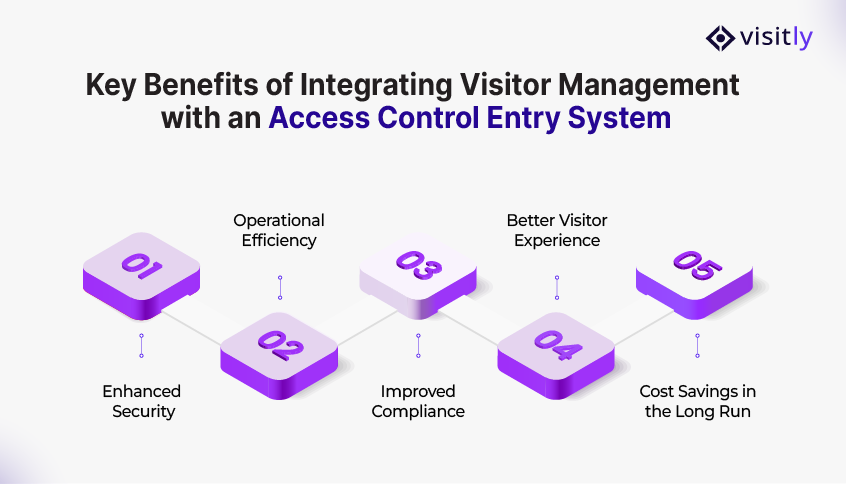
Key Benefits of Integrating Visitor Management with an Access Control Entry System for Business?
The key benefits of integrating visitor management with an access control system for business are:
- Enhanced Security
- Operational Efficiency
- Improved Compliance
- Better Visitor Experience
- Cost Savings in the Long Run
Integrating visitor management with access control entry systems offers numerous advantages. This section will cover the key benefits you can expect from seamless integration, including enhanced security, improved operational efficiency, and greater compliance.
1. Enhanced Security
- Real-time Tracking: Integration ensures only authorized visitors gain access, reducing the risk of breaches.
- Automated Alerts: Immediate notifications for unauthorized access attempts or unusual activity.
- Consistent Logs: Access logs are automatically updated, providing comprehensive audit records.
2. Operational Efficiency
- Automation: Eliminates manual check-ins and reduces wait times, speeding up the process.
- Reduced Errors: Automating data flow reduces human error in visitor tracking and access control.
- Streamlined Entry: Frequent visitors benefit from a faster security check-in system through pre-registration and automated updates.
3. Improved Compliance
- Secure Data Management: Keeps visitor data secure and compliant with regulations like GDPR and HIPAA.
- Easy Reporting: Quick access to visitor logs and access history for audits and compliance checks.
- Policy Enforcement: Ensures visitors sign the required documents and adhere to security standards and protocols.
4. Better Visitor Experience
- Faster Check-ins: Self-service kiosks and online visitor pre-registration streamline entry.
- Consistent Process: Every visitor, new or recurring, enjoys a smooth, professional experience.
- Custom Screening: Tailored questions ensure only authorized visitors enter, streamlining the process.
5. Cost Savings in the Long Run
- Reduced Staffing Needs: Automation reduces staffing requirements for administration and security.
- Minimized Security Incidents: Prevents costly breaches and security lapses.
- Long-Term ROI: The upfront investment pays off through improved efficiency, reduced errors, and enhanced security.
How to Integrate Visitor Management and Access Control Entry Systems Effectively?
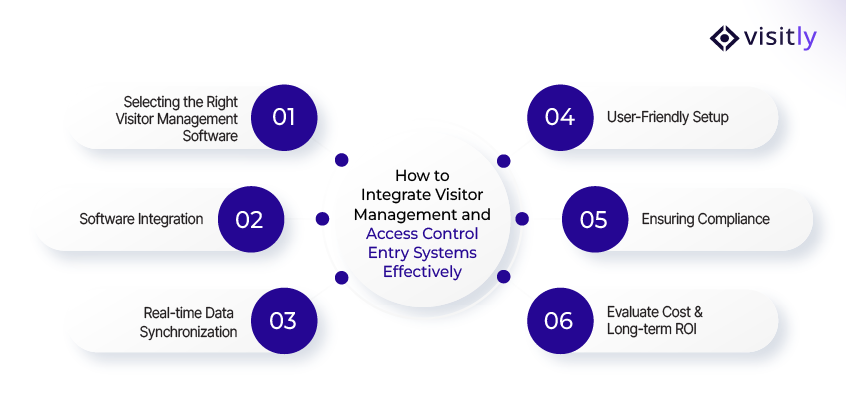
To integrate visitor management and access control entry systems effectively, follow these steps:
- Selecting the Right Visitor Management Software
- Software Integration
- Real-time Data Synchronization
- User-Friendly Setup
- Ensuring Compliance
- Evaluate Cost & Long-term ROI
In this section, we will outline the steps required to integrate your visitor management system (VMS) with your access control entry system.
The integration of these two systems can enhance security, improve operational efficiency, and ensure regulatory compliance. However, the process must be handled carefully to avoid technical issues and maximize the benefits of both systems.
Here’s how to do it effectively:
Step 1: Select the Right Visitor Management Software
Choose visitor management software that integrates seamlessly with your current access control system and supports the necessary customization.
Key Considerations:
- Compatibility with Access Control System: Ensure the office visitor management system integrates with your access control system and other business and security infrastructure, such as biometric access control.
- Ease of Integration: Look for software with open APIs and predefined integrations with access control systems to simplify the process.
- Scalability: Choose a solution that can scale with your business, accommodating multiple locations and users as your organization grows.
Step 2: Implement Software Integration
After selecting your software, connect it to your access control system’s backend to ensure seamless data exchange and system collaboration.
Key Integration Steps:
- API Integration: Most modern access control systems provide APIs that enable the touchless visitor management system to communicate with them in real time. This integration helps synchronize visitor data with access control logs.
- Biometric Authentication: If your access control system uses biometric methods like facial recognition or fingerprint scanning, ensure your visitor management compliance system supports them. Integration will allow visitors to sign in and have their biometric data automatically registered.
- Cloud-Based Solutions: If your access control system is cloud-based, ensure that your visitor management software also operates in the cloud for real-time data synchronization. This eliminates delays and ensures up-to-date security logs.
Step 3: Ensure Real-Time Data Synchronization
Synchronize data in real time to prevent security gaps and ensure instant access verification for visitors.
How to Achieve Synchronization:
- Visitor Data Transfer: The visitor management system should automatically update the access control system when a new visitor signs in, adjusting their entry credentials accordingly.
- Real-Time Monitoring: This integration enables security teams to monitor and track visitor access in real time, improving oversight and eliminating manual checks.
- Syncing Entry and Exit Logs: When a visitor enters and exits, both systems should update logs simultaneously, providing an accurate record for audits and security reviews.
Step 4: Make the System User-Friendly
Design the integration to be intuitive so visitors and employees experience seamless check-in and check-out.
Steps to Ensure a Smooth User Experience:
- Self-Check-In Kiosks: Visitors can sign in at self-service kiosks, where their data is automatically integrated with the access control system.
- Mobile Integration: Enable a mobile check-in app for repeat visitors, allowing them to use their phones as access credentials. This adds flexibility and convenience for frequent visitors and employees.
- Real-Time Notifications: Notify hosts when visitors arrive, providing them with up-to-date information and improving efficiency.
Step 5: Ensure Compliance with Data Privacy and Security Policies
Compliance with data privacy laws and internal security management systems is crucial when integrating visitor management with access control systems.
Integrated workplace management software enables more effective management of visitor data, ensuring that all information is securely stored and accessible when needed for audits or security checks.
Key Compliance Considerations:
- Access Control Policy: Define workplace security policies for visitors’ access rights based on role, time of day, and other criteria. This ensures that the access control system complies with the company’s security policies and regulations.
- Visitor Data Protection: Ensure visitor data is protected and encrypted in compliance with data privacy regulations (e.g., GDPR, CCPA). This can be easily managed with an integrated system that allows secure data storage and handling.
- Audit Trails: The integration of systems creates automatic logs of who enters and exits your building, supporting compliance with access control system security requirements and providing a clear audit trail for security purposes.
Step 6: Evaluate Cost and Long-Term ROI
While the access control system price and initial setup cost for integrating visitor management software may seem high, it’s essential to evaluate the long-term return on investment. Businesses can reduce costs, reduce manual errors, and streamline security procedures through automation.
Cost Considerations:
- Initial Setup Costs: Depending on the complexity of your integration, costs can vary. It’s essential to budget for access control system cost, software fees, and potential hardware upgrades.
- Long-Term Savings: The integration leads to cost savings over the long run by reducing manual work, improving security, and ensuring compliance, thereby helping avoid costly breaches or non-compliance penalties.
How Does Integration Improve Visitor Tracking and Management?
The integration helps improve visitor tracking and management in the following ways:
- Streamlining visitor check-ins and access.
- Real-time monitoring and notifications.
- Automation of entry reduces manual errors.
Integrating visitor management software with your access control entry systems offers significant improvements in how businesses track and manage visitors.
Here, we explore how integration elevates the visitor experience and enhances overall operational efficiency.
1. Streamlining Visitor Check-Ins and Access
One of the most significant advantages of integrating visitor management software with your access control system is automating the visitor check-in process. With a seamless connection, visitors no longer need to manually sign in at a front desk or wait for an employee to grant them access.
Instead, they can check in via a visitor sign-in kiosk or a mobile app, and their details are transmitted to the access control system instantly.
Benefits:
- Reduced Wait Times: The integration speeds up the check-in process, enabling visitors to reach their destination more quickly.
- Instant Access Control: As soon as visitors sign in, the system automatically grants them access to authorized areas, ensuring they enter only where permitted.
- Real-Time Updates: Both the visitor management system and the access control system receive real-time updates, ensuring that all parties are informed about the visitor’s entry status.
2. Real-Time Monitoring and Notifications
When visitor management software integrates with the access control system, businesses can track visitor movements in real time. This feature enhances workplace safety and helps companies stay informed about individuals on-site at any given moment.
Key Features:
- Real-Time Visitor Tracking: Once a visitor is signed in, their status is instantly updated in the access control system, which allows security personnel and staff to track who is on the premises at all times.
- Instant Notifications: Hosts are notified instantly when their visitor arrives, enhancing communication and preventing delays. Furthermore, security teams can be alerted to any attempt by an unauthorized individual to gain access.
- Emergency Response: During emergency management, real-time tracking enables businesses to quickly locate visitors, ensuring that everyone is accounted for during evacuations or incidents.
3. Automation of Entry Reduces Manual Errors
Manual check-in processes are not only time-consuming but also prone to human error. Integrating visitor management software with your access control system automates this step, ensuring greater accuracy and fewer errors.
How Automation Helps:
- Elimination of Manual Data Entry: The integration eliminates the need for security staff to manually enter visitor data. This reduces the risk of errors such as misidentifying individuals or granting access to unauthorized visitors.
- Instant Verification: Visitor credentials are automatically verified by the access control system upon check-in, ensuring that only authorized individuals gain access to sensitive areas.
- Efficient Audit Trails: Automated entry also creates a more reliable audit trail, as all data is stored electronically. This makes it easier to retrieve and analyze visitor logs for compliance or security purposes.
What are the Challenges of Integrating Visitor Management with Access Control Entry Systems?
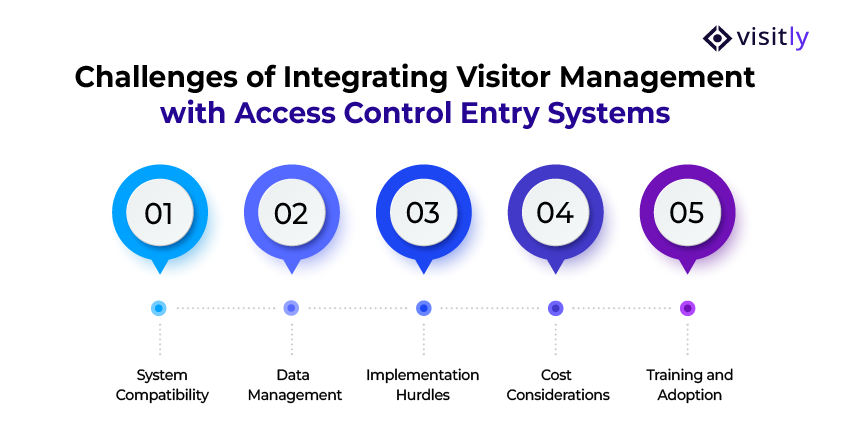
The challenges of integrating visitor management with access control entry systems are:
- System Compatibility
- Data Management
- Implementation Hurdles
- Cost Considerations
- Training and Adoption
Integrating visitor management software with your access control systems can deliver substantial benefits in security, efficiency, and compliance. However, several challenges may arise during this integration process.
Let us understand each of the challenges in integrating visitor management with an access control system for business:
1. System Compatibility
One of the first challenges when integrating visitor management software with access control systems is ensuring compatibility between the two systems. Many businesses use separate systems for visitor management and access control, which may not be designed to work seamlessly together.
Challenges:
- Different Platforms: You might find that your access control system (whether biometric, keycard, or mobile-based) doesn’t natively integrate with the visitor management platform, necessitating custom development.
- Complex Integrations: The integration process can involve working with different software protocols and data formats, which may increase complexity and the risk of errors.
- Inefficiency and Delays: If systems do not sync in real time or experience compatibility issues, the result could be inefficiencies in visitor processing and security breaches.
To overcome this, choosing visitor management software with built-in integration for various access control systems (e.g., biometric or keycard systems) ensures a smoother transition and efficient synchronization.
2. Data Management
When integrating systems, managing data across platforms can become a significant challenge. With visitor management and access control systems both collecting and handling visitor information, data consistency and accuracy must be prioritized.
Challenges:
- Data Fragmentation: Data stored in different systems may not always be synchronized, leading to inconsistencies, incomplete records, or data duplication.
- Manual Errors: When visitor data is manually entered into both systems, human error becomes a factor. This can result in inaccurate logs or incorrect access permissions.
- Data Security and Privacy: Managing visitor data across multiple platforms requires strict security protocols to ensure compliance with data privacy regulations (e.g., GDPR, CCPA).
To mitigate these issues, integration should ensure that data is synchronized in real time across both systems, eliminating the need for manual input and improving data accuracy.
3. Implementation Hurdles
Integrating visitor management software with your access control system isn’t a plug-and-play process. It requires careful planning and a solid understanding of both systems’ capabilities. Companies often face challenges during the implementation phase, particularly in larger enterprises where multiple departments are involved.
Challenges:
- Complex Setup: Depending on the system’s complexity, installation may require custom configurations, which can be time-consuming and costly.
- System Downtime: The integration process may cause system downtime, disrupting business operations and frustrating employees and visitors.
- Vendor Support: Often, businesses rely on vendors or third-party services for integration, and the lack of timely support can delay the process.
To ensure a smooth implementation, businesses should work with experienced vendors who understand both the access control system and the integration process with visitor management software. Proper planning, thorough testing, and clear communication between teams can help minimize downtime and avoid operational disruptions.
4. Cost Considerations
Integrating visitor management software with your access control systems can be costly. While the long-term benefits outweigh the initial investment, understanding the upfront and ongoing costs is essential for budgeting and ROI calculation.
Challenges:
- Initial Investment: The upfront costs include the purchase of new hardware (e.g., biometric readers, access control panels), software licensing, and professional services for integration.
- Ongoing Maintenance: Both systems will require ongoing maintenance, software updates, and potentially increased staffing to manage the new system.
- Hidden Costs: Businesses may not fully account for hidden costs such as training, troubleshooting, and potential integration issues that require additional resources.
While access control system prices vary based on solution complexity, businesses must consider not only the system’s cost but also the long-term ROI it delivers through enhanced security, operational efficiency, and compliance.
5. Training and Adoption
Even after the technical integration is completed, the success of the new system largely depends on how well employees are trained to use it. Resistance to change can be a significant hurdle, especially in larger organizations with established workflows.
Challenges:
- Resistance to Change: Employees may be reluctant to adopt a new system, especially if they are accustomed to manual methods.
- Training Time: Training employees on the new system can take time, potentially disrupting normal operations.
- Diverse User Roles: Different teams (e.g., security, IT, and office staff) may have varying needs, requiring tailored training sessions.
Best Practices:
- Hands-On Training: Offering hands-on training and easy-to-follow tutorials can help employees feel more comfortable with the new system.
- Clear Communication: Clearly communicate the benefits of the new system to staff, showing how it will improve their workflow and the organization’s security.
- Ongoing Support: Providing help desks, FAQs, and user guides can help employees troubleshoot issues and ensure smooth adoption.

Closing Thoughts
Integrating visitor management software with your access control entry systems is a powerful way to enhance security, streamline operations, and ensure compliance.
As businesses evolve and adopt more digital solutions, the need for a unified system that manages both visitors and entry points seamlessly has never been more important. This integration offers many benefits, but choosing the right partner is critical to ensuring a smooth and effective transition.
Here’s a summary of the key takeaways:
- Enhanced Security: Integrating visitor management software with access control systems enables real-time tracking, reduces the risk of unauthorized access, and strengthens security.
- Operational Efficiency: Automated processes such as streamlined check-ins and real-time notifications help save time, reduce manual errors, and improve workflow efficiency.
- Improved Compliance: Integrated systems simplify compliance with data privacy regulations, ensuring that visitor data is securely stored and easily accessible for audits.
- Cost Savings: Although initial setup costs can be substantial, the long-term benefits of reduced operational inefficiencies, improved security, and decreased errors result in significant cost savings.
If you’re ready to streamline your visitor management and access control systems, Visitly is your go-to partner. With Visitly, you’ll experience enhanced security, efficiency, and compliance, all in a seamless, user-friendly package.
Schedule a demo today and discover how Visitly’s integrated solutions can transform your business operations, improve workplace safety, and create a more efficient visitor management process.
Let Visitly be your trusted partner in building a safer, smarter workspace.t can transform your compliance processes, ensuring a secure and compliant environment for your workforce.
FAQs About Mailroom Management Software
1. What is the benefit of integrating visitor management software with an access control system?
Integrating visitor management software with your access control system enhances security, streamlines operations, and improves compliance. It enables real-time visitor monitoring and automates entry and exit processes, reducing manual errors and increasing efficiency.
2. How does a biometric access control system enhance security for businesses?
A biometric access control system ensures that only authorized individuals can access restricted areas. By leveraging unique biological traits such as fingerprints or facial recognition, this system eliminates the risk of unauthorized access from stolen or duplicated keys, enhancing overall security.
3. Can visitor management systems comply with data privacy regulations like GDPR?
Yes, visitor management systems like Visitly are designed to comply with data privacy regulations, including GDPR and CCPA. They securely store visitor data and offer features like data encryption, audit trails, and easy access for security audits, ensuring compliance with relevant laws.
4. What types of access control systems are available for businesses?
There are several types of access control systems available for businesses, including keycard systems, biometric systems (fingerprint, facial recognition), PIN-based systems, and mobile-based systems. Each system offers varying levels of security and convenience, depending on business needs.
5. How much does an access control system cost for businesses?
The cost of an access control system varies based on factors such as system type (biometric vs. keycard), the number of access points, and the level of security required. While initial setup costs can range from a few hundred to several thousand dollars, businesses save on long-term security management costs because automated systems are efficient and reliable.