


A vendor enters your healthcare facility.
A contractor uses their identification badge to access a restricted server room. A visitor writes their name on a sheet of paper at a hospital reception desk, and no one verifies their identity with an official ID or any other method.
This is not a hypothetical. According to ASIS International, 61% of security professionals cite tailgating and piggybacking as their most prevalent physical access control failure. And in high-stakes industries, a single unverified entry can trigger a compliance violation, a safety incident, or a costly data breach.
Traditional visitor logs don’t screen against watchlists, don’t enforce workplace safety inductions, and offer zero real-time visibility into who is on-site at any given moment.
For security and compliance teams managing hospitals, manufacturing facilities, data centers, and government buildings, that gap is no longer acceptable.
Modern touchless visitor management systems turn every check-in into a structured, documented, and enforceable security event. This makes visitor management software a frontline tool for proactive risk management, not a reception desk convenience.
In this blog, you’ll learn how a digital visitor management system strengthens security and compliance in high-risk industries.
What are the Benefits of Proactive Risk Management Through Visitor Management?
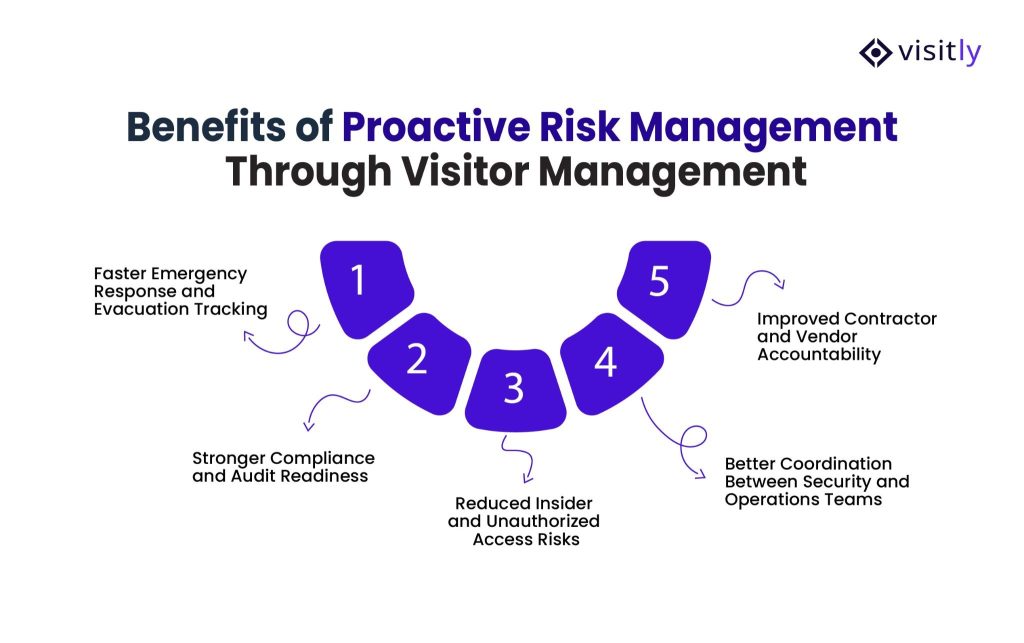
The benefits of proactive risk management through visitor management are:
- Faster Emergency Response and Evacuation Tracking
- Stronger Compliance and Audit Readiness
- Reduced Insider and Unauthorized Access Risks
- Better Coordination Between Security and Operations Teams
- Improved Contractor and Vendor Accountability
Reactive security costs more than preventive security in terms of fines, downtime, reputational damage, and human safety. For high-stakes industries, an automated visitor management system doesn’t just streamline check-ins; it actively reduces risk exposure at every entry point, every shift, and every facility.
Here’s what that looks like in practice.
1. Faster Emergency Response and Evacuation Tracking
When an emergency strikes, your security team can’t afford to guess who is in the building. An integrated visitor management system provides instant, accurate occupancy data when you need it most.
- Real-time occupancy visibility: Know exactly who is on-site; visitors, contractors, and vendors, at any point in time, without manual headcounts.
- Instant evacuation reports: Generate a complete, timestamped list of everyone in the facility with a single tap, ensuring no one is left behind during an evacuation.
- Contractor accountability during emergencies: Track contractors separately from employees so your response teams know precisely who is at which location and who still needs to be accounted for.
2. Stronger Compliance and Audit Readiness
Workplace compliance audits don’t wait for you to get organized.
In regulated industries, such as healthcare, manufacturing plants, BFSI, and data centers, incomplete or inaccurate visitor records can result in failed audits, regulatory penalties, and legal exposure. A reception management software eliminates that risk entirely.
- Digital audit trails: Every check-in, check-out, document signed, and access request is automatically logged, timestamped, and stored; tamper-proof and audit-ready.
- Automated visitor records: No manual data entry, no missing information, no illegible paper logs. Every record is complete, consistent, and retrievable on demand.
- Regulatory reporting support: Pull accurate visitor reports for HIPAA, OSHA, SOC 2, or ISO compliance reviews in minutes, not hours.
3. Reduced Insider and Unauthorized Access Risks
Unauthorized access rarely looks dramatic. It often starts with a visitor who walked into the wrong corridor, a contractor with expired credentials, or a vendor who was never formally checked in. The iPad visitor management system systematically closes these gaps.
- Controlled access permissions: Define exactly where each visitor type is allowed to go and automatically restrict their movement beyond approved areas (using site-specific authorization settings).
- Visitor identity validation: ID scanning (checking government-issued or company identification) and watchlist screening (comparing visitors against lists of people flagged for security reasons) at check-in ensure only verified, approved individuals enter your facility.
- Restricted zone monitoring: Receive real-time emergency notifications (immediate electronic alerts) when a visitor attempts to access a high-security or restricted area without proper authorization.
4. Better Coordination Between Security and Operations Teams
Security incidents escalate fastest when teams are working with different information. A centralized digital visitor management system creates a single source of truth that security, operations, and compliance teams can all act on simultaneously.
- Shared visibility: Every team sees the same real-time data; no information silos, no delayed communication between departments.
- Unified workflows: Visitor pre-registration approvals, host notifications, and access permissions operate within a single platform, reducing coordination gaps.
- Centralized incident tracking: Log, track, and escalate security incidents (such as unauthorized access attempts or rule violations) directly within the electronic sign-in system. This keeps a clear record for post-incident review.
5. Improved Contractor and Vendor Accountability
Contractors and vendors are among the highest-risk visitor categories in any regulated facility. They move through sensitive areas, work alongside employees, and often operate across multiple sites. Without structured check-in workflows, their access is difficult to control and nearly impossible to audit.
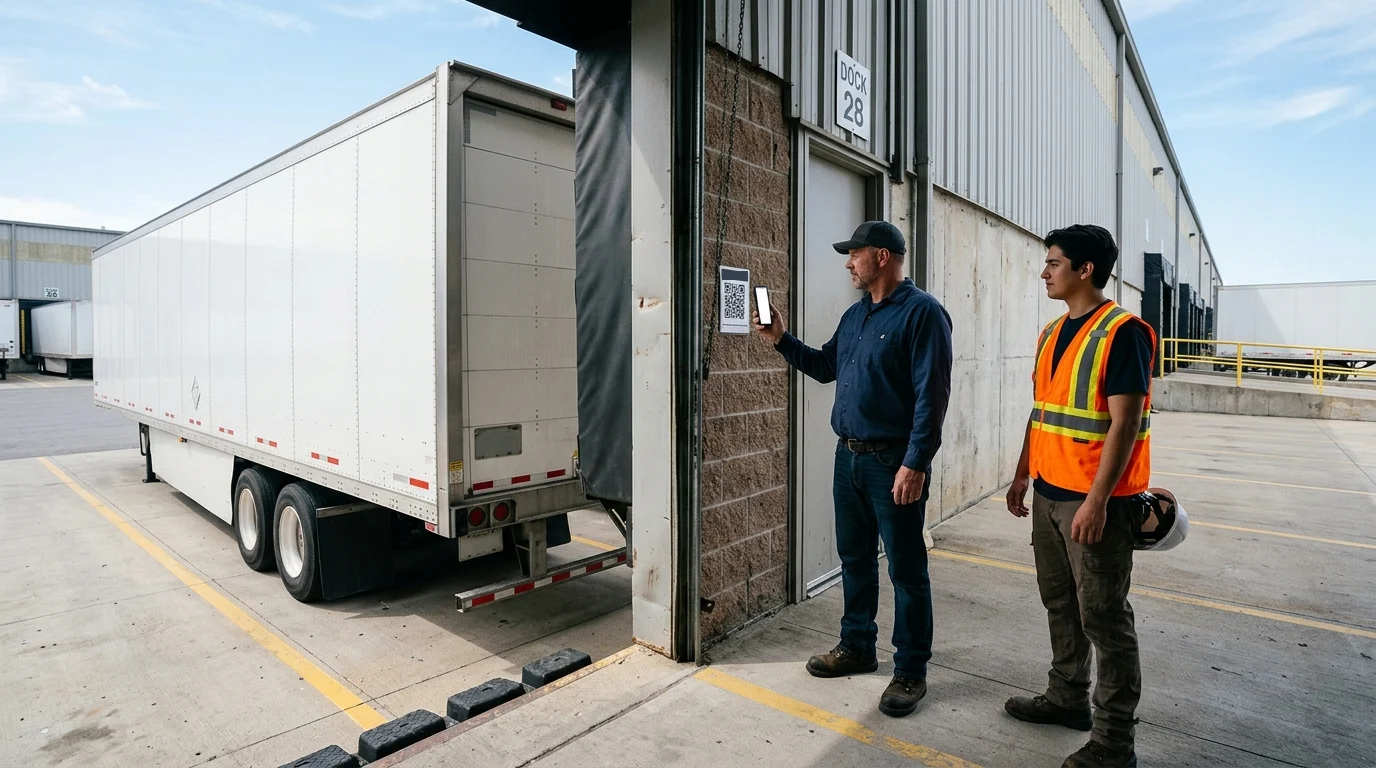
- Contractor-specific check-in workflows: Assign tailored check-in flows for contractors that include safety briefings, document verification, and site-specific compliance requirements, completed before they step onto the floor.
- Safety and compliance verification: Confirm that every contractor has acknowledged safety protocols and security standards, signed required NDAs, and met regulatory prerequisites at the point of entry.
- Time-stamped entry and exit records: Maintain a precise log of when each contractor arrived, which areas they accessed, and when they left; critical for both compliance reporting and incident investigation.

Compliance Risk Management Software Is No Longer Optional
In regulated industries, compliance risks rarely happen because policies are missing.
They happen because organizations lack visibility, documentation, and an access control system. Modern visitor management systems now play a critical role in compliance risk management by helping enterprises maintain accurate records, enforce security protocols, and prepare for audits without relying on manual processes.
Industries Facing the Highest Compliance Pressure
Some industries face far stricter access control and reporting requirements due to workplace security policies, privacy, and operational risks.
This is especially critical in the following:
- Healthcare
- BFSI
- Manufacturing
- Government facilities
- Data centers and critical infrastructure
For these industries, knowing exactly who entered the facility, when they entered, and what areas they accessed is often a compliance requirement, not just a security preference.
Why Compliance Audits Require Digital Visitor Records
Paper logs and spreadsheets cannot provide the accuracy or traceability modern audits demand. Compliance teams need structured, searchable, and verifiable visitor data.
Digital visitor management systems support audits through:
- timestamped logs
- complete visitor history
- signed policies and NDAs
- access accountability
This creates reliable audit trails that simplify investigations, regulatory reviews, and internal compliance reporting.
How Visitor Management Supports Workplace Safety Regulations
Workplace safety regulations increasingly require organizations to document contractor access, confirm visitor safety, and establish emergency readiness procedures.
Modern systems support workplace safety through the following:
- contractor tracking software
- safety induction confirmations
- emergency preparedness documentation
This helps organizations reduce liability risks while ensuring visitors and contractors meet workplace safety checklists before entering high-risk environments.
How Proactive Risk Management in Visitor Management Supports Industry-Specific Risk Management
Different industries face different security, compliance, and operational risks. A visitor’s log monitoring system helps organizations apply proactive risk management tailored to the specific challenges of their environment, rather than relying on a single generic security process.
1. Healthcare Facilities
Healthcare environments operate under strict privacy regulations, handle sensitive patient information, and comply with infection control requirements. Unverified visitor access can create both compliance and patient safety risks.
A hospital visitor management system helps with:
- patient privacy protection
- controlled visitor access
- infection control workflows
This ensures hospitals and healthcare facilities maintain safer, more compliant visitor operations.
2. Manufacturing and Industrial Sites
Manufacturing facilities often manage contractors, vendors, and maintenance teams who work near hazardous equipment and in restricted production areas.
A visitor management system for manufacturing improves industrial safety through:
- contractor safety software for compliance
- restricted zone access
- hazard-aware visitor approvals
This reduces workplace safety risks while improving operational control across industrial sites.
3. BFSI and Data Centers
Financial institutions and data centers handle highly sensitive infrastructure where unauthorized access can lead to major financial, operational, or cybersecurity incidents.
An enterprise visitor management system strengthens protection through:
- sensitive infrastructure protection
- visitor authentication
- compliance-driven audit trails
Organizations gain stronger access, accountability, and better visibility into facility activity.
4. Government and Critical Infrastructure
Government facilities and critical infrastructure environments require a strict access control entry system, real-time monitoring, and detailed visitor-verification processes.
An automated reception system supports these environments through:
- high-security visitor verification
- access logging
- real-time facility visibility
This helps security teams monitor facility access more effectively while maintaining stronger compliance and operational oversight.
How Does Visitly Enable Proactive Risk Management Across Your Facilities?
Most visitor management platforms handle check-ins. Visitly handles risk.
Built for security-sensitive and compliance-driven environments, Visitly transforms your front desk into an active layer of your risk management infrastructure. This provides security teams with real-time visibility and documented control across every location and entry point.
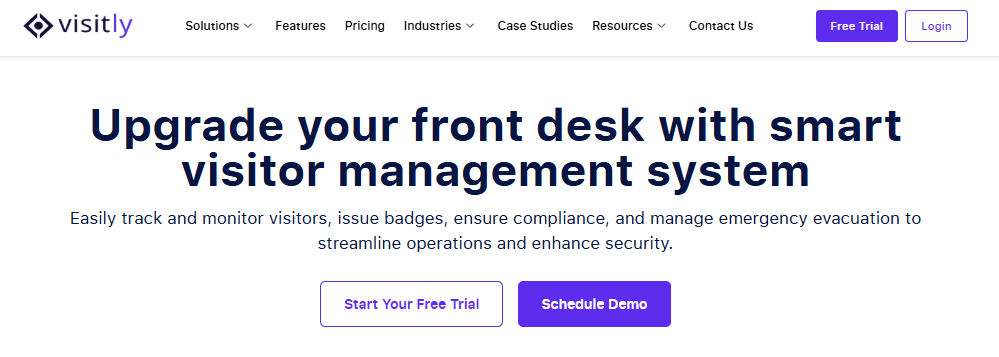
Visitly supports proactive risk management through:
- custom screening questions based on industry, visitor type, or compliance needs
- bulk pre-registration with host-controlled approval workflows
- real-time notifications so visitors are never left untracked or unescorted
- digital document signing and ID scanning during check-in
- centralized dashboards for multi-site visibility and oversight
- fast, frictionless check-ins without requiring app downloads
1. Built for Secure, Smart Visitor Check-Ins
Visitly modernizes the front desk experience while improving security and operational control.
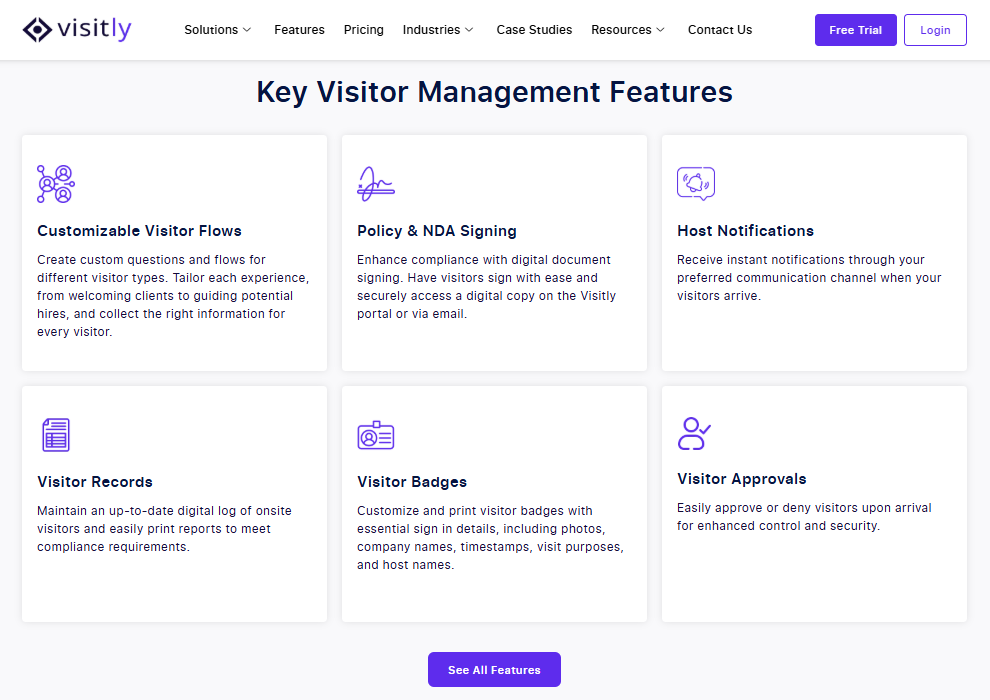
Key capabilities include:
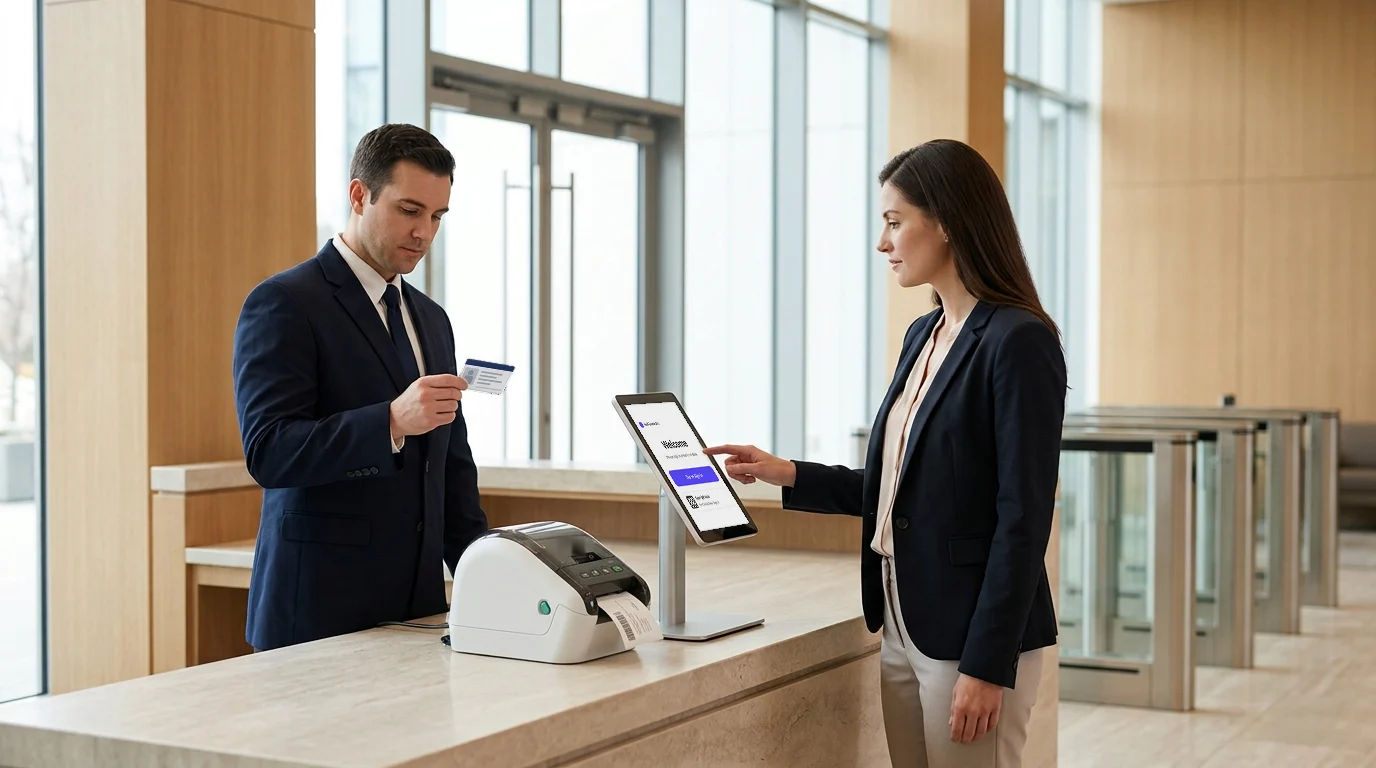
- iPad-based visitor sign-in
- real-time host notifications
- digital document signing
- touchless visitor management and check-in workflows
This reduces manual entry errors, speeds up visitor processing, and improves accountability for access.
2. Designed for Compliance and Workplace Safety
High-stakes industries need more than visitor tracking. They need systems that support visitor management compliance, workplace safety, and audit readiness.
Visitly helps organizations manage:
- visitor screening workflows
- contractor management support
- audit-ready visitor records
- multi-site visibility
This improves regulatory preparedness while reducing operational blind spots across locations.
3. Helps Enterprises Move From Reactive to Proactive Security
Traditional visitor logs only record what has already happened. Visitly helps organizations identify and manage risks in real time before they escalate.
This enables:
- real-time visitor intelligence
- faster incident response
- reduced operational risk
- better compliance readiness

Closing Thoughts
Security and compliance teams in high-stakes industries can no longer treat visitor management as a front-desk afterthought. Every unverified entry, every missing audit record, and every manual workflow gap is a risk your organization is actively carrying, and in regulated industries, that risk has a measurable cost.
Proactive risk management requires real-time visibility into who is on-site, structured controls over who has access, and documented evidence that your facility meets compliance standards. A paper log delivers none of that.
Outdated visitor workflows don’t just create compliance exposure; they slow emergency response, create gaps in contractor accountability, and leave security teams blind across multiple facilities.
Visitly gives enterprises a scalable, audit-ready visitor management platform built for environments that are secure, smart, and compliant from the moment a visitor walks through your door.
Explore Visitly’s visitor management platform or book a demo to improve compliance, workplace safety, and operational control across your facilities.
FAQs
What is proactive risk management in visitor management?
Proactive risk management in visitor management means deciding who may enter, and under what conditions, before the person reaches the door. In practice that is pre-registration, host approval, identity checks and screening at check-in, with a live record of who is on site. The reactive alternative is a sign-in sheet that someone reads after an incident.
Why are paper visitor logs a security risk?
A paper log is a security risk because it verifies nothing and cannot be searched during an incident. Anyone can write a false name, the next visitor can read the entries above theirs, and nobody at another site can see the page. In an evacuation the sheet may be left at the front desk, so the roll call starts from memory.
How does visitor management improve workplace safety?
It improves safety by making sure every visitor and contractor has seen the site rules before entry and can be accounted for in an emergency. A safety induction or hazard acknowledgment is shown at check-in and logged. The same check-in feeds a live roster, which gives the incident lead a list of everyone on site during an evacuation.
Which industries need proactive visitor risk management most?
Sites where an unvetted visitor can cause a safety, privacy or regulatory problem need it most: hospitals, manufacturing plants, data centers, banks, utilities and government facilities. Each has restricted areas and an outside party who checks records, such as a regulator, an auditor or a customer. The more locations a company runs, the harder it is to hold one standard without a shared system.
What should enterprises look for in a visitor management system for risk control?
Look for controls that act before entry and records that hold up afterward. That means pre-registration with host approval, photo ID and watchlist screening, signed acknowledgments, a tamper-resistant audit log and a live roster for evacuations. Check that single sign-on is included, and that one policy can be applied across every location with exceptions set per site.
Does a visitor management platform make a facility compliant?
No. A platform supplies visitor records and controls, and your organization owns the compliance program. Visitly supports HIPAA, ITAR, CMMC and OSHA programs with identity checks, signed acknowledgments and exportable audit records, and it holds SOC 2 Type II and ISO 27001 itself and is HIPAA compliant. Your compliance lead or counsel decides what a given regulation requires at your sites.