


A vendor walks into your facility, signs a paper log at the front desk, and heads inside. Nobody checks if their safety certification is current. Nobody knows which zone they’ve entered. And when an incident happens two hours later, nobody can pull an accurate record of who was where.
This isn’t a hypothetical. It’s happening across manufacturing facilities every single day.
What’s surprising isn’t that facilities get breached or face compliance failures; it’s that most of them already know their contractor management system is broken, yet continue relying on clipboards and spreadsheets to manage it.
Unmanaged third-party access is one of the most underestimated threats to workplace security policies and safety standards in manufacturing today.
The right visitor management system doesn’t just fix the sign-in process; it closes the security gaps your current process doesn’t even know exist while keeping your facility aligned with industry security standards.
What Contractor Access Challenges Do Manufacturing Plants Face Every Day?
The contractor access challenges that manufacturing plants face every day are:
- Untracked contractor movement across restricted zones
- Manual paper logs create compliance blind spots.
- No real-time visibility into who’s on the floor
Most manufacturing plants don’t have a contractor access problem they can see; they have one they can’t. And that’s precisely what makes it dangerous.
1. Untracked Contractor Movement Across Restricted Zones
When a contractor enters your facility without zone-specific permissions, there’s often nothing stopping them from walking into areas they were never cleared for, whether that’s a chemical storage unit, a high-voltage equipment room, or a proprietary production line.
Without a structured contractor access control system in manufacturing plants, access boundaries exist only on paper, not in practice.
2. Manual Paper Logs Creating Compliance Blind Spots
A paper sign-in sheet tells you a contractor arrived. It tells you nothing about whether they completed mandatory workplace safety checklists, submitted current certifications, or acknowledged your workplace security policies.
During an audit, these gaps don’t just look bad; they can lead to regulatory penalties, failed inspections, and, in serious cases, legal liability.
3. No Real-Time Visibility Into Who’s on the Floor
If an emergency evacuation were to occur right now, could your security team produce an accurate list of all contractors and vendors currently inside your facility?
For most plants managing third-party access manually, the honest answer is no. That’s not just an operational gap; it’s a direct violation of basic safety and security standards that manufacturing facilities are expected to uphold.
How Visitor Management Solutions Solve Vendor Access Control Problems in Manufacturing?
Visitor management solutions solve vendor access control problems in manufacturing facilities through the following:
- Digital Pre-Registration and Pre-Approval Workflows
- Role-Based Access Permissions Per Contractor/Vendor Type
- Automated Safety Induction and Document Signing at Check-In
- Instant Host Notifications and Contractor Accountability
- Centralized Visitor Logs for Every Entry and Exit
- Blacklist and Watchlist Screening at Entry
- Emergency Mustering and Real-Time Evacuation Reporting
The core problem with traditional vendor access control isn’t just inefficiency; it’s invisibility. Visitor management software solutions fix this by replacing reactive, paper-based processes with structured, automated workflows that put your security team in control before a contractor ever steps through the door.

1. Digital Pre-Registration and Pre-Approval Workflows
Instead of contractors showing up unannounced and being waved through, visitor management solutions require pre-registration ahead of the visit.
Here’s what this looks like in practice:
- Facility managers or procurement teams approve contractor access in advance.
- Visit windows and permitted zones are defined before arrival.
- Walk-in access risks are eliminated entirely at the system level.
2. Role-Based Access Permissions Per Contractor or Vendor Type
Not every vendor needs the same level of access, and your system shouldn’t treat them as such. Digital visitor management system solutions allow granular, role-specific permissions so access boundaries are enforced automatically, not assumed:
- Cleaning crews are restricted from the production lines.
- Equipment technicians are blocked from the data server rooms.
- Vendors assigned zone-specific clearance tied to their visit purpose
3. Automated Safety Induction and Document Signing at Check-In
Before a contractor receives their badge, the system works through a non-negotiable checklist automatically every time:
- NDAs and site agreements are signed on screen before a badge prints.
- Digital safety inductions are completed before access is granted.
- Each acknowledgment and signature is logged with the visit. Certification and insurance expiry is checked in a contractor prequalification system, separate from visitor management.
4. Instant Host Notifications and Contractor Accountability
The moment a pre-registered contractor checks in, the relevant host receives an instant emergency notification, creating a direct accountability chain between the contractor on the floor and the internal team responsible for their visit.
This alone significantly reduces unsupervised movement across visitor management for manufacturing facilities.
5. Centralized Visitor Logs for Every Entry and Exit
Every contractor’s management software and document submission is logged in a single centralized system. Unlike paper logs, these records are:
- Timestamped and tamper-proof
- Searchable by date, contractor name, zone, or visit purpose
- Instantly accessible for compliance audits and EHS reviews
6. Blacklist and Watchlist Screening at Entry
An automated visitor management system automatically screens incoming contractors against internal blacklists or flagged vendor records before access is granted; no security guard memory is required.
- Previous safety violators flagged at check-in.
- Contractors with expired agreements are blocked automatically.
- Barred vendors are identified before they reach the floor.
7. Emergency Mustering and Real-Time Evacuation Reporting
During an emergency, there’s no time to sort through paper logs. An electronic visitor management system solution generates an instant, accurate headcount of every contractor and vendor on-site.
This ensures your facility meets the emergency response requirements tied to most industrial safety standards and security check-in system policies.
What Features Should You Look for in Visitor Management Platforms for Manufacturing?
The features to look for in visitor management platforms for manufacturing are:
- ID Scanning and Contractor Badge Printing
- Custom EHS-Specific Screening Questions
- Host Notifications and Real-Time Dashboards
- Document Expiry Tracking and Automated Alerts
- Multi-Zone Access Mapping
- Audit-Ready Reporting With Flexible Export Options
Choosing the best visitor management platform for a manufacturing environment isn’t the same as picking a front-desk check-in tool for a corporate office. Factory floors have unique security demands, compliance obligations, and operational realities that generic platforms simply aren’t built for.
Here’s what actually matters when evaluating your options.

Must-Have Features for Factory Environments
1. ID Scanning and Contractor Badge Printing
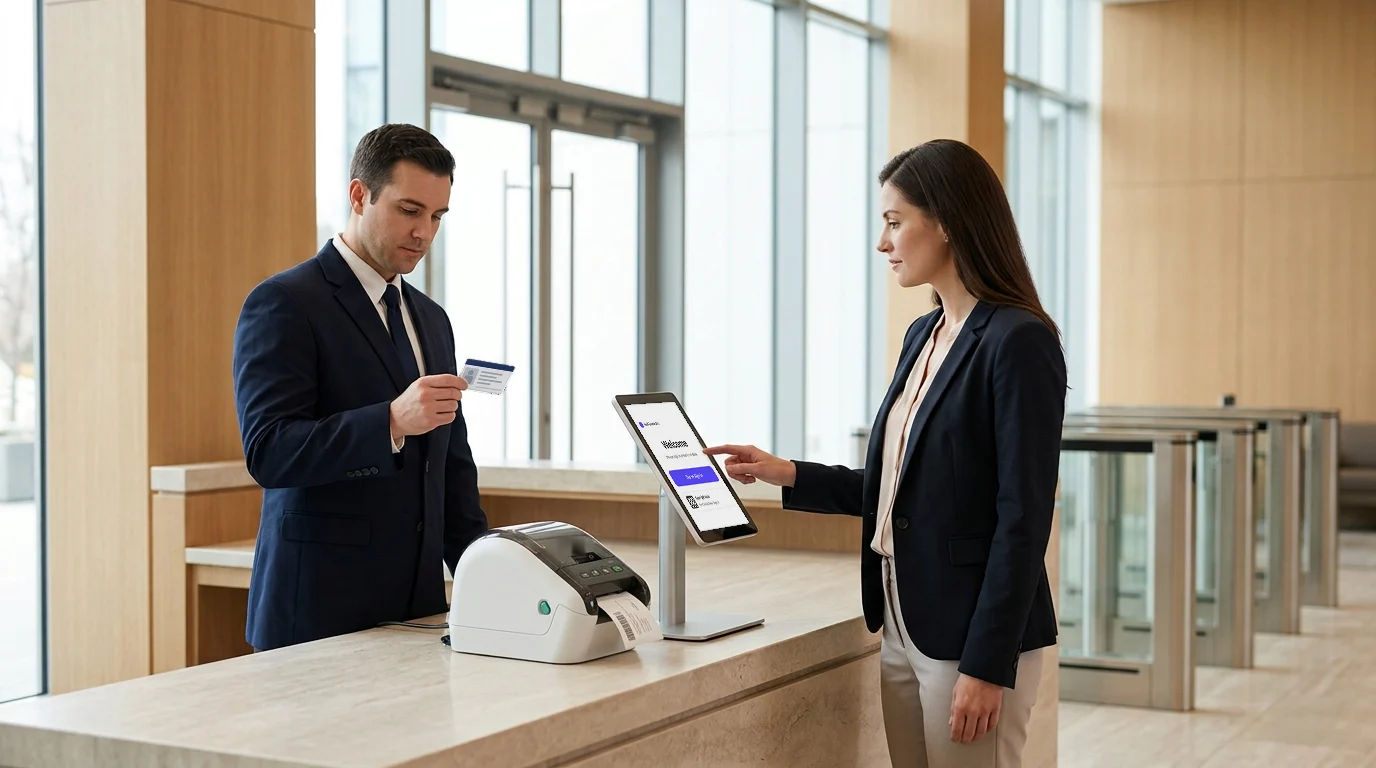
Every contractor entering your facility should be positively identified before access is granted using visitor badge printing. The platform should scan government-issued IDs, cross-reference them with pre-registered records, and instantly print time-bound, zone-specific badges, making it clear at any given moment who belongs where on your production floor.
2. Custom EHS-Specific Screening Questions
A standard “purpose of visit” field isn’t enough for industrial environments. Your platform should support fully configurable screening workflows that reflect your facility’s actual safety requirements:
- Safety induction confirmation questions
- PPE compliance acknowledgments
- Health and hazard exposure declarations
- Site-specific risk awareness checkpoints
3. Host Notifications and Real-Time Dashboards
Plant managers and operations teams shouldn’t have to chase down information about who’s currently on-site.
The right platform delivers:
- Instant SMS or email alerts to hosts upon contractor check-in
- Live occupancy dashboards broken down by zone or department.
- Automated check-out reminders for contractors exceeding their visit window
4. Document Expiry Tracking and Automated Alerts
One of the most overlooked needs in industrial facility management. It usually sits in a contractor prequalification system, separate from visitor management. That system should:
- Store contractor certifications, insurance documents, and safety licenses digitally
- Track expiry dates and flag renewals before they lapse
- Automatically restrict access to contractors with expired documentation; no manual intervention needed.
5. Multi-Zone Access Mapping
Manufacturing facilities aren’t single-entry environments. A capable platform ties each contractor’s badge permissions directly to their cleared zones and triggers an automatic security alert if access to an unauthorized area is attempted. This is foundational to any serious industrial access management strategy.
6. Audit-Ready Reporting With Flexible Export Options
When a regulatory inspection arrives, you need accurate records immediately and in the right format.
Look for platforms that produce:
- Detailed contractor visit histories filterable by date, individual, or zone
- Exportable reports aligned with ISO, OSHA, or regional compliance frameworks.
- Digital signatures and document submissions are tied to each individual visit record.
What Role Do Access Control Vendors Play in Manufacturing Security?
An integrated visitor and contractor management system and a physical access control system are two different things, but in a manufacturing environment, they need to work as one.
Access control vendors provide the hardware and infrastructure layer: electronic gates, turnstiles, card readers, and barrier systems that physically restrict movement across your facility. What they often lack, however, is the intelligence layer, the ability to screen, verify, and manage access before it reaches that hardware.
This is where the integration between visitor management platforms and access control vendors becomes a genuine operational advantage.
When both systems are connected, the visitor check-in process and physical access become a single, seamless workflow:
- A contractor pre-registers and gets approved digitally.
- Their identity is verified and documents are signed at check-in.
- A time-bound, zone-specific digital credential is issued automatically.
- Physical gates or turnstiles grant or deny access based on that credential; no manual override is needed.
- Any attempt to enter an unauthorized zone triggers an instant alert to your security management system and team.
Without this integration, your physical access infrastructure is only as strong as the human judgment at the front desk. With it, your entire facility operates on a rules-based access model that removes guesswork and human error from the equation entirely.
Why Are Manufacturing Companies Switching to Digital Contractor Access Control Systems?
The shift isn’t happening because digital systems are trendy. It’s happening because the cost of not switching, in terms of incidents, audit failures, and operational inefficiency, has become too significant to ignore.
Manufacturing companies moving to digital contractor access control aren’t just solving a security problem. They’re reclaiming time, reducing risk, and building a compliance risk management system that holds up under real scrutiny.
1. Reduction in Administrative Burden on Security Staff
Manual contractor access management quietly consumes enormous staff time, with tasks such as verifying documents, cross-checking approvals, and chasing hosts for confirmations. Digital systems automate every one of these tasks, freeing your team to focus on higher-value work.
For facilities managing dozens of contractors daily, this means:
- Digital document signing at check-in
- Digital approval workflows replacing email chains
- Visitor logs are updated in real time without manual entry.
2. Faster Contractor Onboarding at the Gate
Long check-in queues delay production schedules and push contractors to find workarounds. With digital contractor access control, onboarding happens before the contractor even arrives:
- Documents signed in advance
- Safety inductions were completed remotely prior to the visit.
- Badge credentials ready to issue on arrival
- What previously took 15–20 minutes drops to under two minutes
3. Measurable Safety and Compliance Outcomes
This is where ROI becomes most tangible for EHS managers and operations leaders. Digital signage for the workplace creates an auditable safety process that manual methods simply can’t replicate:
- Safety induction completions are automatically recorded and timestamped.
- Signed safety documents are stored with each visit record.
- Regulatory audits supported by structured, exportable compliance reports
4. Reduced Risk From Unauthorized Contractor Access
A single incident involving an unvetted contractor in a restricted zone can trigger regulatory fines, operational shutdowns, or legal action. Digital contractor access control makes unauthorized access structurally difficult, not just policy-prohibited. The liability exposure that comes with unmanaged third-party access is one of the strongest business cases for making the switch.
Manufacturing companies that are switching aren’t waiting for an incident to justify the investment. They’re recognizing that clipboards were never designed to manage the scale, complexity, and compliance risk demands of modern industrial facility access.
How Does Visitly Help Manufacturing Facilities Manage Contractor & Vendor Access?
Most visitor management features are built for lobbies, not factory floors.
Visitly is different. Designed to handle the complexity of contractor and vendor access in demanding environments, Visitly gives manufacturing facilities a single, structured system to manage every aspect of third-party access from pre-arrival to check-out without adding operational overhead.
1. Pre-Registration and Bulk Contractor Onboarding
Visitly allows facility managers and procurement teams to pre-register contractors individually or in bulk before their visit. Approvals, access permissions, and visit windows are all configured in advance, so by the time a contractor arrives at your gate, the verification process is already done.
- Bulk upload for large contractor teams or recurring vendors
- Pre-assigned zone access tied to each contractor’s role
- Automated confirmation sent to contractors before arrival.
2. Custom Screening Workflows Built for Industrial Environments
No two manufacturing facilities have identical compliance requirements. Visitly’s fully customizable screening workflows let you build check-in processes that reflect your facility’s specific safety and security standards:
- EHS-specific screening questions configured per contractor type
- Mandatory safety acknowledgments before badge issuance
- Custom approval chains for high-risk zone access
3. ID Scanning and Instant Badge Printing
Every contractor is positively identified at check-in through Visitly’s built-in ID scanning capability. Verified contractors receive an instantly printed, time-bound visitor badging system, making it clear who is authorized, which zones they can access, and when their access expires.
4. Digital NDA and Safety Document Signing
Visitly eliminates paper-based document handling entirely. Contractors review and sign NDAs, safety induction documents, and compliance agreements digitally at check-in, with every signed record automatically stored, timestamped, and retrievable for audits. No chasing paperwork. No missing signatures.
5. Real-Time Host Notifications and Live Occupancy Visibility
The moment a contractor checks in, Visitly instantly notifies the relevant host. Security and operations teams get a live dashboard showing exactly who is on-site, at which location and for which host, and when their visit window closes. This gives your facility genuine real-time visibility into the presence of contractors and vendors at all times.
6. Audit-Ready Records, Always
Every interaction, check-in, document signing, and check-out is logged automatically in Visitly’s centralized system. When an audit or incident investigation requires access records, your team can pull accurate, structured reports in minutes, not hours.
Visitly doesn’t just digitize your sign-in process. It gives manufacturing facilities the control, visibility, and compliance infrastructure needed to manage contractor and vendor access the way industrial environments actually demand.
Read our Visitly June Product update blog.
Closing Thoughts
The gap between a paper sign-in sheet and a structured digital contractor access control system isn’t just a technology gap; it’s a security gap, a compliance gap, and increasingly, a liability gap.
Manufacturing facilities that continue managing contractor and vendor access manually aren’t just running an inefficient process. They’re operating with blind spots that auditors, regulators, and incidents will eventually expose.
The shift to digital visitor management isn’t a future consideration for industrial facilities anymore. It’s a present operational necessity.
Visitly gives your facility the tools to close those gaps, with purpose-built workflows for contractor pre-registration, document signing, integration with your access control system, and audit-ready reporting, all in one system.
Book a Demo and see how Visitly transforms contractor and vendor access control across your manufacturing facility.
FAQs
Why is vendor access control important in manufacturing facilities?
Vendors and contractors work near running machinery, hazardous materials and proprietary processes, often without the training employees receive. Access control limits each one to the zones and hours the job requires and proves who was where. That reduces injury risk, protects trade secrets and gives customers and auditors the visitor records they ask for during plant audits.
How does a visitor management system control contractor access at a plant?
It moves the checks to before the gate opens. The host pre-registers the contractor, the visit is approved, and at check-in the system confirms identity, shows the safety induction and prints a badge with authorized areas and an expiry time. Linked to the access control system, the badge can open only the doors that visit was approved for.
Can a visitor management system track contractor certifications and insurance?
Some contractor compliance products do, but many visitor management platforms do not. Visitly does not track contractor certifications, training records or insurance expiry. It covers the gate: check-in, a safety induction that is acknowledged and logged, signed documents, badges and a live roster. Plants that need expiry alerts keep them in a prequalification or EHS system.
Can visitor management records support manufacturing audits?
Yes. A digital visitor log gives auditors dated entries for each visit: who came, the host, the purpose, documents signed and time in and out. That is the evidence asked for in customer audits, ISO 27001 reviews and supply chain security programs such as CTPAT. Your compliance lead decides which records a given audit needs.
What features should manufacturers look for in a visitor management platform?
Look for pre-registration, photo ID capture, safety induction with a logged acknowledgment, watchlist screening, badge printing and a live roster for mustering. Then check integration with the access control system the plant already runs. Visitly connects to Genetec, Brivo, LenelS2 Netbox, Kisi and C CURE 9000. Our team can show you how those integrations work at your sites.
How do plants account for contractors during an evacuation?
The check-in record becomes the roll call. Because every contractor and visitor is signed in digitally, the incident lead can open a live roster by location and mark people off at the muster point. Visitly includes evacuation rolls and sends evacuation alerts by SMS, email and voice call. During an evacuation the kiosk stops new check-ins.